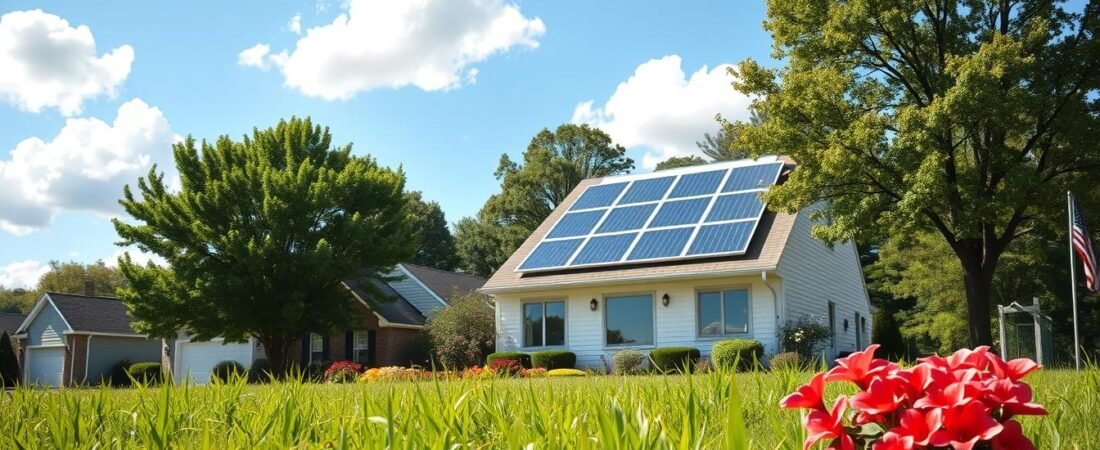
Ready to see what a smart energy investment looks like? This short guide shows the current average for a full system in New Jersey and what it means for your home. As of April 2026 the average rate is $2.77 per watt, which amounts to about $35,203 for a 12.69 kilowatt system before incentives.
With roughly 205 sunny days each year, New Jersey offers strong conditions for steady power production. Homeowners can expect long-term benefits: typical savings on electricity add up to about $86,538 over 25 years, making the purchase a meaningful investment against rising utility bills.
This introduction previews how price, installation, system size, and local installers affect total cost and performance. Use the data here to compare companies, evaluate your roof, and decide if a new system is the right purchase for predictable energy and lower bills.
Understanding the Current NJ Solar Panel Cost
To gauge your investment, begin with today’s average installation figures for homes in New Jersey.
The typical full residential system in New Jersey runs about $35,203 for a 12.69 kW setup. A smaller 5 kW system averages roughly $13,868, giving homeowners clear sizing options based on need and budget.
Prices have dropped roughly 50% over the last 10 years, which is why many homeowners find that the upfront investment is easier to justify today. Larger systems often yield a lower price per watt because of bulk purchasing and economies of scale.
“Reliable market data shows an average of about $2.77 per watt in New Jersey, though some sources report near $3.15 per watt depending on equipment.”
- Compare quotes from multiple companies and installers to find the best value for your home.
- Remember that system size, equipment choices, and local incentives will change your final price.
Bottom line: Use the averages above as a starting point, then get tailored estimates to see how much you can save on electricity and utility bills over the coming years.
Factors Influencing Your Total Installation Price
Equipment and site conditions drive most of the price variation. These choices affect performance and long-term savings for homeowners in New Jersey.
Equipment Quality
Higher-efficiency modules and branded inverters add upfront price but boost output over years. Monocrystalline options are the most common residential choice because they deliver strong power in limited roof space.
Choose quality when you want higher lifetime energy production and larger savings on electricity.
Labor and Permitting
Labor includes roof work, wiring, and the installer’s margin. Permitting and inspection fees are part of the total installation price and vary by municipality.
If your roof is hard to access or needs reinforcement, expect higher labor charges and more time for permitting.
“Reputable companies include permitting, inspection, and warranty details in their quotes—ask for an itemized breakdown.”
- Average installation rate: about $2.75 per watt for many projects in the state.
- Monocrystalline panels often cost more but deliver better long-term savings and power output.
- Roof complexity and structural work raise labor and permit time, which increases the final price.
- Always request a transparent quote from local companies and compare line items.
| Factor | Typical Impact | Why It Matters | Tip |
|---|---|---|---|
| Module Quality | Medium–High | Improves watts per roof area and lifetime output | Prioritize efficiency for limited roof space |
| Inverter Type | Medium | Affects system reliability and monitoring | Choose a trusted brand with warranty |
| Roof Access / Structure | High when complex | Raises labor, scaffolding, and reinforcement needs | Get a structural inspection early |
| Permits & Inspections | Low–Medium | Local rules affect timeline and fees | Work with an installer that handles paperwork |
For a detailed line-item guide from local professionals, review this project cost breakdown to compare quotes and plan your system.
How System Size Impacts Your Investment
Choosing the right system size shapes both your short-term outlay and long-term savings.
A 10 kilowatt system in new jersey typically runs about $27,735. While larger systems carry a higher total price, they often lower the per watt rate and improve returns over the years.
Doubling a system from 5 kW to 10 kW generally doubles the installation price, but it also doubles production and cuts average unit price.
For a 1,500-square-foot home, expect roughly 15–18 panels to meet typical electricity needs. Panel efficiency and roof layout are major factors when sizing a project.
- Right-size for use: Match system size to your household energy use and future plans.
- Save per watt: Bigger systems often reduce the per-watt price and boost lifetime savings.
- Custom design: Every installation fits your roof and aims to maximize power and savings.
“A larger system increases upfront price but can deliver greater long-term financial benefits as it offsets more of your electricity bill.”
Navigating Federal and State Solar Incentives
Incentives can make a big difference in your final outlay. Learn how federal and New Jersey programs cut the net price and speed up payback for households.
Federal Investment Tax Credit
The federal tax credit (ITC) currently lets you claim 30% of the system value on your federal return. This credit directly reduces what you owe in tax and lowers your net installation expense.
Renewable Energy Certificates
Renewable Energy Certificates pay owners for clean power production.
- Average REC value in 2022: $212.
- You may claim up to six RECs per year for 10 years under the state program.
State Sales and Property Tax Exemptions
New Jersey offers a 6.625% sales tax exemption on panels and related gear. Your home also gains value without raising property taxes thanks to the exemption.
“Many companies help with enrollment so you capture every available credit and incentive.”
Comparing Financing Options for New Jersey Homeowners
Financing decisions determine whether you capture tax credits or simply pay for the power you use.
Full purchase is the most cost-effective path for many homeowners. Buying the system lets you claim federal tax credit and state incentives. You avoid loan interest and keep all long-term savings.
Solar loans let you spread payments while still owning the system. Many New Jersey companies offer $0-down options for qualified applicants. Loans preserve access to tax credits and raise monthly payments instead of one upfront price.
Leases and PPAs require little or no upfront outlay and give immediate savings. However, you do not own the panels and cannot claim the tax credit. With a PPA you pay a monthly rate based on electricity use, similar to a traditional bill.
“Choosing the right financing option is essential for homeowners who want to maximize long-term energy savings.”
| Option | Upfront | Access to Credits | Monthly Impact |
|---|---|---|---|
| Full Purchase | High | Yes | Lower over time |
| Loan | Low–Medium | Yes | Moderate payments |
| Lease / PPA | Very Low | No | Monthly rate for power |
Evaluating the Long-Term Value of Solar Energy
Estimating the break-even point turns a technical purchase into a straightforward financial choice. Start by totaling your system price, then subtract the federal tax credit and other incentives.
Most New Jersey homeowners recoup their investment in roughly 7.57 to 8.5 years. That payback range factors in installation, electricity savings, and available credits.
Calculating Your Payback Period
Use this simple approach: divide your net system price by annual avoided utility savings. A typical home sees about $64,962 in avoided utility costs over 25 years.
- Include the federal tax credit to lower net price and shorten payback.
- Remember systems last 25–30 years, so savings continue long after payback.
- Buying the system locks in predictable energy costs and protects against future utility hikes.
“The payback period is the clearest metric to see when your installation becomes a net financial benefit.”
Selecting the Right Solar Installer for Your Home
Picking the right installer sets the tone for how your system will perform and age.
Look for proven reputation and long warranties. Infinity Energy earned Installer of the Year in 2025 and 2026. Momentum Solar offers a 25-year manufacturer and workmanship warranty. Venture Solar includes a 25-year bumper-to-bumper warranty that covers service, parts, and power output.
Green Power Energy has served homeowners since 2009 and provides flexible financing. Getting at least three quotes helps you compare pricing, service, and timeline.
- Choose firms that handle permits and help file the federal tax credit.
- Prefer providers that offer 25-year warranties on workmanship and parts.
- Local, family-owned companies often give more personal service across the system lifespan.
“The right installer will guide you through incentives and keep your system productive for years.”
| Company | Founded / Note | Key Warranty | Financing |
|---|---|---|---|
| Infinity Energy | Awarded Installer of the Year 2025–2026 | Standard manufacturer & workmanship | Yes |
| Green Power Energy | Established 2009 | Manufacturer warranty varies | Flexible options |
| Momentum Solar | National provider | 25-year manufacturer & workmanship | Yes |
| Venture Solar | Comprehensive service | 25-year bumper-to-bumper | Yes |
Essential Equipment and Add-on Considerations
Choosing the right inverter and mounts ensures your system runs efficiently through every season.
Solar Inverters and Mounting
Inverters convert DC power from panels into the AC electricity your home uses. Picking a string inverter, microinverter, or hybrid model affects both performance and price.
Enphase offers monitoring tools that pair with many systems to show production and credits in real time.
Mounting racks secure modules to your roof. Proper installation prevents leaks and keeps equipment stable in storms. Always hire a pro for roof work and permits.
Battery Storage and EV Chargers
Adding battery storage raises upfront costs but adds resilience and energy independence. Batteries let you use stored power at night or during outages.
EV chargers extend value by letting you charge at home with clean energy. Both add-ons change payback timing, so factor them into financing and tax planning.
“High-quality inverters and mounts are as important as panels for a durable, efficient setup.”
- Key items: inverter, mounting, battery, EV charger, monitoring.
- Discuss add-ons with installers so the final system fits your household needs.
- Consider how these choices affect long-term performance and available tax credit.
| Equipment | Primary Benefit | Typical Impact | Tip |
|---|---|---|---|
| Inverter (string/micro) | Converts DC to AC; monitoring | Medium – affects output & reliability | Choose a brand with warranty (e.g., Enphase) |
| Mounting Racks | Secures panels to roof | High – safety and weather resistance | Use certified installers and roof flashing |
| Battery Storage | Backup power, time-shift energy | High – raises upfront investment | Assess usable capacity vs. needs |
| EV Charger | Home EV refueling | Low–Medium – adds convenience | Plan for future vehicle charging demand |
Conclusion
Take action now, and your home can gain steady savings and more control over monthly electricity bills.
Use the federal tax credit and local incentives to lower your net price. Compare quotes from reputable companies and installers to find the best equipment and service.
Choose a system size that matches your household so production meets demand and payback comes faster. A clear plan cuts long‑term costs and boosts energy independence for years.
Start by researching the current market and requesting custom quotes. With the right purchase and trusted teams, homeowners can turn an installation into reliable power and lasting savings.