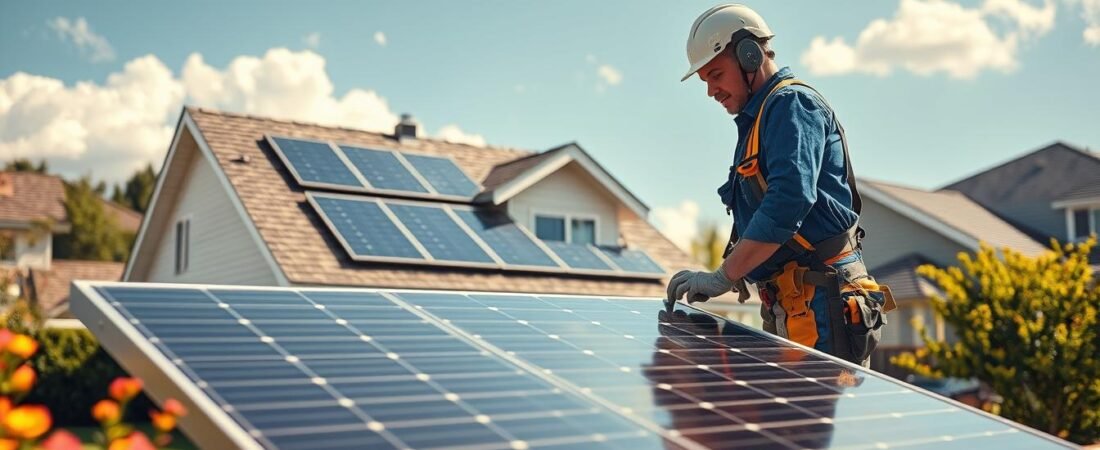
Thinking about adding clean power to your home? This guide walks you through the core ideas so you can make smart choices. It covers the process, key steps, and what to expect for costs and maintenance.
Since 2008, the U.S. Department of Energy has backed growth in solar energy, helping more people access lower-cost options. Lakisha Harris, who moved into a solar-equipped house in Accokeek, Maryland, shows how panels can change daily life and cut electricity bills.
This short guide explains how a solar system works, how installers evaluate your roof and property, and which permits and incentives to ask about. You will learn simple steps to compare companies and equipment.
By the end you’ll understand the main factors that affect savings and efficiency. Use this as a friendly starting point to plan a thoughtful, cost-aware project for your home.
Understanding the Benefits of Solar Energy
Using the sun for home power delivers both environmental gains and long-term financial benefits. The U.S. Department of Energy’s Solar Energy Technologies Office has helped lower costs since 2008, making cleaner options more reachable for many homeowners.
Key advantages include more control over your electricity and reduced dependence on the grid. Generating your own clean electricity can bring steady savings and protect your budget from rising utility rates.
Efficiency gains also matter. Modern systems turn sunlight into usable energy more reliably than older models. That efficiency often raises a property’s resale value and lowers household emissions.
- Lower monthly bills and predictable costs
- Federal and local incentives that reduce upfront expense
- Smaller carbon footprint and improved home value
| Benefit | What it Means | Typical Impact |
|---|---|---|
| Cost savings | Generate your own electricity | Lower monthly bills over years |
| Incentives | Tax credits and rebates | Reduced upfront cost |
| Efficiency | Modern systems use sunlight better | Higher output, more savings |
| Home value | Market appeal for buyers | Potentially higher resale price |
Assessing Your Property for Solar Potential
Before you commit, check how your lot and roof stack up for long-term sun exposure and structural support. A clear site review helps you weigh the main factors that affect energy output and costs.
Roof Suitability
A professional installer will inspect your roof to confirm it can carry the weight of panels and has the right orientation. Homeowners should verify roof condition first, because future maintenance is harder once an array is mounted.
Sunlight Exposure
Check shading from trees, chimneys, or nearby buildings. Shading factors can cut how much energy your systems produce and lower benefits over time.
“Proper sunlight exposure is one of the most critical benefits to consider, as it directly dictates how much power your solar energy system will generate.”
- Work with qualified installers to map sun paths and estimate output.
- Confirm local incentives and permitting requirements early.
Small site changes—trimmed trees or strategic placement—can improve results and help homeowners maximize incentives.
Determining Your Energy Needs and System Size
Start by measuring how much electricity your household uses each month to match system output to real-world demand.
Gather 12 months of utility bills and total the kilowatt-hours. That historical information reveals peak months and steady baselines.
Use a simple calculation to estimate size. A common 6 kW residential system can yield about $10,500 in lifetime savings versus a turn-key cost for many U.S. homes.
Our guide walks you through converting yearly kWh into required array capacity and how many modules you may need.
- Analyze past consumption to set realistic targets.
- Factor local incentives and expected efficiency losses.
- Compare options that meet your budget and power goals.
| Step | What to Check | Why it Matters |
|---|---|---|
| Review bills | 12 months of kWh | Shows true annual demand |
| Estimate size | Convert kWh to kW | Matches output to usage |
| Include incentives | Tax credits & rebates | Reduces net cost and payback |
“Accurate consumption data is the foundation of a system that delivers reliable savings and high efficiency.”
Navigating the Residential Solar Panel Install Process
A clear timeline helps homeowners know what to expect from project start to full power.
The overall process often spans two to six months. Much of that time goes to permits, inspections, and utility paperwork rather than the physical work.
Timeline Expectations
On the ground, a DIY solar panel job averages about two hours per panel. For example, a 16-panel system requires roughly 32 hours of labor.
Working with a reputable company shortens hassle. Professional installers handle permits and scheduling, which keeps the project moving and reduces delays.
“The installation itself can be quick, but administrative steps extend the total timeline.”
- Permits and inspections may take weeks to months.
- Roof work and wiring are usually completed in days.
- Essential tools and safety gear are required for every step on the roof.
| Phase | Typical Time | Why It Matters |
|---|---|---|
| Site survey & design | 1–3 weeks | Confirms system size and placement |
| Permits & approvals | 2–12 weeks | Controls project start and legal compliance |
| Physical installation | 1–7 days | Mounts equipment and connects wiring |
| Inspections & activation | 1–3 weeks | Ensures safety and grid interconnection |
Selecting the Right Equipment and Kits
Start by matching equipment features to your home’s energy goals and your comfort with hands-on work. Pick gear that fits the expected size of the system and the time you can commit.
Choosing Between DIY and Professional
DIY kits are like the IKEA of power technology: they come with step-by-step guides and customer support. For many homeowners, a kit lowers costs and offers clear instructions.
Note: If you lack electrical experience, hiring a licensed installer for final utility connections is the safer option.
“A DIY route can cut cost, but the right professional avoids safety and permitting problems.”
Essential Tools
Typical tools include a power drill, power saw, ladder, torque wrench, and safety gear. Ensure your kit also lists racking, inverter, and monitoring equipment.
- Decide if you will mount panels on the roof or use ground mounts.
- Confirm the kit includes racking, inverter, and a monitoring system.
- Plan for an electrician to handle grid connections if you go DIY.
| Option | Who it’s best for | Key benefit |
|---|---|---|
| DIY kit | Skilled homeowners with tools | Lower costs; hands-on control |
| Professional installer | Those preferring turnkey service | Faster permits and certified wiring |
| Hybrid (DIY + electrician) | DIY mounters needing safe connection | Balance of savings and compliance |
Managing Permits and Utility Requirements
Getting local approvals is a must before any equipment goes up. You must secure permits from the Authority Having Jurisdiction (AHJ), your HOA, and the local utility company.
The permit application should include a clear site plan, system design schematics, and an electrical wiring diagram. These documents let reviewers check safety and grid compatibility.
Your utility will review the wiring diagram to confirm the system can tie into the grid safely. HOA sign-off is required for many properties, so get that approval early.
- Securing AHJ permits ensures compliance with safety rules.
- Utility review verifies safe interconnection to local electricity lines.
- HOA approval prevents disputes over placement on your property.
The permitting process can take several weeks. Provide accurate schematics and full information to avoid delays.
“Working with a professional company often simplifies permitting, since they usually submit designs and handle reviews for you.”
Executing the Physical Installation
A safe, stepwise build keeps the project on schedule. Start each day with a plan, tools checked, and clear roles for anyone on the roof or ground.
Racking System Setup
Racking system setup
Mark rafters before you drill. Flashings must be bolted through the roof into rafters to stop leaks and give a solid anchor for the rails.
For ground mounts, dig holes at least 18 inches deep and pour concrete footings. This anchors the structure against wind and movement.
Inverter placement
Mount string inverters on a wall near the array to keep cable runs short and cost-effective.
Microinverters attach under each module, so plan access for inspection and service.
Wiring and battery integration
Use grounding mid clamps so the entire array bonds to a single earth point.
Route cables through a junction box and a PV disconnect before tying into the main breaker. If you add a battery, confirm the floor or pad will bear the weight and that connections are grounded.
“Clear anchors, short cable runs, and solid grounding make the system safe and reliable.”
- Start: mark rafters and bolt flashings.
- Mount: set rails, secure modules, and bond the array.
- Connect: route cables to junction box, PV disconnect, then breaker.
- Store: place batteries on a rated surface and test grounding.
| Task | Key Action | Why It Matters |
|---|---|---|
| Racking | Bolt flashings to rafters | Prevents leaks; secures rails |
| Inverter | Mount near array or on modules | Shorter wiring; easier service |
| Wiring | Use junction box & PV disconnect | Safe shutdown and clear routing |
| Battery | Prepare pad and ground connections | Supports weight; prevents faults |
For a practical walkthrough of the full installation steps, refer to the detailed installation steps.
Completing Inspections and Interconnection
The last step is a formal review that clears your system to operate. A local building inspector visits your property to confirm the panels, wiring, and equipment meet code.
After the inspector signs off, submit that record to your utility to finish the interconnection process. Most utilities then issue Permission to Operate (PTO) before you can turn on the system.
Common outcomes:
- Utilities often fit a new meter to track energy production and net metering.
- If issues are found, the installer must make repairs and request a re-inspection.
- About 90% of projects do not need an onsite utility inspection; the utility accepts the building department’s report.
“Provide accurate plans and clear information to your installer and the city to avoid delays in PTO.”
| Step | Who acts | Why it matters |
|---|---|---|
| Local inspection | Building inspector | Verifies safety and permits compliance |
| Submit record | Homeowner or company | Starts utility interconnection |
| Meter upgrade | Utility | Accurate tracking of electricity produced |
| PTO granted | Utility | System can be energized and produce power |
Maintaining Your Solar System for Efficiency
A few simple checks each season can prevent drops in output and extend equipment life. Regular care is easy because most panels have no moving parts, so major repairs are rare.
Cleaning and Inspection Tips
Clean twice a year to remove dust, pollen, and bird droppings. Light soap and water or a soft brush usually do the job and restore peak efficiency.
Inspect the array and wiring for loose clamps, corrosion, or debris that could block sunlight. Leaves, branches, or built-up grime can lower energy and power output noticeably.
Use your monitoring system every month. Alerts will flag drops in production so you can address faults before they affect savings.
- Check the inverter and monitoring readouts for error codes.
- Confirm battery charge levels and clean any corroded connections.
- Trim nearby foliage that casts shade and lowers system size effectiveness.
“Keeping panels clean and checking equipment regularly protects your investment and keeps electricity production steady.”
If you spot damage, contact a certified service provider for repairs. Routine upkeep keeps performance high and helps your installation deliver reliable returns for years.
Conclusion
Finish strong: verify permits, test output, and set a simple upkeep plan to protect your investment.
This guide shows the key steps of the process and the choices you face. While the installation can take several months, the long-term benefits often include decades of lower electricity bills and steady savings.
Choose a reputable installer or company to help with permits, grid interconnection, and final testing. Good installers shorten time and reduce unexpected costs.
Keep panels clean and monitor the system regularly. With routine care and attention to incentives and design, your home can enjoy reliable power and meaningful financial benefits for years to come.