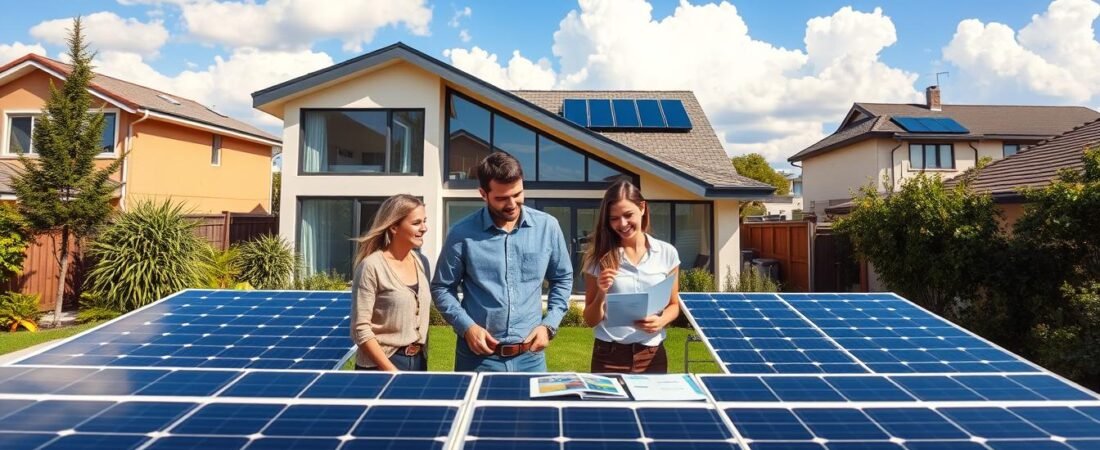
Ready to move toward cleaner power for your home? This guide walks you through residential solar panel installations in clear, simple steps. It helps you weigh costs, incentives, and the long-term benefits of switching to rooftop generation.
As part of the U.S. Department of Energy’s Summer of Solar, homeowners like Lakisha Harris in Accokeek, Maryland, share how a switch to solar energy changed their homes. Their stories show practical wins and common hurdles.
Inside, you’ll find a straightforward checklist: assessment, quotes, financing, site visit, and installation prep. We break technical terms into bite-sized advice so you can make confident decisions and estimate potential savings.
For tools and marketplace comparisons, visit EnergySage to get quotes and learn more about incentives in your state.
Understanding the Benefits of Solar Energy
Rising electricity costs make generating your own energy an increasingly smart choice.
Locking in lower long-term costs is one of the biggest draws. In places like Atlanta, utility prices rose about 18% since 2020. That climb shows how a home energy system can act as a hedge against future hikes.
By producing electricity on-site you reduce reliance on the grid and protect your household budget from inflation. Typical Atlanta customers may see roughly $45,000 in savings over 25 years when switching to a rooftop system.
Environmental and community benefits often add motivation for homeowners. Generating clean power cuts carbon emissions and supports local programs that expand renewable access.
| Benefit | What it Means | Typical Impact |
|---|---|---|
| Cost Stability | Lock fixed energy costs | Lower bills vs. rising utility rates |
| Long-Term Savings | Reduced electricity purchases | ~$45,000 over 25 years (Atlanta example) |
| Environmental Gain | Lower household carbon output | Supports local clean energy goals |
Local utility factors matter: fuel mix, grid health, and state incentives affect cost-effectiveness. Check tax credits and programs in your area before choosing a purchase or lease option.
Assessing Your Home for Solar Potential
Start by checking how your roof and yard shape the amount of sun your home receives.
Roof Condition
Inspect roof age, material, and any missing shingles. Replacing an old roof after an installation adds avoidable extra cost.
Tip: If your roof is older than 10–15 years, plan replacement first. A durable roof supports a long‑lasting energy system and protects your investment.
Shading and Sunlight Exposure
Atlanta averages 5.1 peak sun hours per day and over 213 sunny days a year, which helps system performance.
Nearby trees or neighbor shade can cut yearly electricity output. Use online mapping tools for a rough estimate, but schedule a professional site assessment to size a system correctly.
| Factor | Why It Matters | Action |
|---|---|---|
| Roof age & condition | Affects mounting and warranty | Repair or replace before installation |
| Sun hours (Atlanta) | Boosts annual generation | Use 5.1 peak hours as planning baseline |
| Shade | Reduces output and savings | Trim trees or adjust layout |
| Local rules | HOA or state limits can affect options | Check programs, incentives, and rights early |
Next step: Combine these checks with your electricity bills and a pro site visit to estimate costs, credits, and long‑term savings.
Evaluating Your Energy Usage and Efficiency
A clear first step is to pull the last 12 months of electricity bills and review consumption patterns.
Use those statements to calculate annual kilowatt‑hour totals. That number guides system size and helps estimate long‑term savings.
Cut demand before sizing: simple upgrades—LEDs, smart thermostats, and efficient appliances—lower how much energy your home needs.
If you plan to buy an electric vehicle or build an addition, factor in extra load. Future needs may require a larger system and higher upfront costs.
A home energy audit finds leaks, heat loss, and inefficient equipment so you can optimize performance before installation.
“Knowing your peak usage hours helps you choose a configuration that boosts savings and grid independence.”
- Review 12 months of bills for accurate sizing.
- Implement efficiency measures to reduce required system capacity.
- Plan for future electricity needs like EV charging.
- Use an audit to fix losses and maximize savings.
Exploring Residential Solar Panel Installations
Deciding where to mount your system starts with space, sun access, and local rules. Those three factors shape cost, permitting, and long-term performance for your home.
Rooftop mounts often make the most efficient use of space. If your roof is strong and faces the sun, a rooftop option can cut roof footprint and avoid extra land use.
Choosing Between Rooftop and Ground Mount
Ground-mounted systems are a solid choice when roofs are shaded, small, or structurally limited. They give installers room to optimize tilt and orientation.
- Space & orientation: pick the option that gets the most direct sun.
- Zoning & permits: local rules can limit ground arrays in some areas.
- Performance: a well-placed 10 kW system can offset about 10 tons of CO2 per year and power multiple homes or EV chargers.
Tip: Regardless of mount type, ask installers to model production for your site so the system installed matches expected electricity needs and savings.
“Optimizing tilt and orientation is the single easiest way to boost daily generation.”
Comparing Financing Options for Your System
Choosing how to pay for a home energy system can shape your long‑term savings and ownership perks.
Understand the trade-offs: some choices lower upfront costs, while others boost lifetime value and qualify for incentives.
Cash Purchases
Buying outright gives homeowners the biggest upside. You own the system and can claim the federal 30% investment tax credit for systems placed between 2022 and 2032.
Pros: higher savings over time and increased home value.
Cons: large initial cost compared to other financing options.
Solar Leases
Leases let you go solar with little or no down payment. You pay a fixed monthly fee to the lessor for use of the equipment.
Note: leased systems do not qualify for the federal tax credit because you do not own the panels.
Power Purchase Agreements (PPAs)
With a PPA you pay for the electricity the system produces at a set rate per kilowatt‑hour. That rate is often lower than your local utility price.
Good for: customers seeking immediate bill relief and minimal risk. Limit: no eligibility for the tax credit and limited ownership benefits.
| Option | Upfront Cost | Tax Credit Eligible | Monthly Payments |
|---|---|---|---|
| Cash Purchase | High | Yes (30% investment tax credit) | None |
| Lease | Low/None | No | Fixed monthly |
| PPA | Low/None | No | Variable or fixed per kWh |
“Match your financing choice to how long you plan to stay in the home and your appetite for upfront investment.”
Navigating Community Solar Programs
If your roof can’t host a system, a community option still lets you support local renewable energy. Community solar programs let neighbors pool purchasing power to buy into a shared system that fits different budgets.
Good for renters and shaded homes: these programs provide access to solar energy without mounting panels on your property. Georgia Power’s Community Solar program lets customers subscribe to blocks and receive renewable energy credit on their monthly electric bill.
Participation is low barrier. You avoid upfront installation, maintenance, and many permitting issues. That makes it a practical option for customers who want the savings and environmental benefits without managing a private installation.
- Subscribe to blocks based on size and budget.
- Receive credits that offset electricity charges each month.
- Keep flexibility—some programs allow transfers if you move within the state.
“Community solar is an easy way to join clean energy, even when your home isn’t a fit for rooftop options.”
Understanding Net Metering and Grid Interconnection
How your utility credits exported electricity can change the payback timeline for a home energy system.
Net metering lets homeowners receive credits when a system sends extra electricity to the grid. Those credits often reduce bills and improve long‑term savings.
In many areas, utilities use an export credit or net billing model instead of full retail net metering. For example, Georgia Power credited excess power at about 8.5¢/kWh in 2024. That lower rate changes the value of surplus generation.
How Export Credits Work
Know what your utility pays before you size a system.
- Net metering: excess energy offsets consumption at close to retail rates.
- Export credit: surplus is compensated at a separate, often lower, rate.
- Grid interconnection: your installer must complete paperwork and tests so the utility can safely accept exported power.
When your home needs more electricity than the panels produce, you draw from the grid as usual. That keeps supply seamless while you earn credits for exports.
“Understanding how your specific utility handles export credits is vital for calculating the true return on investment.”
Selecting a Qualified Solar Installer
Picking the right installer makes the difference between smooth service and costly delays.
Always make sure your contractor holds a valid license and is certified by the North American Board of Certified Energy Practitioners (NABCEP). That credential is the industry standard and signals proper training.
Obtain at least three bids for your solar installations. Compare hardware, labor, warranty terms, and total cost across quotes.
Ask each company for references from customers in your area. Speak with those homeowners about permitting, interconnection, and timeliness.
- Verify licenses and NABCEP certification.
- Get three written bids and compare warranties.
- Request local references and check permit experience.
- Confirm the installer handles all paperwork with the utility and building department.
- Check state electrical board records for liens or judgments.
“A qualified installer will protect your warranty, finish permits, and help maximize your energy savings.”
| What to Check | Why It Matters | Expected Outcome |
|---|---|---|
| License & NABCEP | Shows competency and safety training | Fewer installation errors, valid warranties |
| Multiple bids | Compare costs and equipment | Better value and clearer long-term savings |
| Local references | Proof of permit and interconnection experience | Smoother paperwork and fewer delays |
Managing the Installation Process
A smooth installation depends as much on permits and inspections as on the equipment itself. Your contractor should manage complex permitting and paperwork so the system meets local codes and incentive rules.
Permitting and Paperwork
Make sure all applications, electrical plans, and tax credit forms are filed before work begins. An experienced team handles permit timelines, HOA approvals, and utility interconnection requests on your behalf.
Final Inspection
After the hardware is mounted, a final inspection confirms the system meets safety and electrical codes. Once passed, your utility will issue permission to operate and you can start exporting electricity.
Tip: Palmetto has completed 2,471 installations in Georgia with over an 85% approval rating among their customers. That experience often speeds permits and reduces costly delays.
“Keep in mind that system size and local net metering rules will affect monthly savings and overall cost recovery.”
- Confirm your installer files permit and interconnection paperwork.
- Track final inspection and permission to operate with the utility.
- Ask how system size and export credits change expected electricity bill savings.
Maintaining Your Solar Energy System
A simple maintenance plan preserves performance and maximizes savings. Most systems need little upkeep, but small tasks keep output steady and costs low.
Keep panels clean. Remove leaves, bird droppings, and dirt to avoid shaded spots that reduce electricity production.
Monitor output through the installer’s online portal. Spotting dips early helps you fix issues before they affect monthly savings.
Many installers offer operations and maintenance plans. Some leases include a 90% Production Guarantee, which protects homeowners if the system underperforms.
Remember inverters may need replacement after 10–15 years. Check warranty and warranty transfer terms so future costs are clear.
“Regular checks and timely repairs protect your power production and long-term return.”
- Clean panels seasonally or after storms.
- Use the portal to track electricity and alert installers to drops.
- If you lease, the owner usually handles repairs and maintenance.
Conclusion
Putting the pieces together—from financing to net metering—lets you move forward with confidence.
This guide shows practical steps to cut electricity costs and increase long‑term savings for your home. Use federal tax credit incentives and local programs to lower upfront cost and improve payback.
Whether you buy or choose a lease option, pick the path that fits your budget and future plans. Community solar and other flexible programs keep the clean power transition open to all customers, even if your roof or size limits private panels.
Contact qualified installers for a personalized quote. A clear plan, the right financing options, and trusted pros turn interest into lasting energy independence.