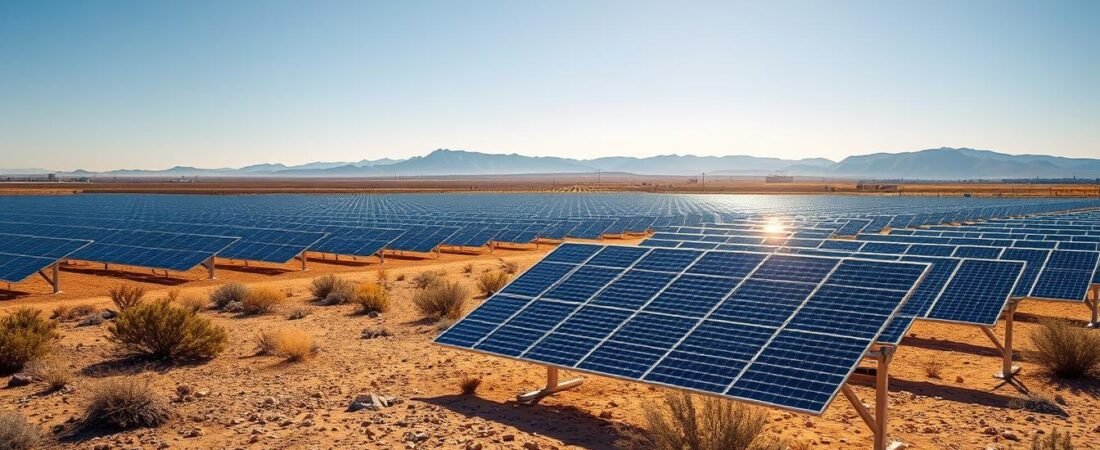
Thinking about adding a clean energy system to your home? Residents across New Mexico are locking in predictable energy and lowering monthly bills. With about 310 sunny days each year, this region offers an excellent climate for reliable power generation.
As of April 2026 the average installation runs about $2.77 per watt. That price makes a roof-mounted system a competitive long-term investment for many homeowners. Choosing the right size and equipment affects both performance and savings over the years.
Our buyer’s guide helps you compare quotes, weigh incentives, and find trusted installers. Start by collecting multiple offers and review warranties, labels, and company reputations. If you want help, compare local installers to find the best match for your home and budget.
Key takeaways: strong sunlight, average $2.77/W, research installers and incentives for long-term savings.
Understanding the Solar Panel Cost in New Mexico
Knowing the typical per-watt rate gives you a quick way to forecast your project budget. As of April 2026 the average rate is $2.77 per watt, which helps homeowners scale expected spending before incentives.
For a common 9.52 kW installation the average price before credits is $26,421. Actual prices vary. Typical ranges run from about $22,458 to $30,384 depending on equipment, labor, and roof work.
- What the price includes: modules, inverters, racking, labor, permits, and interconnection.
- Why prices differ: home energy needs, roof orientation, and installer rates.
- Long-term view: a 25–30 year system can offset rising electricity bills and produce steady power.
Tip: Compare multiple quotes and weigh warranties and company reputation, not just the headline price. That approach helps you find the best long-term investment for your home and utility savings.
How System Size Impacts Your Total Investment
System capacity has a direct effect on what you pay and how much energy you produce each year.
Average Costs by Kilowatt
A typical 5 kW system in New Mexico runs about $13,874. Doubling capacity to roughly 10 kW will usually double the overall price, though unit rates fall for larger installs.
Price breaks for larger installs
Buying more panels at once often unlocks bulk discounts. That lowers the per watt figure and improves the long-term return on your investment.
“Larger systems tend to reduce the price per unit, making bigger arrays more cost-effective over their 25–30 year lifespan.”
| System Size (kW) | Typical Price | Per Watt |
|---|---|---|
| 5 | $13,874 | $2.77 |
| 10 | $27,748 | $2.50 (bulk) |
| 15 | $40,000 | $2.30 (bulk) |
Tip: Work with local companies to size a system that matches usage and future goals. Calculating the per watt rate makes quote comparisons simple and fair for homeowners.
Key Factors That Influence Your Solar Quote
Your project total often comes down to a few key fees and the gear selected for the job. Small differences in wiring, roof work, or equipment can change the final number more than you expect.
Permitting and Interconnection Fees
Permits and utility paperwork matter. Professional installers usually file building and electrical permits for you. That saves time and helps keep the job compliant with local rules.
Utility companies may charge between $25 and $500 for interconnection agreements. Confirm whether a quote includes this fee or lists it separately.
- Labor rates and warranty terms affect what companies charge.
- Larger system size increases total spend but can lower the price per watt.
- Ask installers to show a line-item breakdown so you can compare quotes fairly.
Tip: Choose reputable installers who explain fees clearly. That transparency helps you avoid surprises and pick the best value for your home.
Federal and State Incentives to Lower Your Costs
A mix of national and state credits often cuts thousands off a homeowner’s installation bill. These incentives change the effective price and improve payback time for residential systems.
Federal Solar Tax Credit
The federal investment tax credit (ITC) covers 30% of your total system cost. That credit applies to the full installed price and reduces the tax you owe for the year you place the system into service.
State Tax Credits and Exemptions
New Mexico offers a state market development tax credit equal to 10% of system costs, capped at $6,000 for qualifying installations.
The state also provides a Gross Receipts Tax Exemption on eligible equipment, which removes sales tax and lowers upfront spending.
Net Metering Policies
Net metering lets utilities credit homeowners for surplus electricity sent back to the grid. Many providers, such as PNM Resources, allow monthly rollovers of credits to offset future bills.
- Combine credits (federal + state) to maximize short-term savings.
- Track changes: incentives and program rules can shift over years.
- Consult a tax professional to confirm eligibility and claim every available tax credit for your panels and system.
“Stacking the ITC with state credits and a sales tax exemption can cut thousands from your net price.”
Exploring Financing Options for Your Home
Many homeowners find that flexible funding makes adopting clean home power far more achievable.
Payment routes vary: you can pay with cash, take a loan, lease the system, or sign a power purchase agreement (PPA).
Cash purchases deliver the largest lifetime savings, but loans let you avoid a big upfront check. Compare interest rates and loan terms so monthly payments stay below your current electric bill.
- SOL Fund: Homewise offers this program to help low-income households access rooftop systems.
- PACE programs: Property-Assessed Clean Energy can lower upfront loan burdens for qualifying homeowners.
- Leases / PPAs: No money down often means immediate bill relief, though long-term benefits are smaller.
“Shop rates and choose reputable companies; clear terms protect your long-term savings.”
Tip: Learn local pricing by checking the average local panel prices and then match financing to your budget and energy goals.
Evaluating Solar Equipment and Panel Efficiency
Choosing the right equipment shapes how much power your rooftop system will actually produce. Start by weighing efficiency, roof space, and long-term guarantees. These choices affect performance over the system’s 25–30 years.
Comparing Monocrystalline and Polycrystalline Options
Monocrystalline modules are the most common choice for residential installs. They deliver higher efficiency and better output per square foot. That makes them ideal if roof space is limited.
Polycrystalline units cost less up front but provide lower efficiency. They are rarely chosen for modern home installations because buyers want the best output over many years.
- Consider inverter type — microinverters or string inverters change performance and maintenance needs.
- Compare warranties and expected degradation to protect your long-term investment.
- With about 310 sunny days per year, you can balance panel efficiency and total system size to meet your energy goals.
| Feature | Monocrystalline | Polycrystalline |
|---|---|---|
| Efficiency | High (best for limited roof) | Lower (larger area needed) |
| Typical lifespan | 25–30 years | 20–25 years |
| Upfront price | Higher | Lower |
Tip: Match equipment to your roof and goals. Compare brands, warranties, and installation guarantees to find the best value and long-term performance for your project.
Selecting the Right Installer for Your Project
A trusted installer can simplify permits, warranties, and post‑install support. Local firms like NM Solar Group often offer a personal touch and carry brands such as Solaria, Tesla, and Panasonic.
National providers, for example SunPower, install proprietary Maxeon panels and may charge more. That tradeoff can make sense if you want a bundled product and nationwide service.
Ask every candidate these questions:
- How many installations have you done in New Mexico and nearby areas?
- Do you handle permits and utility interconnection paperwork?
- What brands do you install and what are the warranty terms?
Request at least three written quotes so you can compare labor, equipment, and long-term guarantees. Look for screened, verified companies with strong reviews.
“A good installer will be transparent about total costs and will help you understand long-term system benefits.”
Choosing a reputable company ensures the installation is done right and that your home gets reliable energy for years.
Long-Term Savings and Energy Independence
Installing a rooftop system turns your home into a predictable source of electricity and long-term value. Homeowners across New Mexico typically see strong financial returns from this kind of investment.
The average household saves about $22,900 over 25 years. That figure factors in the initial price, incentives, and avoided utility bills.
With an average payback period of 14.36 years, the system will likely pay for itself and then supply low‑cost electricity for many remaining years.
- Predictable bills: Lock in a portion of your energy charges and reduce exposure to rate hikes.
- Energy independence: Your roof can act as a small power plant and cut reliance on the grid.
- Flexible payment: Whether you pay with cash or use a loan, long‑term savings tend to outweigh upfront money spent.
“Treat the installation as a long-term asset: it raises home value and delivers steady savings over time.”
Tip: When comparing options, focus on system size, warranties, and verified savings estimates. That will give you a clear picture of expected payback and lifetime value.
Conclusion
Making the switch to rooftop power can lock in steady savings and greater home resilience.
Take advantage of the 30% federal tax credit along with local incentives to reduce upfront price and accelerate payback. Compare multiple written quotes from reputable installers and ask for a clear line-item breakdown.
Prioritize warranty coverage and verified equipment performance. A well-sized system matched to your household needs delivers reliable energy for many years and protects against rising utility bills.
Start your journey today by exploring incentives, checking company reviews, and choosing quality over the lowest headline cost.