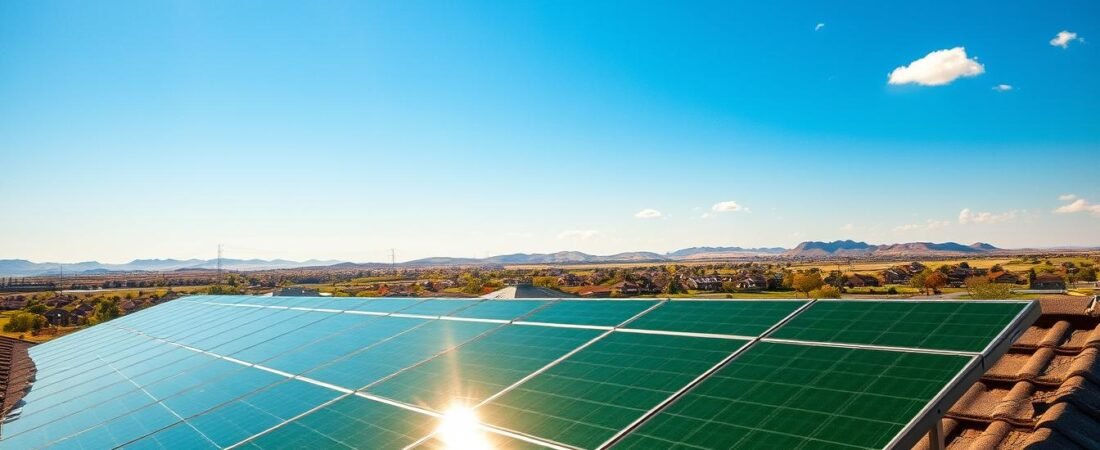
Thinking about a home energy upgrade? Illinois now ranks 12th for residential installations, so many local homeowners are joining this movement. Electricity prices in the state rose 22% between 2020 and 2024, making a private system more appealing for families who want predictable payments.
This short guide gives you the essential data to evaluate the right system for your roof and budget. We explain the average price of equipment, how the federal tax credit and incentives work, and why a trusted installation company matters.
Key points include warranty coverage, proper roof assessment, and realistic savings estimates over 20–25 years. Whether you seek an estimate or read customer reviews, this overview helps you decide if the investment fits your home and goals.
Start here: learn the basics, compare systems, and plan for steady power and lower bills in the years ahead.
Understanding the Solar Panel Cost Peoria Homeowners Face
Knowing typical local prices and average system sizes makes it easier to plan a smart energy upgrade.
The average price for a standard 6.4‑kilowatt system in this city is about $16,798 before any federal tax credit. That figure gives homeowners a useful starting point when they compare quotes.
How much panels and a full installation end up costing depends mostly on your household energy use and roof size. Local installation companies review your usage, roof orientation, and shading to size the right system.
- The typical 6.4‑kW system meets many local homes’ needs.
- Upfront investment is often offset by long‑term savings across 20–25 years.
- State incentives and the federal credit can shorten payback periods.
Tip: Check multiple company reviews and request a site visit. Real data from installers helps you avoid buying a system larger than you need and ensures better long‑term value.
Why Electricity Rates Are Driving Solar Adoption
Rising utility bills are nudging many local households to rethink how they buy power. Higher grid prices make predictable monthly payments and long-term protection more appealing.
Rising Utility Rates
Illinois electricity rates climbed nearly 20% since 2021. That jump has many homeowners exploring alternatives to limit future expenses.
The trend is clear: locking in an energy source today can prevent surprise increases later. A typical home that installs a rooftop system can save about $62,000 over 25 years, assuming steady usage and current incentives.
Energy Independence
Energy independence means reducing reliance on the grid and stabilizing household budgets. A well-sized system provides steady power and cuts monthly bills when rates spike.
Installing panels also lets homeowners make the most of available tax credit opportunities and long-term savings. For many, this is both a financial and practical move to protect their household from volatile energy markets.
- Rates up ~20% since 2021—many seek stable alternatives.
- Typical savings: roughly $62,000 across 25 years for a standard rooftop installation.
- A properly sized system helps lock in predictable energy bills.
Breaking Down the Average Investment for Solar Systems
A clear breakdown of prices, loans, and incentives shows how much a full home system will actually cost over time.
In Illinois a 10 kW system typically lists around $29,253 before incentives. That number is your starting point when you compare quotes from different companies.
Consider the upfront cost, but also factor in financing. A solar loan lowers initial outlay and spreads payments over years, though interest rates change the total investment.
- Compare multiple quotes to see how installation and equipment affect the price.
- Use the federal tax credit and local incentives to reduce net price.
- Think long term: many homeowners recover the investment through energy savings over 25 years.
Tip: Ask each company for a size-based breakdown so you can match system power to your home’s needs and budget.
Navigating Illinois Solar Incentives and Rebates
Understanding available incentives helps homeowners lower net project expenses and improve long‑term returns. State and utility programs can cut your upfront fees and shorten payback time.
Property Tax Exemptions
Illinois offers a 100% property tax exemption for the added value from an installed energy system. That means your home tax bill won’t rise just because you added a system.
To claim this benefit, file form PTAX-330 with your county assessor. Working with an approved vendor can simplify the paperwork and keep you compliant.
Utility Rebates
Many utilities provide direct rebates that lower project pricing. For example, Ameren Illinois pays $300 per kW installed, which can shave thousands off a typical system.
Stacking this rebate with the federal tax credit and state programs improves the net return and speeds up savings for your home.
Virtual Power Plant Programs
Some programs pay homeowners for managed output from battery systems. By enrolling, you can earn additional performance payments for energy sent to the grid.
Tip: Check program rules and vendor requirements so your system qualifies and you capture all available incentives.
- Illinois Solar for All offers no‑upfront options to income‑eligible households.
- Combine rebates, the federal credit, and exemptions to reduce net project costs.
- Work with an approved installer to ensure your system meets program rules.
Comparing Cash Purchases Versus Solar Leases
Deciding whether to buy or lease a home power system shapes your long-term savings and responsibilities.
Cash purchase means you own the system. You pay an upfront cost or take a loan, claim the federal tax credit, and capture most long-term savings. Ownership also usually raises home value.
Lease or PPA options—like Palmetto’s LightReach—remove the large upfront cost. A company owns the panels and handles maintenance. You get lower monthly payments but the company claims the tax credit.
Choosing between them depends on your goals. If you want maximum savings and the tax credit, ownership is best. If you prefer predictable bills and no responsibility for repairs, leasing works well.
| Feature | Cash / Loan | Lease / PPA |
|---|---|---|
| Upfront cost | High or financed | Low or none |
| Ownership | Yes | No |
| Federal tax credit | Homeowner claims credit | Company claims credit |
| Maintenance | Owner responsible | Company handles repairs |
| Long-term savings | Higher potential | Moderate, predictable |
How System Size Impacts Your Total Price
Bigger systems raise the initial investment but often lower the per‑watt price and improve lifetime savings.
Calculating Price Per Watt
The most reliable way to compare quotes is to check the price per watt. In Illinois the average is about $2.93 per watt. That figure helps you see whether an installer offers a competitive deal.
- Compare price per watt to match apples with apples across offers.
- A 10 kW system generally produces more energy and could cost more upfront than a 5 kW array, but its panels cost per watt often falls.
- Larger systems tend to lower the effective price and improve return on investment over years.
- Ask for a clear breakdown in your estimate showing size, equipment, installation, tax incentives, and loan terms.
- Verify the system size in contracts and check reviews and production data to confirm expected savings.
Maximizing Savings Through Net Billing Policies
The shift to net billing on January 1, 2025, changes how homeowners recover value from extra daytime production.
Under the new rule, new systems receive credits at the utility’s supply-only rate for exported electricity. That makes unused generation worth less on the monthly bill.
How to respond: Pairing your panels with a battery lets you store midday surplus for evening use. This lowers the energy you buy from the grid when rates rise.
Homeowners who activated a system before 2025 keep the older full-retail net metering benefits. New buyers should stack federal tax credit benefits and local solar incentives to offset storage and installation costs.
- Understand supply-rate credit details from your utility.
- Consider a battery to shorten your payback period.
- Use rebates and the federal tax credit to lower upfront spending.
| Policy | Who it Affects | Practical Tip |
|---|---|---|
| Supply-only net billing (2025+) | New installations | Install battery or shift usage to daytime |
| Full retail net metering | Systems before 2025 | Continue exporting — high credit value |
| Incentives & tax credit | All qualifying homeowners | Apply credits to batteries and system upgrades |
Evaluating Your Roof and Energy Production Potential
Assessing your roof and local sun exposure is the first step to a productive home system. A brief inspection shows whether the roof angle, orientation, and shade will help or hinder overall output.
Seasonal Production Variations
Peoria receives about 4.7 peak sun hours per day on average. That level supports meaningful daily generation for a typical rooftop system.
Expect higher production in summer, which often matches peak cooling demand and lowers monthly utility bills. Winter output falls but still contributes to household energy needs.
Environmental Benefits
A 10 kW installation can offset roughly 10 tons of CO₂ each year. This reduction cuts reliance on fossil fuels and lowers your home’s footprint over decades.
Professional roof assessments place panels where they capture the most light and stay productive. Regular maintenance keeps the system efficient and ensures you reap both savings and environmental gains.
| Factor | What to Check | Why It Matters |
|---|---|---|
| Roof angle & orientation | Tilt, south-facing area | Maximizes yearly production |
| Shade | Nearby trees or chimneys | Reduces output during peak hours |
| Structural condition | Roof age and integrity | Avoids extra installation delays or costs |
Selecting the Right Solar Installer for Your Home
A careful installer selection can protect your investment and simplify incentive paperwork.
Choose a company that offers a 25-year warranty — this is the gold standard for protecting a rooftop system. A long warranty means the installer stands behind equipment and labor for decades.
When you request an estimate, compare total price and the quality of the panels and inverters. Read customer reviews to confirm the company’s reputation and look for local jobs with similar sizes and roofs.
- Verify a 25-year warranty and written workmanship terms.
- Ask how the installer helps you claim tax and other incentives.
- Compare multiple quotes using a marketplace like EnergySage to see true value.
- Confirm installers are certified for Illinois grid interconnection and battery installs.
- Request expected payback, system production data, and financing or loan options to lower upfront cost.
Final tip: Prioritize experience and service over the lowest price. A reputable company that explains incentives, warranty coverage, and expected payments will protect your home and long-term savings when going solar.
Conclusion
A well-planned system can lock in steady energy bills and deliver measurable savings over decades.
Use federal credit and local incentives to lower upfront price and improve your payback period. Whether you pay cash or choose a loan, thoughtful sizing and a trusted installer turn the investment into long-term monthly savings.
Our guide gives you the facts you need to compare panels, evaluate installation offers, and estimate likely savings. For a personalized quote, request a Peoria solar estimate today and see how much you can save on energy over the next 25 years.