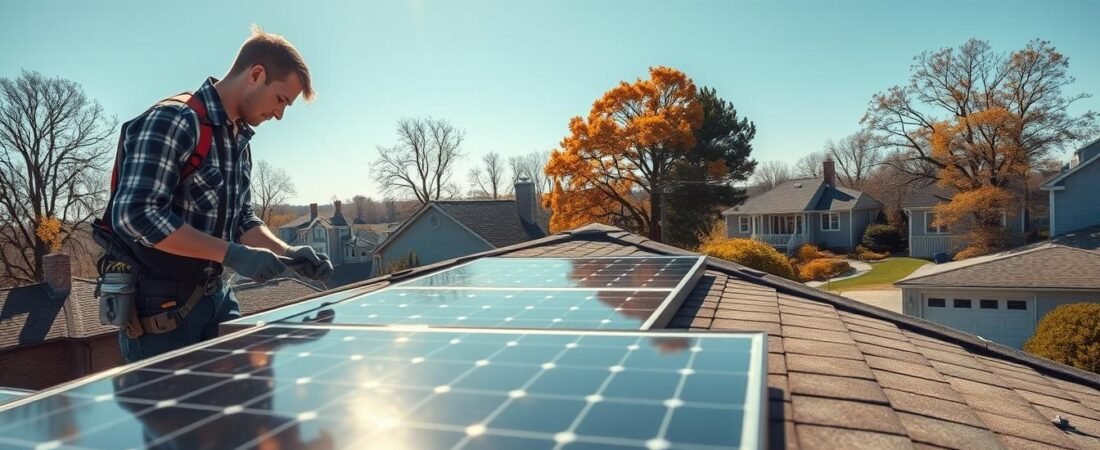
Understanding the price and value of a roof-mounted energy system helps homeowners make smart choices. As of April 2026, the average system price in Massachusetts is about $3.08/W including installation. This guide gives clear facts you can use to compare quotes and weigh options.
Your home’s energy needs shape the final investment. Many homeowners are going solar to lock in predictable electricity bills and to protect against rising rates. Learn how incentives, loan versus cash choices, and reputable companies affect the long-term payoff.
Use our actionable tips and the linked services page to request multiple quotes and find installers who match your goals. For professional help, see solar services and quotes.
Understanding the Solar Landscape in Massachusetts
With retail electricity near 21.27¢ per kWh, many homeowners in the state are evaluating how rooftop generation can lower monthly bills. Cold winter days can actually improve the efficiency of modern solar panels, so seasonal output remains strong.
Your roof orientation and pitch shape how much a system will produce across the year. South-facing roofs with proper tilt get the best results, but many homes still see meaningful gains from partial or shaded arrays.
- Winter performance: Lower temperatures can boost module efficiency.
- High rates matter: With higher electricity rates, payback periods shorten.
- Battery backup: Adding a battery stores excess power and offers outage protection.
- Policy support: State incentives and favorable tax treatment enhance long-term savings.
In short, combining quality panels with the right roof setup and a storage option makes investing in clean energy a pragmatic choice for homeowners in massachusetts solar markets.
Current Solar Panel Installation Cost Massachusetts Estimates
Recent average prices give a clear starting point when shopping for a residential system. Knowing typical rates helps you compare quotes and spot outliers.
Average Market Pricing
Median figures: a 10.92 kW system typically runs about $33,594 before incentives. Prices commonly range from $28,555 to $38,633.
Per-watt benchmark: the market average is roughly $3.08 per watt as of April 2026. That rate reflects improved module efficiency and lower equipment prices over recent years.
Impact of Electricity Rates
High local electricity prices shorten payback periods for rooftop systems. When power rates are steep, homeowners recover their upfront outlay faster through monthly bill savings.
Requesting multiple quotes from reputable companies will reveal realistic pricing for quality work. Also analyze your monthly energy bill to size a system that fits your needs and maximizes long-term savings.
| Metric | Typical Value | Range |
|---|---|---|
| System size | 10.92 kW | — |
| Average price | $33,594 (before incentives) | $28,555 – $38,633 |
| Average per watt | $3.08/W | — |
| Key driver | Electricity rates and equipment | Varies by state and roof |
How System Size Influences Your Total Investment
System size shapes unit pricing, roof use, and the amount of electricity you can generate. A larger array often lowers the per-watt price because fixed fees are spread across more modules.
As a concrete example, a 5 kW setup typically runs about $15,387, while a 10 kW version is roughly $30,773. That near-doubling in capacity usually brings better value per watt.
- Value: Bigger systems cut unit costs by spreading permit and design fees.
- Limits: Roof size and shading cap how many panels you can place.
- Future needs: Plan for EV chargers or added loads to avoid early upsizing.
- Custom fit: Every panel system should match how your home uses energy to maximize returns.
Remember: sizing balances upfront spend with multi-year savings and incentives. Work with a trusted installer to model production, tax benefits, and payback in years so you pick the right system for your roof and household needs.
Key Variables Affecting Your Final Quote
Your home’s physical setup and the parts selected drive most of the variance in contractor bids. Understanding these drivers helps you compare offers and spot unnecessary markups.
Roof Condition and Complexity
The state of your roof is a primary factor in any estimate. Older roofs often need repairs before mounting panels, and complex shapes or many dormers add labor time.
Tip: Replace or reinforce worn shingles first to avoid extra charges later.
Equipment Quality
Higher-grade modules, advanced inverters, and a battery raise upfront spend. In return, you often get better efficiency, longer warranties, and fewer maintenance needs over the system’s life.
Electrical Panel Upgrades
Many older homes require an electrical upgrade to handle the power your new solar panel system will produce. That work ensures safety and code compliance and can appear as a separate line item on quotes.
Choose a reputable company to confirm wiring, permits, and inspections are included so your final price reflects a complete, safe installation.
Maximizing Savings Through Federal and State Incentives
Tax incentives and billing credits make the financial case for clean energy much stronger today. The federal Residential Clean Energy Credit lets homeowners claim 30% of a qualifying system’s eligible costs as a dollar-for-dollar tax credit. That credit applies whether you pay cash or use a loan, but it expires on December 31, 2025.
Massachusetts adds further help. The state offers a sales tax exemption and property tax breaks that protect your home value and save money over time. Net metering also lets you earn credits on your electricity bill when panels produce excess power.
- Federal credit: 30% of eligible system expenses.
- State perks: Sales tax and property tax exemptions reduce upfront and ongoing costs.
- Net metering: Turn excess generation into bill credits.
Combine federal and state incentives to lower out-of-pocket costs and shorten payback. Act now to capture the full tax benefit before the December 31, 2025 deadline and consider battery incentives if you plan to add storage.
Evaluating the Long Term Financial Returns
Long-term returns from rooftop generation often outpace initial spending. In Massachusetts, homeowners typically see a payback in about 7.33 years, after which monthly savings turn into net profit for the remainder of a 25-year life span.
Property Value and Marketability
Adding solar panels can lift a home’s resale value. Studies show properties with panels sell for roughly 4.1% more than similar homes without them.
Over 25 years, the average homeowner in the state saves about $155,788 on electricity after accounting for the initial outlay. That makes the system both a financial and environmental investment.
- Typical payback: 7.33 years, then pure savings for the remaining years.
- Homes with panels often fetch a higher sale price, improving marketability.
- The setup acts as a hedge against rising utility rates and benefits from tax and other incentives.
Bottom line: consider long-term savings, increased property value, and local incentives when weighing the true return on your energy system.
Essential Steps for a Successful Installation
A clear timeline keeps you in control. Most projects move from contract to permission to operate in about 2 to 4 months. Expect a steady, predictable flow of tasks.
Begin with a professional site assessment. An expert inspects your roof, shading, and wiring to map the best placement for your panels.
- Request and compare multiple quotes to weigh total system price, warranties, and company reputation.
- Let your chosen company handle permitting; this step avoids permit delays and compliance problems.
- After the crew fits the panels and wiring, the utility performs a final inspection before activation.
Tip: Ask installers about timeline milestones and what could add time or money. Good communication reduces surprises and keeps your household routine steady.
| Phase | Typical Duration | Key Action |
|---|---|---|
| Site assessment | 1–2 weeks | Roof check, layout, quote |
| Permitting & procurement | 2–6 weeks | Paperwork and equipment orders |
| Physical work & inspection | 1–2 weeks | Mounting, wiring, utility inspection |
| Activation | Days | Permission to operate; start saving on bills |
Comparing Your Financing and Ownership Options
Your choice of payment shapes both monthly flow and long-term returns. Decide whether upfront ownership or a financed route fits your goals. Each option affects how much you save, when you start saving, and which incentives you can claim.
Cash Purchase Benefits
Buying with cash gives the highest lifetime savings. You own the solar panel system outright and avoid interest charges.
Owning outright also means you qualify for all federal and state incentives and the full tax benefits. That boosts the overall return on your investment.
Solar Loan Considerations
Loans let many homeowners go forward with little or no down payment. Monthly payments can be lower than your existing electricity bill, so you may see immediate relief.
Compare interest rates carefully. Higher interest raises the total cost of the panel system over time. Still, a loan can be the right option when cash is limited.
- Cash: maximum long-term savings, full tax and incentive eligibility.
- Loan: $0-down options, start saving on bills today, watch interest impacts.
Selecting the Right Local Solar Installer
Picking a local installer makes the process smoother and gives you one reliable contact from quote to activation.
Choose local companies like Future Energy Solar in Woburn or Great Sky Solar in Lexington when you want hands-on service and quick responses for your home.
Local firms understand permitting rules and municipal paperwork. That knowledge helps avoid delays and keeps timelines tight.
- Verify the company is licensed and insured to protect your property during work.
- Read reviews to check workmanship and aftercare service in your neighborhood.
- Ask for a clear, written price quote and a design plan that matches your roof and usage.
| Factor | Why it Matters | What to Ask |
|---|---|---|
| Licensing & insurance | Protects you from liability and ensures code compliance | Request copies of licenses and insurance certificates |
| Local experience | Speeds permitting and adapts to common roof types | Ask for nearby project references |
| Transparent quote | Prevents surprise charges and clarifies scope | Get itemized pricing and timeline |
| Customer support | Ensures fast service for warranty or repairs | Confirm contact person and post-job support |
Conclusion
,
Making an informed purchase now can lock in lower electricity bills for decades. Taking advantage of federal and state incentives trims upfront expense and shortens payback time.
Investing in a solar panel system boosts home value and steadies energy costs whether you pay with cash or use a loan. Compare local quotes and verify warranties to find the best fit for your roof and needs.
Start by reviewing the detailed guide on the cost of solar panels in Massachusetts. Your choice saves money and helps build a cleaner energy future for your community.