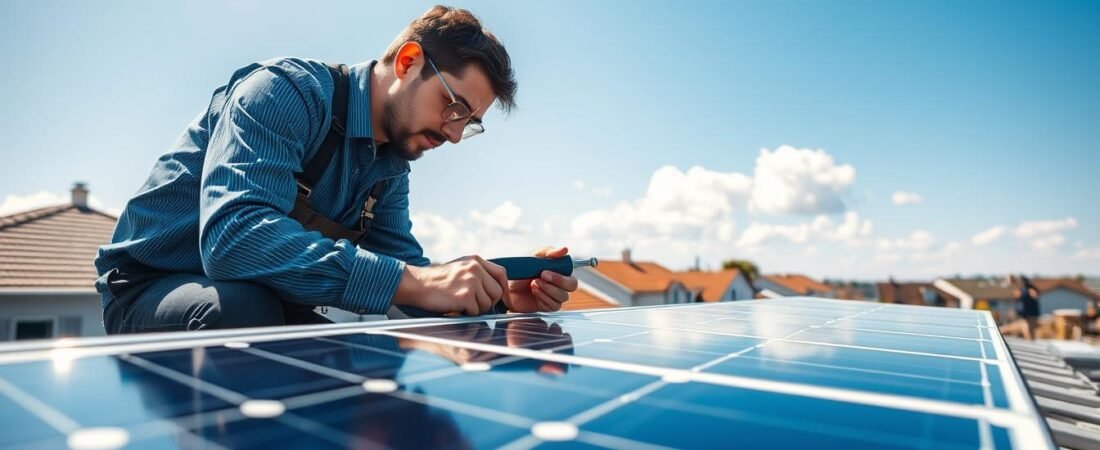
Start here if you own a rooftop energy system or plan to buy one. This buyer’s guide explains how solar panel repair and replacement works in the U.S., what commonly fails, and how to pick the most cost‑effective path.
Many “module” problems are actually system issues. Inverter faults, wiring, monitoring glitches, or roof attachments often mimic a failing panel. Knowing the difference helps you avoid costly swaps.
We outline a simple decision flow: safety first, check performance drops, confirm if the issue can be fixed, then weigh repair versus full replacement by price, downtime, and warranty cover.
Quality gear is built to last decades, but real damage happens. Weather, pests, wear, or accidents cause most failures. This guide gives common fix types, on‑site clues, cost benchmarks, and who typically pays—manufacturer, installer, homeowner, insurer, or lease provider.
Gather model numbers, install date, warranty docs, and inverter type before contacting a local pro. Most fixes are manageable and some can be diagnosed remotely by your installer.
When solar panels need help: what “normal” looks like over 25+ years
Understanding how these systems age helps you spot real faults early. Over two to three decades, gradual output decline is expected. Small yearly drops in output and minor efficiency loss are normal wear.
The National Renewable Energy Laboratory reports an intrinsic module failure rate near 0.05%. That means true module failures are rare. Most homeowner downtime comes from inverters, wiring, or monitoring gear, not the modules themselves.
Reliability varies by component. Panels are built to last, while inverters and communications equipment fail earlier. Weather, thermal cycling, rooftop conditions, and poor installation raise the risk of late-life problems.
What to notice:
- Monitoring alerts or missing data
- Unexpected bill increases or reduced credits
- Partial-array underproduction or steady drops in output
Before you call for service, remember: safety and proper shutdown come first. The next section explains how to power down safely for any inspection.
Safety-first steps before any inspection, repair, or service call
Prioritize safety: assume the system is energized until you confirm otherwise. Treat rooftop equipment as live electrical hardware, especially after storms or visible damage.
How shutdown usually works near the inverter
Most systems have AC and DC disconnect switches located beside the inverter. These switches let a technician isolate the array from household power without touching wiring inside the unit.
Do not attempt brand-specific wiring work. High voltage exists on the DC side and can cause severe shocks or start a fire if handled incorrectly.
When to stop and call for professional help
Call for help immediately if you see cracked modules, exposed conductors, burnt smells, water intrusion, or breakers that won’t reset. Physical damage or loose connections raise arc-fault risk.
- Take photos from a safe distance and note error codes.
- Record recent changes like storms, tree work, or Wi‑Fi resets.
- Expect a technician to isolate circuits, test voltage/current, inspect roof penetrations, and confirm inverter status.
Once the site is safe, you can assess whether on-site fixes or a more extensive repair is the better next step.
Solar panel repair and replacement: how to decide which option makes sense
A clear buyer checklist saves time and money: confirm the type of damage, measure how much output is lost, then compare the cost and downtime of a fix versus a full replace.
Repairable vs non-repairable damage
Repairable issues include wiring faults, loose connectors, monitoring misconfigurations, and some microcrack mitigation that restores weather seal and function.
Non‑repairable or not worth fixing covers broken glass, severe delamination, and moisture intrusion that threaten long‑term reliability.
Performance and efficiency clues
If the whole array drops suddenly, suspect the inverter or system wiring. If one module underperforms, look at that module or its microinverter.
Track efficiency over weeks. Small gradual declines often need monitoring tweaks. Sharp losses point to physical damage.
When replacement becomes the better buy
As module prices fall, full replacement can be smarter for older systems near end of warranty or when matching parts are unavailable.
Ask for apples‑to‑apples quotes: include parts, labor, roof work, and expected downtime for both a targeted fix and a full swap. Compare lifetime value, not just the sticker price.
| Decision Step | Repair | Replace | When to choose |
|---|---|---|---|
| Damage type | Wiring, connectors, minor microcracks | Broken glass, delamination, water inside | Match to visible fault |
| Output impact | Single-module loss or small drop | Large or progressive array loss | Compare measured performance |
| Cost vs value | Lower short-term cost, less downtime | Higher upfront, better long-term value | Use quoted total cost and warranty terms |
Common solar panel repairs and what each one typically involves
A quick symptom-to-cause checklist speeds diagnosis and gets systems back to full output sooner.
Monitoring, software, and communication
Symptoms: missing data, new alerts after a router change, or wrong performance settings.
Often the fix is remote: a hub reset, re-entered Wi‑Fi credentials, or corrected system parameters. This is the fastest category for support.
Inverter hardware
Symptoms: a full-site outage or frequent fault codes.
String inverter faults can take an entire array offline. Microinverter failures usually cut output at one location. Techs test voltage, heat stress, and error logs to decide if module-level swaps or unit replacement is needed.
Roof penetrations and leaks
Symptoms: roof stains, damp attic spots, or loose mounts.
Pros inspect flashing, sealant, and mounts. Leaks are uncommon with good installation; when present, workmanship warranties often apply.
Wiring and connections
Symptoms: arcing alarms, discoloration at junctions, or chewed insulation.
Loose lugs or damaged wiring raise fire risk and require immediate onsite work. Technicians tighten connections, replace damaged runs, and test for arc faults.
Broken modules
Symptoms: visible cracks, shattered glass, or water intrusion after storms.
Impacts from hail, limbs, or wind-driven debris reduce output and may cause electrical hazards. Physical damage usually needs an on-site visit and a parts quote.
Next steps: start with remote troubleshooting for software cases, then schedule a field visit for wiring, roof, or physical damage. Have model numbers, error codes, recent photos, and notes ready to speed service or get an accurate quote via panel repairs.
Diagnosing panel damage on-site: debris, pests, microcracks, and physical impacts
Start on the roof with a quick visual sweep—many faults begin as simple buildup or small critter activity.
What to look for first
Simple checklist for on-site triage:
- Visible debris: dust, pollen, sap, leaves, bird droppings.
- Hotspots or dark spots when running a thermal scan.
- Pest signs: nests, droppings, scratch marks, chewed wiring insulation.
- Hairline cracks, delamination, or moisture stains at edges.
- Storm damage: dents, broken glass, or displaced mounts.
Debris buildup and hotspots
Dust, pollen, sap, and droppings block light and create uneven heating. That creates hotspots that cut output over time.
Cleaning frequency depends on location. Areas with trees, heavy pollen, or wildfire smoke need more frequent cleaning and maintenance.
Pest damage and wiring risks
Pests often nest under modules, scratch glass, corrode frames, or chew wiring. Look for insulation nicks, frayed conductors, and droppings.
Simple prevention methods include mesh guards or wire channels to block access and reduce long-term damage.
Microcracks: cause, spread, and real fixes
Thermal cycling (expansion and contraction) and mechanical stress from wind or roof movement create microcracks. Cracks can spread with time, especially if moisture enters.
Fix options: surface mitigation can restore waterproofing and slow spread, but it rarely heals cell-level cracks fully.
Mitigation methods compared
| Method | What it involves | Pros | Cons |
|---|---|---|---|
| Laminating film | Transparent film, heat-gun + squeegee application | Maintains light transmission; quick | Depends on technique; may not seal deep cracks |
| Polyurethane / waterproof resin | Coating that fills surface cracks and seals edges | Better moisture barrier, durable | May slightly reduce light; needs careful cure |
| Full module swap | Replace damaged unit on roof | Restores original output and warranty where applicable | Higher cost and more downtime |
Severe weather and impact risks
Hail size, heavy snow load, wind uplift, and lightning surges raise the chance of physical damage.
After storms, prioritize safety and system shutdown before inspection. Surge protectors can reduce surge exposure to inverters and wiring.
Practical bridge to cost: once you sort issues into cleaning, pest/wiring, or module-level damage, estimating the fix becomes far more predictable.
Solar panel repair costs in the United States: what you’ll pay and what drives pricing
Start with the show-up fee. Most service calls run $200–$300 just to get a technician on site. Expect diagnostic labor around $150 per hour after that.
Typical price ranges and why they vary
On-site fixes usually land between $400–$1,000. Simple jobs can be as low as $120; complex work or urgent service can reach $3,000.
Component benchmarks to sanity-check quotes
| Item | Typical cost | Notes |
|---|---|---|
| Inverter | $1,000–$2,500 | Major driver of system downtime |
| Panel swap | $250–$650 per panel | Depends on model and access |
| Diodes / connectors | $100–$400 | Small parts, can save full replacement cost |
| Mounting / roof work | $250–$750 | Steep roofs raise time and cost |
Maintenance and cleaning typically run $8–$25 per panel. Annual bills often total $500–$700 for medium systems when pro service is used.
“Ask for quotes that list show-up cost, diagnostic labor, parts, and final commissioning so you can compare offers directly.”
- Watch cost multipliers: roof access, system size, parts lead time, and urgency.
- Ask for an ROI comparison: expected energy regained, time out of service, and long-term equipment value.
Warranties, insurance, and who pays for repairs or replacement
Who pays depends less on the visible damage and more on the fine print in your contracts. Start by identifying whether the issue is an equipment failure, workmanship error, storm loss, or accidental homeowner damage.
Manufacturer vs installer coverage
Manufacturer warranties usually cover product defects and loss of output for a set term. They often include parts but may not include on-site labor.
Installer workmanship or installation warranties cover how the system was mounted and sealed. These may include labor for fixing install faults, but terms vary. Always ask: “Is labor included?”
Premium warranties and third‑party insurance
Paid upgrades or third‑party policies can bundle parts, travel, and labor. That reduces out-of-pocket costs when service is needed.
Compare bundled plans by checking labor caps, response time, and transferability if you sell the home.
Homeowners insurance and typical applicability
Homeowners policies may cover sudden perils like hail, fire, falling branches, or wind. Flood and gradual wear are usually excluded.
File photos, monitoring logs, and invoices to speed claims. Confirm deductible and whether policy limits cover full replacement cost.
Leases and PPAs
When the provider owns the equipment, they normally handle fixes and service. You still must report damage promptly and avoid actions that void the contract.
If homeowner actions caused the damage, expect some costs to be charged back.
Quick action checklist
- Gather: warranty certificates, install invoice, and any service emails.
- Capture: clear photos, monitoring screenshots, and error codes.
- Ask: “Does this cover parts, labor, travel, and commissioning?”
- Contact: installer, manufacturer support, insurer, or lease provider as applicable.
| Who | Typical coverage | Watch for |
|---|---|---|
| Manufacturer | Parts, output guarantees | Labor often excluded |
| Installer | Workmanship, roof penetrations | Time limits and service windows |
| Homeowner insurer / third‑party | Storm or catastrophic damage; bundled labor | Deductibles and excluded perils |
“Always confirm labor and travel are included before accepting a quote.”
Conclusion
Keep good records and act fast. Clear monitoring logs, date‑stamped photos, and a simple checklist cut diagnosis time. Use those first when you report a fault.
Start with communication checks, then test the inverter and overall system before assuming the panel is the problem. Remember the main fix categories: software/monitoring, inverter hardware, roof leaks, wiring faults, and physical damage to modules.
Today: locate AC/DC disconnects, save your installer’s contact, note model numbers, and keep warranty and insurance files handy. If safety risks appear, call a qualified technician — pros finish work faster and safer.
A well‑maintained array keeps producing clean solar energy for your home, protecting long‑term savings and peace of mind.
FAQ
How reliable are panels over 25 years, and what does a ~0.05% failure rate mean?
What common causes create real-world problems despite good reliability?
What safety steps should I take before an inspection or service call?
How do I shut down my system using AC and DC disconnects?
When does damage create shock or fire risk, and why avoid DIY electrical work?
How do I decide between repairing a module and replacing it entirely?
What performance signs indicate repair versus full replacement?
Are panel prices low enough that replacement is often the better buy?
What are typical monitoring, software, and communication fixes?
What do inverter hardware issues usually mean for system uptime?
How are roof leaks related to installation, and how are they fixed?
What wiring issues should I watch for and how serious are they?
How do I handle broken modules from hail, branches, or storms?
How does debris build-up cause hotspots and output loss?
What damage can pests cause and how is it fixed?
What are microcracks, why do they spread, and can they be mitigated quickly?
How does severe weather like snow, hail, or wind affect modules?
What typical one-time repair cost ranges should I expect in the U.S.?
FAQ
How reliable are panels over 25 years, and what does a ~0.05% failure rate mean?
The ~0.05% figure refers to rare catastrophic failures. Most systems lose small amounts of output yearly but continue working. Expect gradual efficiency decline from normal aging, often covered by a manufacturer performance warranty that guarantees a percentage of nameplate output at 10–25 years.
What common causes create real-world problems despite good reliability?
Weather, poor installation, aging components like inverters or racking, and accidental impacts (hail, branches) are frequent culprits. Improper wiring, poor roof flashing, and pest activity also produce faults that reduce output or create safety risks.
What safety steps should I take before an inspection or service call?
Turn off the AC disconnect and the DC disconnect if present, and shut down the inverter following manufacturer instructions. Wear proper PPE and avoid touching live wiring. If you suspect electrical damage, roof instability, or severe weather effects, call a licensed technician rather than attempting fixes yourself.
How do I shut down my system using AC and DC disconnects?
Locate the inverter and the AC disconnect near your service panel; flip the AC disconnect off. For DC, open the labeled DC switch or breaker between the array and inverter. Confirm the inverter display shows shutdown. If unsure, consult the inverter manual from brands like SolarEdge, Enphase, or SMA, or call your installer.
When does damage create shock or fire risk, and why avoid DIY electrical work?
Exposed wires, arcing, water ingress, or damaged junction boxes can cause fires or electrocution. Working on high-voltage DC circuits requires training and insulated tools. Licensed electricians and certified installers follow codes and carry insurance; DIY attempts can void warranties and create hazards.
How do I decide between repairing a module and replacing it entirely?
Repair is sensible for localized wiring faults, junction box replacement, or small cell damage (like certain microcracks) when restored performance is likely. Replace modules with shattered glass, severe delamination, or widespread cell damage. Compare remaining lifespan, warranty coverage, and per-panel costs when deciding.
What performance signs indicate repair versus full replacement?
Persistent string-level energy loss, hot spots, or uneven output across modules suggests module-level damage. If unhealthy modules can be isolated and restored economically, repair may work. If degradation causes consistent large-percent losses, replacement often gives better long-term value.
Are panel prices low enough that replacement is often the better buy?
Module prices have fallen, making replacement attractive for older, heavily damaged, or out-of-warranty units. Factor in labor, disposal, and matching aesthetic or electrical characteristics. For many homeowners, replacing several failing units yields faster performance recovery than repeated repairs.
What are typical monitoring, software, and communication fixes?
Common fixes include reconnecting Wi‑Fi or Ethernet, updating firmware, resetting the gateway or hub, and correcting inverter or module IDs. Sometimes a simple hub reboot or network credential update restores telemetry without hardware work.
What do inverter hardware issues usually mean for system uptime?
Inverter faults can stop production entirely until repaired. Issues range from firmware glitches to failed power electronics. Some manufacturers allow remote diagnostics; others require replacement. Inverter warranties often cover parts but not labor, so expect service call costs.
How are roof leaks related to installation, and how are they fixed?
Improper flashing, loose lag bolts, or worn seals around penetrations cause leaks. Technicians inspect roof penetrations, reseal flashing, or retrofit flashing kits. Qualified roofers often coordinate with installers to prevent further water damage while keeping the racking secure.
What wiring issues should I watch for and how serious are they?
Loose connections, corroded terminals, arc-fault trips, and chewed cables are common. These can cause intermittent loss, reduced generation, or fire risk. A certified electrician should diagnose, tighten, replace connectors, and test for proper grounding and polarity.
How do I handle broken modules from hail, branches, or storms?
Photograph damage, isolate the affected string if possible, and contact your installer and insurer. Small chips may be serviceable with sealants; shattered glass usually requires full module replacement. Keep debris clear to prevent further impacts.
How does debris build-up cause hotspots and output loss?
Dirt, pollen, sap, and bird droppings shade cells unevenly, creating hot spots that reduce efficiency and accelerate aging. Regular cleaning or scheduled maintenance helps maintain output; simple rinses or professional wash services address stubborn deposits.
What damage can pests cause and how is it fixed?
Birds and rodents can nest under modules, scratch glass, corrode frames, and chew wiring. Fixes include installing mesh guards, perimeter flashing, cable protection, and replacing damaged conductors or connectors. Pest prevention extends system life and reduces service calls.
What are microcracks, why do they spread, and can they be mitigated quickly?
Microcracks arise from thermal cycling and mechanical stress. They reduce cell conductivity and expand over time. Temporary mitigation includes laminating films or polyurethane/waterproof resins to limit moisture ingress, but these are often stopgaps; replacement may be needed if performance keeps dropping.
How does severe weather like snow, hail, or wind affect modules?
Heavy snow loads cause extra weight and potential frame stress; large hail can pit or crack glass; high winds cause uplift and racking stress. Lightning strikes can induce surges damaging inverters and electronics. Proper mounting, certified hardware, and surge protection lower risks.
What typical one-time repair cost ranges should I expect in the U.S.?
Small fixes often run 0–
FAQ
How reliable are panels over 25 years, and what does a ~0.05% failure rate mean?
The ~0.05% figure refers to rare catastrophic failures. Most systems lose small amounts of output yearly but continue working. Expect gradual efficiency decline from normal aging, often covered by a manufacturer performance warranty that guarantees a percentage of nameplate output at 10–25 years.
What common causes create real-world problems despite good reliability?
Weather, poor installation, aging components like inverters or racking, and accidental impacts (hail, branches) are frequent culprits. Improper wiring, poor roof flashing, and pest activity also produce faults that reduce output or create safety risks.
What safety steps should I take before an inspection or service call?
Turn off the AC disconnect and the DC disconnect if present, and shut down the inverter following manufacturer instructions. Wear proper PPE and avoid touching live wiring. If you suspect electrical damage, roof instability, or severe weather effects, call a licensed technician rather than attempting fixes yourself.
How do I shut down my system using AC and DC disconnects?
Locate the inverter and the AC disconnect near your service panel; flip the AC disconnect off. For DC, open the labeled DC switch or breaker between the array and inverter. Confirm the inverter display shows shutdown. If unsure, consult the inverter manual from brands like SolarEdge, Enphase, or SMA, or call your installer.
When does damage create shock or fire risk, and why avoid DIY electrical work?
Exposed wires, arcing, water ingress, or damaged junction boxes can cause fires or electrocution. Working on high-voltage DC circuits requires training and insulated tools. Licensed electricians and certified installers follow codes and carry insurance; DIY attempts can void warranties and create hazards.
How do I decide between repairing a module and replacing it entirely?
Repair is sensible for localized wiring faults, junction box replacement, or small cell damage (like certain microcracks) when restored performance is likely. Replace modules with shattered glass, severe delamination, or widespread cell damage. Compare remaining lifespan, warranty coverage, and per-panel costs when deciding.
What performance signs indicate repair versus full replacement?
Persistent string-level energy loss, hot spots, or uneven output across modules suggests module-level damage. If unhealthy modules can be isolated and restored economically, repair may work. If degradation causes consistent large-percent losses, replacement often gives better long-term value.
Are panel prices low enough that replacement is often the better buy?
Module prices have fallen, making replacement attractive for older, heavily damaged, or out-of-warranty units. Factor in labor, disposal, and matching aesthetic or electrical characteristics. For many homeowners, replacing several failing units yields faster performance recovery than repeated repairs.
What are typical monitoring, software, and communication fixes?
Common fixes include reconnecting Wi‑Fi or Ethernet, updating firmware, resetting the gateway or hub, and correcting inverter or module IDs. Sometimes a simple hub reboot or network credential update restores telemetry without hardware work.
What do inverter hardware issues usually mean for system uptime?
Inverter faults can stop production entirely until repaired. Issues range from firmware glitches to failed power electronics. Some manufacturers allow remote diagnostics; others require replacement. Inverter warranties often cover parts but not labor, so expect service call costs.
How are roof leaks related to installation, and how are they fixed?
Improper flashing, loose lag bolts, or worn seals around penetrations cause leaks. Technicians inspect roof penetrations, reseal flashing, or retrofit flashing kits. Qualified roofers often coordinate with installers to prevent further water damage while keeping the racking secure.
What wiring issues should I watch for and how serious are they?
Loose connections, corroded terminals, arc-fault trips, and chewed cables are common. These can cause intermittent loss, reduced generation, or fire risk. A certified electrician should diagnose, tighten, replace connectors, and test for proper grounding and polarity.
How do I handle broken modules from hail, branches, or storms?
Photograph damage, isolate the affected string if possible, and contact your installer and insurer. Small chips may be serviceable with sealants; shattered glass usually requires full module replacement. Keep debris clear to prevent further impacts.
How does debris build-up cause hotspots and output loss?
Dirt, pollen, sap, and bird droppings shade cells unevenly, creating hot spots that reduce efficiency and accelerate aging. Regular cleaning or scheduled maintenance helps maintain output; simple rinses or professional wash services address stubborn deposits.
What damage can pests cause and how is it fixed?
Birds and rodents can nest under modules, scratch glass, corrode frames, and chew wiring. Fixes include installing mesh guards, perimeter flashing, cable protection, and replacing damaged conductors or connectors. Pest prevention extends system life and reduces service calls.
What are microcracks, why do they spread, and can they be mitigated quickly?
Microcracks arise from thermal cycling and mechanical stress. They reduce cell conductivity and expand over time. Temporary mitigation includes laminating films or polyurethane/waterproof resins to limit moisture ingress, but these are often stopgaps; replacement may be needed if performance keeps dropping.
How does severe weather like snow, hail, or wind affect modules?
Heavy snow loads cause extra weight and potential frame stress; large hail can pit or crack glass; high winds cause uplift and racking stress. Lightning strikes can induce surges damaging inverters and electronics. Proper mounting, certified hardware, and surge protection lower risks.
What typical one-time repair cost ranges should I expect in the U.S.?
Small fixes often run $400–$1,000. Simpler service calls may be $120, while complex jobs with replacement modules, reroof coordination, or hard-to-access systems can reach $3,000 or more. Exact pricing depends on parts, labor, and system complexity.
What are common service call and labor costs?
Truck rolls and diagnostics commonly cost $200–$300. Hourly labor for certified technicians averages around $150+/hour depending on region, licensure, and required specialty (electrical, roofing, or structural).
What are typical component price benchmarks for inverters and modules?
Residential string inverters typically range $1,000–$2,500. Individual module replacement often costs $250–$650 per module, depending on wattage and brand. Microinverters and optimizers add different cost profiles.
How much does maintenance and cleaning usually cost?
Basic cleaning runs about $8–$25 per module or a flat-figure annual service. Many homeowners spend a few hundred dollars yearly for inspection and cleaning, which helps avoid larger repairs later.
What cost factors can multiply the bill for repairs?
Hard roof access, tall or steep roofs, system size, rare parts, emergency service, and warranty limitations increase costs. Time-sensitive repairs or jobs requiring crane work also raise final invoices.
What’s the difference between manufacturer and installer workmanship warranties?
Manufacturer warranties typically cover product defects and long-term performance but often exclude labor. Installer workmanship warranties cover installation errors and some labor for a limited period. Always read terms and request copies when buying a system.
How can premium warranties or third‑party insurance change out-of-pocket costs?
Extended warranties and specialized solar insurance can cover labor, component replacement, and even lost production, reducing surprise expenses. They carry premiums, so compare coverage limits, deductibles, and exclusions.
When will homeowners insurance cover damage to my system?
Homeowners policies often cover storm, fire, and certain impact damages, subject to deductibles and policy limits. Document damage and contact your insurer quickly. For leased systems, coverage varies and may involve the lessor.
How do leases and PPAs affect repair responsibility?
With leases or power purchase agreements (PPAs), the system owner—often the installer or financier—typically handles repairs and maintenance. Homeowners should check contract terms for response times, warranty responsibilities, and any cost-sharing clauses.
,000. Simpler service calls may be 0, while complex jobs with replacement modules, reroof coordination, or hard-to-access systems can reach ,000 or more. Exact pricing depends on parts, labor, and system complexity.
What are common service call and labor costs?
Truck rolls and diagnostics commonly cost 0–0. Hourly labor for certified technicians averages around 0+/hour depending on region, licensure, and required specialty (electrical, roofing, or structural).
What are typical component price benchmarks for inverters and modules?
Residential string inverters typically range
FAQ
How reliable are panels over 25 years, and what does a ~0.05% failure rate mean?
The ~0.05% figure refers to rare catastrophic failures. Most systems lose small amounts of output yearly but continue working. Expect gradual efficiency decline from normal aging, often covered by a manufacturer performance warranty that guarantees a percentage of nameplate output at 10–25 years.
What common causes create real-world problems despite good reliability?
Weather, poor installation, aging components like inverters or racking, and accidental impacts (hail, branches) are frequent culprits. Improper wiring, poor roof flashing, and pest activity also produce faults that reduce output or create safety risks.
What safety steps should I take before an inspection or service call?
Turn off the AC disconnect and the DC disconnect if present, and shut down the inverter following manufacturer instructions. Wear proper PPE and avoid touching live wiring. If you suspect electrical damage, roof instability, or severe weather effects, call a licensed technician rather than attempting fixes yourself.
How do I shut down my system using AC and DC disconnects?
Locate the inverter and the AC disconnect near your service panel; flip the AC disconnect off. For DC, open the labeled DC switch or breaker between the array and inverter. Confirm the inverter display shows shutdown. If unsure, consult the inverter manual from brands like SolarEdge, Enphase, or SMA, or call your installer.
When does damage create shock or fire risk, and why avoid DIY electrical work?
Exposed wires, arcing, water ingress, or damaged junction boxes can cause fires or electrocution. Working on high-voltage DC circuits requires training and insulated tools. Licensed electricians and certified installers follow codes and carry insurance; DIY attempts can void warranties and create hazards.
How do I decide between repairing a module and replacing it entirely?
Repair is sensible for localized wiring faults, junction box replacement, or small cell damage (like certain microcracks) when restored performance is likely. Replace modules with shattered glass, severe delamination, or widespread cell damage. Compare remaining lifespan, warranty coverage, and per-panel costs when deciding.
What performance signs indicate repair versus full replacement?
Persistent string-level energy loss, hot spots, or uneven output across modules suggests module-level damage. If unhealthy modules can be isolated and restored economically, repair may work. If degradation causes consistent large-percent losses, replacement often gives better long-term value.
Are panel prices low enough that replacement is often the better buy?
Module prices have fallen, making replacement attractive for older, heavily damaged, or out-of-warranty units. Factor in labor, disposal, and matching aesthetic or electrical characteristics. For many homeowners, replacing several failing units yields faster performance recovery than repeated repairs.
What are typical monitoring, software, and communication fixes?
Common fixes include reconnecting Wi‑Fi or Ethernet, updating firmware, resetting the gateway or hub, and correcting inverter or module IDs. Sometimes a simple hub reboot or network credential update restores telemetry without hardware work.
What do inverter hardware issues usually mean for system uptime?
Inverter faults can stop production entirely until repaired. Issues range from firmware glitches to failed power electronics. Some manufacturers allow remote diagnostics; others require replacement. Inverter warranties often cover parts but not labor, so expect service call costs.
How are roof leaks related to installation, and how are they fixed?
Improper flashing, loose lag bolts, or worn seals around penetrations cause leaks. Technicians inspect roof penetrations, reseal flashing, or retrofit flashing kits. Qualified roofers often coordinate with installers to prevent further water damage while keeping the racking secure.
What wiring issues should I watch for and how serious are they?
Loose connections, corroded terminals, arc-fault trips, and chewed cables are common. These can cause intermittent loss, reduced generation, or fire risk. A certified electrician should diagnose, tighten, replace connectors, and test for proper grounding and polarity.
How do I handle broken modules from hail, branches, or storms?
Photograph damage, isolate the affected string if possible, and contact your installer and insurer. Small chips may be serviceable with sealants; shattered glass usually requires full module replacement. Keep debris clear to prevent further impacts.
How does debris build-up cause hotspots and output loss?
Dirt, pollen, sap, and bird droppings shade cells unevenly, creating hot spots that reduce efficiency and accelerate aging. Regular cleaning or scheduled maintenance helps maintain output; simple rinses or professional wash services address stubborn deposits.
What damage can pests cause and how is it fixed?
Birds and rodents can nest under modules, scratch glass, corrode frames, and chew wiring. Fixes include installing mesh guards, perimeter flashing, cable protection, and replacing damaged conductors or connectors. Pest prevention extends system life and reduces service calls.
What are microcracks, why do they spread, and can they be mitigated quickly?
Microcracks arise from thermal cycling and mechanical stress. They reduce cell conductivity and expand over time. Temporary mitigation includes laminating films or polyurethane/waterproof resins to limit moisture ingress, but these are often stopgaps; replacement may be needed if performance keeps dropping.
How does severe weather like snow, hail, or wind affect modules?
Heavy snow loads cause extra weight and potential frame stress; large hail can pit or crack glass; high winds cause uplift and racking stress. Lightning strikes can induce surges damaging inverters and electronics. Proper mounting, certified hardware, and surge protection lower risks.
What typical one-time repair cost ranges should I expect in the U.S.?
Small fixes often run $400–$1,000. Simpler service calls may be $120, while complex jobs with replacement modules, reroof coordination, or hard-to-access systems can reach $3,000 or more. Exact pricing depends on parts, labor, and system complexity.
What are common service call and labor costs?
Truck rolls and diagnostics commonly cost $200–$300. Hourly labor for certified technicians averages around $150+/hour depending on region, licensure, and required specialty (electrical, roofing, or structural).
What are typical component price benchmarks for inverters and modules?
Residential string inverters typically range $1,000–$2,500. Individual module replacement often costs $250–$650 per module, depending on wattage and brand. Microinverters and optimizers add different cost profiles.
How much does maintenance and cleaning usually cost?
Basic cleaning runs about $8–$25 per module or a flat-figure annual service. Many homeowners spend a few hundred dollars yearly for inspection and cleaning, which helps avoid larger repairs later.
What cost factors can multiply the bill for repairs?
Hard roof access, tall or steep roofs, system size, rare parts, emergency service, and warranty limitations increase costs. Time-sensitive repairs or jobs requiring crane work also raise final invoices.
What’s the difference between manufacturer and installer workmanship warranties?
Manufacturer warranties typically cover product defects and long-term performance but often exclude labor. Installer workmanship warranties cover installation errors and some labor for a limited period. Always read terms and request copies when buying a system.
How can premium warranties or third‑party insurance change out-of-pocket costs?
Extended warranties and specialized solar insurance can cover labor, component replacement, and even lost production, reducing surprise expenses. They carry premiums, so compare coverage limits, deductibles, and exclusions.
When will homeowners insurance cover damage to my system?
Homeowners policies often cover storm, fire, and certain impact damages, subject to deductibles and policy limits. Document damage and contact your insurer quickly. For leased systems, coverage varies and may involve the lessor.
How do leases and PPAs affect repair responsibility?
With leases or power purchase agreements (PPAs), the system owner—often the installer or financier—typically handles repairs and maintenance. Homeowners should check contract terms for response times, warranty responsibilities, and any cost-sharing clauses.
,000–,500. Individual module replacement often costs 0–0 per module, depending on wattage and brand. Microinverters and optimizers add different cost profiles.
How much does maintenance and cleaning usually cost?
Basic cleaning runs about – per module or a flat-figure annual service. Many homeowners spend a few hundred dollars yearly for inspection and cleaning, which helps avoid larger repairs later.
What cost factors can multiply the bill for repairs?
Hard roof access, tall or steep roofs, system size, rare parts, emergency service, and warranty limitations increase costs. Time-sensitive repairs or jobs requiring crane work also raise final invoices.
What’s the difference between manufacturer and installer workmanship warranties?
Manufacturer warranties typically cover product defects and long-term performance but often exclude labor. Installer workmanship warranties cover installation errors and some labor for a limited period. Always read terms and request copies when buying a system.
How can premium warranties or third‑party insurance change out-of-pocket costs?
Extended warranties and specialized solar insurance can cover labor, component replacement, and even lost production, reducing surprise expenses. They carry premiums, so compare coverage limits, deductibles, and exclusions.
When will homeowners insurance cover damage to my system?
Homeowners policies often cover storm, fire, and certain impact damages, subject to deductibles and policy limits. Document damage and contact your insurer quickly. For leased systems, coverage varies and may involve the lessor.
How do leases and PPAs affect repair responsibility?
With leases or power purchase agreements (PPAs), the system owner—often the installer or financier—typically handles repairs and maintenance. Homeowners should check contract terms for response times, warranty responsibilities, and any cost-sharing clauses.
FAQ
How reliable are panels over 25 years, and what does a ~0.05% failure rate mean?
The ~0.05% figure refers to rare catastrophic failures. Most systems lose small amounts of output yearly but continue working. Expect gradual efficiency decline from normal aging, often covered by a manufacturer performance warranty that guarantees a percentage of nameplate output at 10–25 years.
What common causes create real-world problems despite good reliability?
Weather, poor installation, aging components like inverters or racking, and accidental impacts (hail, branches) are frequent culprits. Improper wiring, poor roof flashing, and pest activity also produce faults that reduce output or create safety risks.
What safety steps should I take before an inspection or service call?
Turn off the AC disconnect and the DC disconnect if present, and shut down the inverter following manufacturer instructions. Wear proper PPE and avoid touching live wiring. If you suspect electrical damage, roof instability, or severe weather effects, call a licensed technician rather than attempting fixes yourself.
How do I shut down my system using AC and DC disconnects?
Locate the inverter and the AC disconnect near your service panel; flip the AC disconnect off. For DC, open the labeled DC switch or breaker between the array and inverter. Confirm the inverter display shows shutdown. If unsure, consult the inverter manual from brands like SolarEdge, Enphase, or SMA, or call your installer.
When does damage create shock or fire risk, and why avoid DIY electrical work?
Exposed wires, arcing, water ingress, or damaged junction boxes can cause fires or electrocution. Working on high-voltage DC circuits requires training and insulated tools. Licensed electricians and certified installers follow codes and carry insurance; DIY attempts can void warranties and create hazards.
How do I decide between repairing a module and replacing it entirely?
Repair is sensible for localized wiring faults, junction box replacement, or small cell damage (like certain microcracks) when restored performance is likely. Replace modules with shattered glass, severe delamination, or widespread cell damage. Compare remaining lifespan, warranty coverage, and per-panel costs when deciding.
What performance signs indicate repair versus full replacement?
Persistent string-level energy loss, hot spots, or uneven output across modules suggests module-level damage. If unhealthy modules can be isolated and restored economically, repair may work. If degradation causes consistent large-percent losses, replacement often gives better long-term value.
Are panel prices low enough that replacement is often the better buy?
Module prices have fallen, making replacement attractive for older, heavily damaged, or out-of-warranty units. Factor in labor, disposal, and matching aesthetic or electrical characteristics. For many homeowners, replacing several failing units yields faster performance recovery than repeated repairs.
What are typical monitoring, software, and communication fixes?
Common fixes include reconnecting Wi‑Fi or Ethernet, updating firmware, resetting the gateway or hub, and correcting inverter or module IDs. Sometimes a simple hub reboot or network credential update restores telemetry without hardware work.
What do inverter hardware issues usually mean for system uptime?
Inverter faults can stop production entirely until repaired. Issues range from firmware glitches to failed power electronics. Some manufacturers allow remote diagnostics; others require replacement. Inverter warranties often cover parts but not labor, so expect service call costs.
How are roof leaks related to installation, and how are they fixed?
Improper flashing, loose lag bolts, or worn seals around penetrations cause leaks. Technicians inspect roof penetrations, reseal flashing, or retrofit flashing kits. Qualified roofers often coordinate with installers to prevent further water damage while keeping the racking secure.
What wiring issues should I watch for and how serious are they?
Loose connections, corroded terminals, arc-fault trips, and chewed cables are common. These can cause intermittent loss, reduced generation, or fire risk. A certified electrician should diagnose, tighten, replace connectors, and test for proper grounding and polarity.
How do I handle broken modules from hail, branches, or storms?
Photograph damage, isolate the affected string if possible, and contact your installer and insurer. Small chips may be serviceable with sealants; shattered glass usually requires full module replacement. Keep debris clear to prevent further impacts.
How does debris build-up cause hotspots and output loss?
Dirt, pollen, sap, and bird droppings shade cells unevenly, creating hot spots that reduce efficiency and accelerate aging. Regular cleaning or scheduled maintenance helps maintain output; simple rinses or professional wash services address stubborn deposits.
What damage can pests cause and how is it fixed?
Birds and rodents can nest under modules, scratch glass, corrode frames, and chew wiring. Fixes include installing mesh guards, perimeter flashing, cable protection, and replacing damaged conductors or connectors. Pest prevention extends system life and reduces service calls.
What are microcracks, why do they spread, and can they be mitigated quickly?
Microcracks arise from thermal cycling and mechanical stress. They reduce cell conductivity and expand over time. Temporary mitigation includes laminating films or polyurethane/waterproof resins to limit moisture ingress, but these are often stopgaps; replacement may be needed if performance keeps dropping.
How does severe weather like snow, hail, or wind affect modules?
Heavy snow loads cause extra weight and potential frame stress; large hail can pit or crack glass; high winds cause uplift and racking stress. Lightning strikes can induce surges damaging inverters and electronics. Proper mounting, certified hardware, and surge protection lower risks.
What typical one-time repair cost ranges should I expect in the U.S.?
Small fixes often run 0–
FAQ
How reliable are panels over 25 years, and what does a ~0.05% failure rate mean?
The ~0.05% figure refers to rare catastrophic failures. Most systems lose small amounts of output yearly but continue working. Expect gradual efficiency decline from normal aging, often covered by a manufacturer performance warranty that guarantees a percentage of nameplate output at 10–25 years.
What common causes create real-world problems despite good reliability?
Weather, poor installation, aging components like inverters or racking, and accidental impacts (hail, branches) are frequent culprits. Improper wiring, poor roof flashing, and pest activity also produce faults that reduce output or create safety risks.
What safety steps should I take before an inspection or service call?
Turn off the AC disconnect and the DC disconnect if present, and shut down the inverter following manufacturer instructions. Wear proper PPE and avoid touching live wiring. If you suspect electrical damage, roof instability, or severe weather effects, call a licensed technician rather than attempting fixes yourself.
How do I shut down my system using AC and DC disconnects?
Locate the inverter and the AC disconnect near your service panel; flip the AC disconnect off. For DC, open the labeled DC switch or breaker between the array and inverter. Confirm the inverter display shows shutdown. If unsure, consult the inverter manual from brands like SolarEdge, Enphase, or SMA, or call your installer.
When does damage create shock or fire risk, and why avoid DIY electrical work?
Exposed wires, arcing, water ingress, or damaged junction boxes can cause fires or electrocution. Working on high-voltage DC circuits requires training and insulated tools. Licensed electricians and certified installers follow codes and carry insurance; DIY attempts can void warranties and create hazards.
How do I decide between repairing a module and replacing it entirely?
Repair is sensible for localized wiring faults, junction box replacement, or small cell damage (like certain microcracks) when restored performance is likely. Replace modules with shattered glass, severe delamination, or widespread cell damage. Compare remaining lifespan, warranty coverage, and per-panel costs when deciding.
What performance signs indicate repair versus full replacement?
Persistent string-level energy loss, hot spots, or uneven output across modules suggests module-level damage. If unhealthy modules can be isolated and restored economically, repair may work. If degradation causes consistent large-percent losses, replacement often gives better long-term value.
Are panel prices low enough that replacement is often the better buy?
Module prices have fallen, making replacement attractive for older, heavily damaged, or out-of-warranty units. Factor in labor, disposal, and matching aesthetic or electrical characteristics. For many homeowners, replacing several failing units yields faster performance recovery than repeated repairs.
What are typical monitoring, software, and communication fixes?
Common fixes include reconnecting Wi‑Fi or Ethernet, updating firmware, resetting the gateway or hub, and correcting inverter or module IDs. Sometimes a simple hub reboot or network credential update restores telemetry without hardware work.
What do inverter hardware issues usually mean for system uptime?
Inverter faults can stop production entirely until repaired. Issues range from firmware glitches to failed power electronics. Some manufacturers allow remote diagnostics; others require replacement. Inverter warranties often cover parts but not labor, so expect service call costs.
How are roof leaks related to installation, and how are they fixed?
Improper flashing, loose lag bolts, or worn seals around penetrations cause leaks. Technicians inspect roof penetrations, reseal flashing, or retrofit flashing kits. Qualified roofers often coordinate with installers to prevent further water damage while keeping the racking secure.
What wiring issues should I watch for and how serious are they?
Loose connections, corroded terminals, arc-fault trips, and chewed cables are common. These can cause intermittent loss, reduced generation, or fire risk. A certified electrician should diagnose, tighten, replace connectors, and test for proper grounding and polarity.
How do I handle broken modules from hail, branches, or storms?
Photograph damage, isolate the affected string if possible, and contact your installer and insurer. Small chips may be serviceable with sealants; shattered glass usually requires full module replacement. Keep debris clear to prevent further impacts.
How does debris build-up cause hotspots and output loss?
Dirt, pollen, sap, and bird droppings shade cells unevenly, creating hot spots that reduce efficiency and accelerate aging. Regular cleaning or scheduled maintenance helps maintain output; simple rinses or professional wash services address stubborn deposits.
What damage can pests cause and how is it fixed?
Birds and rodents can nest under modules, scratch glass, corrode frames, and chew wiring. Fixes include installing mesh guards, perimeter flashing, cable protection, and replacing damaged conductors or connectors. Pest prevention extends system life and reduces service calls.
What are microcracks, why do they spread, and can they be mitigated quickly?
Microcracks arise from thermal cycling and mechanical stress. They reduce cell conductivity and expand over time. Temporary mitigation includes laminating films or polyurethane/waterproof resins to limit moisture ingress, but these are often stopgaps; replacement may be needed if performance keeps dropping.
How does severe weather like snow, hail, or wind affect modules?
Heavy snow loads cause extra weight and potential frame stress; large hail can pit or crack glass; high winds cause uplift and racking stress. Lightning strikes can induce surges damaging inverters and electronics. Proper mounting, certified hardware, and surge protection lower risks.
What typical one-time repair cost ranges should I expect in the U.S.?
Small fixes often run $400–$1,000. Simpler service calls may be $120, while complex jobs with replacement modules, reroof coordination, or hard-to-access systems can reach $3,000 or more. Exact pricing depends on parts, labor, and system complexity.
What are common service call and labor costs?
Truck rolls and diagnostics commonly cost $200–$300. Hourly labor for certified technicians averages around $150+/hour depending on region, licensure, and required specialty (electrical, roofing, or structural).
What are typical component price benchmarks for inverters and modules?
Residential string inverters typically range $1,000–$2,500. Individual module replacement often costs $250–$650 per module, depending on wattage and brand. Microinverters and optimizers add different cost profiles.
How much does maintenance and cleaning usually cost?
Basic cleaning runs about $8–$25 per module or a flat-figure annual service. Many homeowners spend a few hundred dollars yearly for inspection and cleaning, which helps avoid larger repairs later.
What cost factors can multiply the bill for repairs?
Hard roof access, tall or steep roofs, system size, rare parts, emergency service, and warranty limitations increase costs. Time-sensitive repairs or jobs requiring crane work also raise final invoices.
What’s the difference between manufacturer and installer workmanship warranties?
Manufacturer warranties typically cover product defects and long-term performance but often exclude labor. Installer workmanship warranties cover installation errors and some labor for a limited period. Always read terms and request copies when buying a system.
How can premium warranties or third‑party insurance change out-of-pocket costs?
Extended warranties and specialized solar insurance can cover labor, component replacement, and even lost production, reducing surprise expenses. They carry premiums, so compare coverage limits, deductibles, and exclusions.
When will homeowners insurance cover damage to my system?
Homeowners policies often cover storm, fire, and certain impact damages, subject to deductibles and policy limits. Document damage and contact your insurer quickly. For leased systems, coverage varies and may involve the lessor.
How do leases and PPAs affect repair responsibility?
With leases or power purchase agreements (PPAs), the system owner—often the installer or financier—typically handles repairs and maintenance. Homeowners should check contract terms for response times, warranty responsibilities, and any cost-sharing clauses.
,000. Simpler service calls may be 0, while complex jobs with replacement modules, reroof coordination, or hard-to-access systems can reach ,000 or more. Exact pricing depends on parts, labor, and system complexity.
What are common service call and labor costs?
Truck rolls and diagnostics commonly cost 0–0. Hourly labor for certified technicians averages around 0+/hour depending on region, licensure, and required specialty (electrical, roofing, or structural).
What are typical component price benchmarks for inverters and modules?
Residential string inverters typically range
FAQ
How reliable are panels over 25 years, and what does a ~0.05% failure rate mean?
The ~0.05% figure refers to rare catastrophic failures. Most systems lose small amounts of output yearly but continue working. Expect gradual efficiency decline from normal aging, often covered by a manufacturer performance warranty that guarantees a percentage of nameplate output at 10–25 years.
What common causes create real-world problems despite good reliability?
Weather, poor installation, aging components like inverters or racking, and accidental impacts (hail, branches) are frequent culprits. Improper wiring, poor roof flashing, and pest activity also produce faults that reduce output or create safety risks.
What safety steps should I take before an inspection or service call?
Turn off the AC disconnect and the DC disconnect if present, and shut down the inverter following manufacturer instructions. Wear proper PPE and avoid touching live wiring. If you suspect electrical damage, roof instability, or severe weather effects, call a licensed technician rather than attempting fixes yourself.
How do I shut down my system using AC and DC disconnects?
Locate the inverter and the AC disconnect near your service panel; flip the AC disconnect off. For DC, open the labeled DC switch or breaker between the array and inverter. Confirm the inverter display shows shutdown. If unsure, consult the inverter manual from brands like SolarEdge, Enphase, or SMA, or call your installer.
When does damage create shock or fire risk, and why avoid DIY electrical work?
Exposed wires, arcing, water ingress, or damaged junction boxes can cause fires or electrocution. Working on high-voltage DC circuits requires training and insulated tools. Licensed electricians and certified installers follow codes and carry insurance; DIY attempts can void warranties and create hazards.
How do I decide between repairing a module and replacing it entirely?
Repair is sensible for localized wiring faults, junction box replacement, or small cell damage (like certain microcracks) when restored performance is likely. Replace modules with shattered glass, severe delamination, or widespread cell damage. Compare remaining lifespan, warranty coverage, and per-panel costs when deciding.
What performance signs indicate repair versus full replacement?
Persistent string-level energy loss, hot spots, or uneven output across modules suggests module-level damage. If unhealthy modules can be isolated and restored economically, repair may work. If degradation causes consistent large-percent losses, replacement often gives better long-term value.
Are panel prices low enough that replacement is often the better buy?
Module prices have fallen, making replacement attractive for older, heavily damaged, or out-of-warranty units. Factor in labor, disposal, and matching aesthetic or electrical characteristics. For many homeowners, replacing several failing units yields faster performance recovery than repeated repairs.
What are typical monitoring, software, and communication fixes?
Common fixes include reconnecting Wi‑Fi or Ethernet, updating firmware, resetting the gateway or hub, and correcting inverter or module IDs. Sometimes a simple hub reboot or network credential update restores telemetry without hardware work.
What do inverter hardware issues usually mean for system uptime?
Inverter faults can stop production entirely until repaired. Issues range from firmware glitches to failed power electronics. Some manufacturers allow remote diagnostics; others require replacement. Inverter warranties often cover parts but not labor, so expect service call costs.
How are roof leaks related to installation, and how are they fixed?
Improper flashing, loose lag bolts, or worn seals around penetrations cause leaks. Technicians inspect roof penetrations, reseal flashing, or retrofit flashing kits. Qualified roofers often coordinate with installers to prevent further water damage while keeping the racking secure.
What wiring issues should I watch for and how serious are they?
Loose connections, corroded terminals, arc-fault trips, and chewed cables are common. These can cause intermittent loss, reduced generation, or fire risk. A certified electrician should diagnose, tighten, replace connectors, and test for proper grounding and polarity.
How do I handle broken modules from hail, branches, or storms?
Photograph damage, isolate the affected string if possible, and contact your installer and insurer. Small chips may be serviceable with sealants; shattered glass usually requires full module replacement. Keep debris clear to prevent further impacts.
How does debris build-up cause hotspots and output loss?
Dirt, pollen, sap, and bird droppings shade cells unevenly, creating hot spots that reduce efficiency and accelerate aging. Regular cleaning or scheduled maintenance helps maintain output; simple rinses or professional wash services address stubborn deposits.
What damage can pests cause and how is it fixed?
Birds and rodents can nest under modules, scratch glass, corrode frames, and chew wiring. Fixes include installing mesh guards, perimeter flashing, cable protection, and replacing damaged conductors or connectors. Pest prevention extends system life and reduces service calls.
What are microcracks, why do they spread, and can they be mitigated quickly?
Microcracks arise from thermal cycling and mechanical stress. They reduce cell conductivity and expand over time. Temporary mitigation includes laminating films or polyurethane/waterproof resins to limit moisture ingress, but these are often stopgaps; replacement may be needed if performance keeps dropping.
How does severe weather like snow, hail, or wind affect modules?
Heavy snow loads cause extra weight and potential frame stress; large hail can pit or crack glass; high winds cause uplift and racking stress. Lightning strikes can induce surges damaging inverters and electronics. Proper mounting, certified hardware, and surge protection lower risks.
What typical one-time repair cost ranges should I expect in the U.S.?
Small fixes often run $400–$1,000. Simpler service calls may be $120, while complex jobs with replacement modules, reroof coordination, or hard-to-access systems can reach $3,000 or more. Exact pricing depends on parts, labor, and system complexity.
What are common service call and labor costs?
Truck rolls and diagnostics commonly cost $200–$300. Hourly labor for certified technicians averages around $150+/hour depending on region, licensure, and required specialty (electrical, roofing, or structural).
What are typical component price benchmarks for inverters and modules?
Residential string inverters typically range $1,000–$2,500. Individual module replacement often costs $250–$650 per module, depending on wattage and brand. Microinverters and optimizers add different cost profiles.
How much does maintenance and cleaning usually cost?
Basic cleaning runs about $8–$25 per module or a flat-figure annual service. Many homeowners spend a few hundred dollars yearly for inspection and cleaning, which helps avoid larger repairs later.
What cost factors can multiply the bill for repairs?
Hard roof access, tall or steep roofs, system size, rare parts, emergency service, and warranty limitations increase costs. Time-sensitive repairs or jobs requiring crane work also raise final invoices.
What’s the difference between manufacturer and installer workmanship warranties?
Manufacturer warranties typically cover product defects and long-term performance but often exclude labor. Installer workmanship warranties cover installation errors and some labor for a limited period. Always read terms and request copies when buying a system.
How can premium warranties or third‑party insurance change out-of-pocket costs?
Extended warranties and specialized solar insurance can cover labor, component replacement, and even lost production, reducing surprise expenses. They carry premiums, so compare coverage limits, deductibles, and exclusions.
When will homeowners insurance cover damage to my system?
Homeowners policies often cover storm, fire, and certain impact damages, subject to deductibles and policy limits. Document damage and contact your insurer quickly. For leased systems, coverage varies and may involve the lessor.
How do leases and PPAs affect repair responsibility?
With leases or power purchase agreements (PPAs), the system owner—often the installer or financier—typically handles repairs and maintenance. Homeowners should check contract terms for response times, warranty responsibilities, and any cost-sharing clauses.
,000–,500. Individual module replacement often costs 0–0 per module, depending on wattage and brand. Microinverters and optimizers add different cost profiles.
How much does maintenance and cleaning usually cost?
Basic cleaning runs about – per module or a flat-figure annual service. Many homeowners spend a few hundred dollars yearly for inspection and cleaning, which helps avoid larger repairs later.
What cost factors can multiply the bill for repairs?
Hard roof access, tall or steep roofs, system size, rare parts, emergency service, and warranty limitations increase costs. Time-sensitive repairs or jobs requiring crane work also raise final invoices.
What’s the difference between manufacturer and installer workmanship warranties?
Manufacturer warranties typically cover product defects and long-term performance but often exclude labor. Installer workmanship warranties cover installation errors and some labor for a limited period. Always read terms and request copies when buying a system.
How can premium warranties or third‑party insurance change out-of-pocket costs?
Extended warranties and specialized solar insurance can cover labor, component replacement, and even lost production, reducing surprise expenses. They carry premiums, so compare coverage limits, deductibles, and exclusions.
When will homeowners insurance cover damage to my system?
Homeowners policies often cover storm, fire, and certain impact damages, subject to deductibles and policy limits. Document damage and contact your insurer quickly. For leased systems, coverage varies and may involve the lessor.
How do leases and PPAs affect repair responsibility?
With leases or power purchase agreements (PPAs), the system owner—often the installer or financier—typically handles repairs and maintenance. Homeowners should check contract terms for response times, warranty responsibilities, and any cost-sharing clauses.
What are common service call and labor costs?
What are typical component price benchmarks for inverters and modules?
FAQ
How reliable are panels over 25 years, and what does a ~0.05% failure rate mean?
The ~0.05% figure refers to rare catastrophic failures. Most systems lose small amounts of output yearly but continue working. Expect gradual efficiency decline from normal aging, often covered by a manufacturer performance warranty that guarantees a percentage of nameplate output at 10–25 years.
What common causes create real-world problems despite good reliability?
Weather, poor installation, aging components like inverters or racking, and accidental impacts (hail, branches) are frequent culprits. Improper wiring, poor roof flashing, and pest activity also produce faults that reduce output or create safety risks.
What safety steps should I take before an inspection or service call?
Turn off the AC disconnect and the DC disconnect if present, and shut down the inverter following manufacturer instructions. Wear proper PPE and avoid touching live wiring. If you suspect electrical damage, roof instability, or severe weather effects, call a licensed technician rather than attempting fixes yourself.
How do I shut down my system using AC and DC disconnects?
Locate the inverter and the AC disconnect near your service panel; flip the AC disconnect off. For DC, open the labeled DC switch or breaker between the array and inverter. Confirm the inverter display shows shutdown. If unsure, consult the inverter manual from brands like SolarEdge, Enphase, or SMA, or call your installer.
When does damage create shock or fire risk, and why avoid DIY electrical work?
Exposed wires, arcing, water ingress, or damaged junction boxes can cause fires or electrocution. Working on high-voltage DC circuits requires training and insulated tools. Licensed electricians and certified installers follow codes and carry insurance; DIY attempts can void warranties and create hazards.
How do I decide between repairing a module and replacing it entirely?
Repair is sensible for localized wiring faults, junction box replacement, or small cell damage (like certain microcracks) when restored performance is likely. Replace modules with shattered glass, severe delamination, or widespread cell damage. Compare remaining lifespan, warranty coverage, and per-panel costs when deciding.
What performance signs indicate repair versus full replacement?
Persistent string-level energy loss, hot spots, or uneven output across modules suggests module-level damage. If unhealthy modules can be isolated and restored economically, repair may work. If degradation causes consistent large-percent losses, replacement often gives better long-term value.
Are panel prices low enough that replacement is often the better buy?
Module prices have fallen, making replacement attractive for older, heavily damaged, or out-of-warranty units. Factor in labor, disposal, and matching aesthetic or electrical characteristics. For many homeowners, replacing several failing units yields faster performance recovery than repeated repairs.
What are typical monitoring, software, and communication fixes?
Common fixes include reconnecting Wi‑Fi or Ethernet, updating firmware, resetting the gateway or hub, and correcting inverter or module IDs. Sometimes a simple hub reboot or network credential update restores telemetry without hardware work.
What do inverter hardware issues usually mean for system uptime?
Inverter faults can stop production entirely until repaired. Issues range from firmware glitches to failed power electronics. Some manufacturers allow remote diagnostics; others require replacement. Inverter warranties often cover parts but not labor, so expect service call costs.
How are roof leaks related to installation, and how are they fixed?
Improper flashing, loose lag bolts, or worn seals around penetrations cause leaks. Technicians inspect roof penetrations, reseal flashing, or retrofit flashing kits. Qualified roofers often coordinate with installers to prevent further water damage while keeping the racking secure.
What wiring issues should I watch for and how serious are they?
Loose connections, corroded terminals, arc-fault trips, and chewed cables are common. These can cause intermittent loss, reduced generation, or fire risk. A certified electrician should diagnose, tighten, replace connectors, and test for proper grounding and polarity.
How do I handle broken modules from hail, branches, or storms?
Photograph damage, isolate the affected string if possible, and contact your installer and insurer. Small chips may be serviceable with sealants; shattered glass usually requires full module replacement. Keep debris clear to prevent further impacts.
How does debris build-up cause hotspots and output loss?
Dirt, pollen, sap, and bird droppings shade cells unevenly, creating hot spots that reduce efficiency and accelerate aging. Regular cleaning or scheduled maintenance helps maintain output; simple rinses or professional wash services address stubborn deposits.
What damage can pests cause and how is it fixed?
Birds and rodents can nest under modules, scratch glass, corrode frames, and chew wiring. Fixes include installing mesh guards, perimeter flashing, cable protection, and replacing damaged conductors or connectors. Pest prevention extends system life and reduces service calls.
What are microcracks, why do they spread, and can they be mitigated quickly?
Microcracks arise from thermal cycling and mechanical stress. They reduce cell conductivity and expand over time. Temporary mitigation includes laminating films or polyurethane/waterproof resins to limit moisture ingress, but these are often stopgaps; replacement may be needed if performance keeps dropping.
How does severe weather like snow, hail, or wind affect modules?
Heavy snow loads cause extra weight and potential frame stress; large hail can pit or crack glass; high winds cause uplift and racking stress. Lightning strikes can induce surges damaging inverters and electronics. Proper mounting, certified hardware, and surge protection lower risks.
What typical one-time repair cost ranges should I expect in the U.S.?
Small fixes often run 0–
FAQ
How reliable are panels over 25 years, and what does a ~0.05% failure rate mean?
The ~0.05% figure refers to rare catastrophic failures. Most systems lose small amounts of output yearly but continue working. Expect gradual efficiency decline from normal aging, often covered by a manufacturer performance warranty that guarantees a percentage of nameplate output at 10–25 years.
What common causes create real-world problems despite good reliability?
Weather, poor installation, aging components like inverters or racking, and accidental impacts (hail, branches) are frequent culprits. Improper wiring, poor roof flashing, and pest activity also produce faults that reduce output or create safety risks.
What safety steps should I take before an inspection or service call?
Turn off the AC disconnect and the DC disconnect if present, and shut down the inverter following manufacturer instructions. Wear proper PPE and avoid touching live wiring. If you suspect electrical damage, roof instability, or severe weather effects, call a licensed technician rather than attempting fixes yourself.
How do I shut down my system using AC and DC disconnects?
Locate the inverter and the AC disconnect near your service panel; flip the AC disconnect off. For DC, open the labeled DC switch or breaker between the array and inverter. Confirm the inverter display shows shutdown. If unsure, consult the inverter manual from brands like SolarEdge, Enphase, or SMA, or call your installer.
When does damage create shock or fire risk, and why avoid DIY electrical work?
Exposed wires, arcing, water ingress, or damaged junction boxes can cause fires or electrocution. Working on high-voltage DC circuits requires training and insulated tools. Licensed electricians and certified installers follow codes and carry insurance; DIY attempts can void warranties and create hazards.
How do I decide between repairing a module and replacing it entirely?
Repair is sensible for localized wiring faults, junction box replacement, or small cell damage (like certain microcracks) when restored performance is likely. Replace modules with shattered glass, severe delamination, or widespread cell damage. Compare remaining lifespan, warranty coverage, and per-panel costs when deciding.
What performance signs indicate repair versus full replacement?
Persistent string-level energy loss, hot spots, or uneven output across modules suggests module-level damage. If unhealthy modules can be isolated and restored economically, repair may work. If degradation causes consistent large-percent losses, replacement often gives better long-term value.
Are panel prices low enough that replacement is often the better buy?
Module prices have fallen, making replacement attractive for older, heavily damaged, or out-of-warranty units. Factor in labor, disposal, and matching aesthetic or electrical characteristics. For many homeowners, replacing several failing units yields faster performance recovery than repeated repairs.
What are typical monitoring, software, and communication fixes?
Common fixes include reconnecting Wi‑Fi or Ethernet, updating firmware, resetting the gateway or hub, and correcting inverter or module IDs. Sometimes a simple hub reboot or network credential update restores telemetry without hardware work.
What do inverter hardware issues usually mean for system uptime?
Inverter faults can stop production entirely until repaired. Issues range from firmware glitches to failed power electronics. Some manufacturers allow remote diagnostics; others require replacement. Inverter warranties often cover parts but not labor, so expect service call costs.
How are roof leaks related to installation, and how are they fixed?
Improper flashing, loose lag bolts, or worn seals around penetrations cause leaks. Technicians inspect roof penetrations, reseal flashing, or retrofit flashing kits. Qualified roofers often coordinate with installers to prevent further water damage while keeping the racking secure.
What wiring issues should I watch for and how serious are they?
Loose connections, corroded terminals, arc-fault trips, and chewed cables are common. These can cause intermittent loss, reduced generation, or fire risk. A certified electrician should diagnose, tighten, replace connectors, and test for proper grounding and polarity.
How do I handle broken modules from hail, branches, or storms?
Photograph damage, isolate the affected string if possible, and contact your installer and insurer. Small chips may be serviceable with sealants; shattered glass usually requires full module replacement. Keep debris clear to prevent further impacts.
How does debris build-up cause hotspots and output loss?
Dirt, pollen, sap, and bird droppings shade cells unevenly, creating hot spots that reduce efficiency and accelerate aging. Regular cleaning or scheduled maintenance helps maintain output; simple rinses or professional wash services address stubborn deposits.
What damage can pests cause and how is it fixed?
Birds and rodents can nest under modules, scratch glass, corrode frames, and chew wiring. Fixes include installing mesh guards, perimeter flashing, cable protection, and replacing damaged conductors or connectors. Pest prevention extends system life and reduces service calls.
What are microcracks, why do they spread, and can they be mitigated quickly?
Microcracks arise from thermal cycling and mechanical stress. They reduce cell conductivity and expand over time. Temporary mitigation includes laminating films or polyurethane/waterproof resins to limit moisture ingress, but these are often stopgaps; replacement may be needed if performance keeps dropping.
How does severe weather like snow, hail, or wind affect modules?
Heavy snow loads cause extra weight and potential frame stress; large hail can pit or crack glass; high winds cause uplift and racking stress. Lightning strikes can induce surges damaging inverters and electronics. Proper mounting, certified hardware, and surge protection lower risks.
What typical one-time repair cost ranges should I expect in the U.S.?
Small fixes often run $400–$1,000. Simpler service calls may be $120, while complex jobs with replacement modules, reroof coordination, or hard-to-access systems can reach $3,000 or more. Exact pricing depends on parts, labor, and system complexity.
What are common service call and labor costs?
Truck rolls and diagnostics commonly cost $200–$300. Hourly labor for certified technicians averages around $150+/hour depending on region, licensure, and required specialty (electrical, roofing, or structural).
What are typical component price benchmarks for inverters and modules?
Residential string inverters typically range $1,000–$2,500. Individual module replacement often costs $250–$650 per module, depending on wattage and brand. Microinverters and optimizers add different cost profiles.
How much does maintenance and cleaning usually cost?
Basic cleaning runs about $8–$25 per module or a flat-figure annual service. Many homeowners spend a few hundred dollars yearly for inspection and cleaning, which helps avoid larger repairs later.
What cost factors can multiply the bill for repairs?
Hard roof access, tall or steep roofs, system size, rare parts, emergency service, and warranty limitations increase costs. Time-sensitive repairs or jobs requiring crane work also raise final invoices.
What’s the difference between manufacturer and installer workmanship warranties?
Manufacturer warranties typically cover product defects and long-term performance but often exclude labor. Installer workmanship warranties cover installation errors and some labor for a limited period. Always read terms and request copies when buying a system.
How can premium warranties or third‑party insurance change out-of-pocket costs?
Extended warranties and specialized solar insurance can cover labor, component replacement, and even lost production, reducing surprise expenses. They carry premiums, so compare coverage limits, deductibles, and exclusions.
When will homeowners insurance cover damage to my system?
Homeowners policies often cover storm, fire, and certain impact damages, subject to deductibles and policy limits. Document damage and contact your insurer quickly. For leased systems, coverage varies and may involve the lessor.
How do leases and PPAs affect repair responsibility?
With leases or power purchase agreements (PPAs), the system owner—often the installer or financier—typically handles repairs and maintenance. Homeowners should check contract terms for response times, warranty responsibilities, and any cost-sharing clauses.
,000. Simpler service calls may be 0, while complex jobs with replacement modules, reroof coordination, or hard-to-access systems can reach ,000 or more. Exact pricing depends on parts, labor, and system complexity.
What are common service call and labor costs?
Truck rolls and diagnostics commonly cost 0–0. Hourly labor for certified technicians averages around 0+/hour depending on region, licensure, and required specialty (electrical, roofing, or structural).
What are typical component price benchmarks for inverters and modules?
Residential string inverters typically range
FAQ
How reliable are panels over 25 years, and what does a ~0.05% failure rate mean?
The ~0.05% figure refers to rare catastrophic failures. Most systems lose small amounts of output yearly but continue working. Expect gradual efficiency decline from normal aging, often covered by a manufacturer performance warranty that guarantees a percentage of nameplate output at 10–25 years.
What common causes create real-world problems despite good reliability?
Weather, poor installation, aging components like inverters or racking, and accidental impacts (hail, branches) are frequent culprits. Improper wiring, poor roof flashing, and pest activity also produce faults that reduce output or create safety risks.
What safety steps should I take before an inspection or service call?
Turn off the AC disconnect and the DC disconnect if present, and shut down the inverter following manufacturer instructions. Wear proper PPE and avoid touching live wiring. If you suspect electrical damage, roof instability, or severe weather effects, call a licensed technician rather than attempting fixes yourself.
How do I shut down my system using AC and DC disconnects?
Locate the inverter and the AC disconnect near your service panel; flip the AC disconnect off. For DC, open the labeled DC switch or breaker between the array and inverter. Confirm the inverter display shows shutdown. If unsure, consult the inverter manual from brands like SolarEdge, Enphase, or SMA, or call your installer.
When does damage create shock or fire risk, and why avoid DIY electrical work?
Exposed wires, arcing, water ingress, or damaged junction boxes can cause fires or electrocution. Working on high-voltage DC circuits requires training and insulated tools. Licensed electricians and certified installers follow codes and carry insurance; DIY attempts can void warranties and create hazards.
How do I decide between repairing a module and replacing it entirely?
Repair is sensible for localized wiring faults, junction box replacement, or small cell damage (like certain microcracks) when restored performance is likely. Replace modules with shattered glass, severe delamination, or widespread cell damage. Compare remaining lifespan, warranty coverage, and per-panel costs when deciding.
What performance signs indicate repair versus full replacement?
Persistent string-level energy loss, hot spots, or uneven output across modules suggests module-level damage. If unhealthy modules can be isolated and restored economically, repair may work. If degradation causes consistent large-percent losses, replacement often gives better long-term value.
Are panel prices low enough that replacement is often the better buy?
Module prices have fallen, making replacement attractive for older, heavily damaged, or out-of-warranty units. Factor in labor, disposal, and matching aesthetic or electrical characteristics. For many homeowners, replacing several failing units yields faster performance recovery than repeated repairs.
What are typical monitoring, software, and communication fixes?
Common fixes include reconnecting Wi‑Fi or Ethernet, updating firmware, resetting the gateway or hub, and correcting inverter or module IDs. Sometimes a simple hub reboot or network credential update restores telemetry without hardware work.
What do inverter hardware issues usually mean for system uptime?
Inverter faults can stop production entirely until repaired. Issues range from firmware glitches to failed power electronics. Some manufacturers allow remote diagnostics; others require replacement. Inverter warranties often cover parts but not labor, so expect service call costs.
How are roof leaks related to installation, and how are they fixed?
Improper flashing, loose lag bolts, or worn seals around penetrations cause leaks. Technicians inspect roof penetrations, reseal flashing, or retrofit flashing kits. Qualified roofers often coordinate with installers to prevent further water damage while keeping the racking secure.
What wiring issues should I watch for and how serious are they?
Loose connections, corroded terminals, arc-fault trips, and chewed cables are common. These can cause intermittent loss, reduced generation, or fire risk. A certified electrician should diagnose, tighten, replace connectors, and test for proper grounding and polarity.
How do I handle broken modules from hail, branches, or storms?
Photograph damage, isolate the affected string if possible, and contact your installer and insurer. Small chips may be serviceable with sealants; shattered glass usually requires full module replacement. Keep debris clear to prevent further impacts.
How does debris build-up cause hotspots and output loss?
Dirt, pollen, sap, and bird droppings shade cells unevenly, creating hot spots that reduce efficiency and accelerate aging. Regular cleaning or scheduled maintenance helps maintain output; simple rinses or professional wash services address stubborn deposits.
What damage can pests cause and how is it fixed?
Birds and rodents can nest under modules, scratch glass, corrode frames, and chew wiring. Fixes include installing mesh guards, perimeter flashing, cable protection, and replacing damaged conductors or connectors. Pest prevention extends system life and reduces service calls.
What are microcracks, why do they spread, and can they be mitigated quickly?
Microcracks arise from thermal cycling and mechanical stress. They reduce cell conductivity and expand over time. Temporary mitigation includes laminating films or polyurethane/waterproof resins to limit moisture ingress, but these are often stopgaps; replacement may be needed if performance keeps dropping.
How does severe weather like snow, hail, or wind affect modules?
Heavy snow loads cause extra weight and potential frame stress; large hail can pit or crack glass; high winds cause uplift and racking stress. Lightning strikes can induce surges damaging inverters and electronics. Proper mounting, certified hardware, and surge protection lower risks.
What typical one-time repair cost ranges should I expect in the U.S.?
Small fixes often run $400–$1,000. Simpler service calls may be $120, while complex jobs with replacement modules, reroof coordination, or hard-to-access systems can reach $3,000 or more. Exact pricing depends on parts, labor, and system complexity.
What are common service call and labor costs?
Truck rolls and diagnostics commonly cost $200–$300. Hourly labor for certified technicians averages around $150+/hour depending on region, licensure, and required specialty (electrical, roofing, or structural).
What are typical component price benchmarks for inverters and modules?
Residential string inverters typically range $1,000–$2,500. Individual module replacement often costs $250–$650 per module, depending on wattage and brand. Microinverters and optimizers add different cost profiles.
How much does maintenance and cleaning usually cost?
Basic cleaning runs about $8–$25 per module or a flat-figure annual service. Many homeowners spend a few hundred dollars yearly for inspection and cleaning, which helps avoid larger repairs later.
What cost factors can multiply the bill for repairs?
Hard roof access, tall or steep roofs, system size, rare parts, emergency service, and warranty limitations increase costs. Time-sensitive repairs or jobs requiring crane work also raise final invoices.
What’s the difference between manufacturer and installer workmanship warranties?
Manufacturer warranties typically cover product defects and long-term performance but often exclude labor. Installer workmanship warranties cover installation errors and some labor for a limited period. Always read terms and request copies when buying a system.
How can premium warranties or third‑party insurance change out-of-pocket costs?
Extended warranties and specialized solar insurance can cover labor, component replacement, and even lost production, reducing surprise expenses. They carry premiums, so compare coverage limits, deductibles, and exclusions.
When will homeowners insurance cover damage to my system?
Homeowners policies often cover storm, fire, and certain impact damages, subject to deductibles and policy limits. Document damage and contact your insurer quickly. For leased systems, coverage varies and may involve the lessor.
How do leases and PPAs affect repair responsibility?
With leases or power purchase agreements (PPAs), the system owner—often the installer or financier—typically handles repairs and maintenance. Homeowners should check contract terms for response times, warranty responsibilities, and any cost-sharing clauses.
,000–,500. Individual module replacement often costs 0–0 per module, depending on wattage and brand. Microinverters and optimizers add different cost profiles.
How much does maintenance and cleaning usually cost?
Basic cleaning runs about – per module or a flat-figure annual service. Many homeowners spend a few hundred dollars yearly for inspection and cleaning, which helps avoid larger repairs later.
What cost factors can multiply the bill for repairs?
Hard roof access, tall or steep roofs, system size, rare parts, emergency service, and warranty limitations increase costs. Time-sensitive repairs or jobs requiring crane work also raise final invoices.
What’s the difference between manufacturer and installer workmanship warranties?
Manufacturer warranties typically cover product defects and long-term performance but often exclude labor. Installer workmanship warranties cover installation errors and some labor for a limited period. Always read terms and request copies when buying a system.
How can premium warranties or third‑party insurance change out-of-pocket costs?
Extended warranties and specialized solar insurance can cover labor, component replacement, and even lost production, reducing surprise expenses. They carry premiums, so compare coverage limits, deductibles, and exclusions.
When will homeowners insurance cover damage to my system?
Homeowners policies often cover storm, fire, and certain impact damages, subject to deductibles and policy limits. Document damage and contact your insurer quickly. For leased systems, coverage varies and may involve the lessor.
How do leases and PPAs affect repair responsibility?
With leases or power purchase agreements (PPAs), the system owner—often the installer or financier—typically handles repairs and maintenance. Homeowners should check contract terms for response times, warranty responsibilities, and any cost-sharing clauses.
FAQ
How reliable are panels over 25 years, and what does a ~0.05% failure rate mean?
The ~0.05% figure refers to rare catastrophic failures. Most systems lose small amounts of output yearly but continue working. Expect gradual efficiency decline from normal aging, often covered by a manufacturer performance warranty that guarantees a percentage of nameplate output at 10–25 years.
What common causes create real-world problems despite good reliability?
Weather, poor installation, aging components like inverters or racking, and accidental impacts (hail, branches) are frequent culprits. Improper wiring, poor roof flashing, and pest activity also produce faults that reduce output or create safety risks.
What safety steps should I take before an inspection or service call?
Turn off the AC disconnect and the DC disconnect if present, and shut down the inverter following manufacturer instructions. Wear proper PPE and avoid touching live wiring. If you suspect electrical damage, roof instability, or severe weather effects, call a licensed technician rather than attempting fixes yourself.
How do I shut down my system using AC and DC disconnects?
Locate the inverter and the AC disconnect near your service panel; flip the AC disconnect off. For DC, open the labeled DC switch or breaker between the array and inverter. Confirm the inverter display shows shutdown. If unsure, consult the inverter manual from brands like SolarEdge, Enphase, or SMA, or call your installer.
When does damage create shock or fire risk, and why avoid DIY electrical work?
Exposed wires, arcing, water ingress, or damaged junction boxes can cause fires or electrocution. Working on high-voltage DC circuits requires training and insulated tools. Licensed electricians and certified installers follow codes and carry insurance; DIY attempts can void warranties and create hazards.
How do I decide between repairing a module and replacing it entirely?
Repair is sensible for localized wiring faults, junction box replacement, or small cell damage (like certain microcracks) when restored performance is likely. Replace modules with shattered glass, severe delamination, or widespread cell damage. Compare remaining lifespan, warranty coverage, and per-panel costs when deciding.
What performance signs indicate repair versus full replacement?
Persistent string-level energy loss, hot spots, or uneven output across modules suggests module-level damage. If unhealthy modules can be isolated and restored economically, repair may work. If degradation causes consistent large-percent losses, replacement often gives better long-term value.
Are panel prices low enough that replacement is often the better buy?
Module prices have fallen, making replacement attractive for older, heavily damaged, or out-of-warranty units. Factor in labor, disposal, and matching aesthetic or electrical characteristics. For many homeowners, replacing several failing units yields faster performance recovery than repeated repairs.
What are typical monitoring, software, and communication fixes?
Common fixes include reconnecting Wi‑Fi or Ethernet, updating firmware, resetting the gateway or hub, and correcting inverter or module IDs. Sometimes a simple hub reboot or network credential update restores telemetry without hardware work.
What do inverter hardware issues usually mean for system uptime?
Inverter faults can stop production entirely until repaired. Issues range from firmware glitches to failed power electronics. Some manufacturers allow remote diagnostics; others require replacement. Inverter warranties often cover parts but not labor, so expect service call costs.
How are roof leaks related to installation, and how are they fixed?
Improper flashing, loose lag bolts, or worn seals around penetrations cause leaks. Technicians inspect roof penetrations, reseal flashing, or retrofit flashing kits. Qualified roofers often coordinate with installers to prevent further water damage while keeping the racking secure.
What wiring issues should I watch for and how serious are they?
Loose connections, corroded terminals, arc-fault trips, and chewed cables are common. These can cause intermittent loss, reduced generation, or fire risk. A certified electrician should diagnose, tighten, replace connectors, and test for proper grounding and polarity.
How do I handle broken modules from hail, branches, or storms?
Photograph damage, isolate the affected string if possible, and contact your installer and insurer. Small chips may be serviceable with sealants; shattered glass usually requires full module replacement. Keep debris clear to prevent further impacts.
How does debris build-up cause hotspots and output loss?
Dirt, pollen, sap, and bird droppings shade cells unevenly, creating hot spots that reduce efficiency and accelerate aging. Regular cleaning or scheduled maintenance helps maintain output; simple rinses or professional wash services address stubborn deposits.
What damage can pests cause and how is it fixed?
Birds and rodents can nest under modules, scratch glass, corrode frames, and chew wiring. Fixes include installing mesh guards, perimeter flashing, cable protection, and replacing damaged conductors or connectors. Pest prevention extends system life and reduces service calls.
What are microcracks, why do they spread, and can they be mitigated quickly?
Microcracks arise from thermal cycling and mechanical stress. They reduce cell conductivity and expand over time. Temporary mitigation includes laminating films or polyurethane/waterproof resins to limit moisture ingress, but these are often stopgaps; replacement may be needed if performance keeps dropping.
How does severe weather like snow, hail, or wind affect modules?
Heavy snow loads cause extra weight and potential frame stress; large hail can pit or crack glass; high winds cause uplift and racking stress. Lightning strikes can induce surges damaging inverters and electronics. Proper mounting, certified hardware, and surge protection lower risks.
What typical one-time repair cost ranges should I expect in the U.S.?
Small fixes often run 0–
FAQ
How reliable are panels over 25 years, and what does a ~0.05% failure rate mean?
The ~0.05% figure refers to rare catastrophic failures. Most systems lose small amounts of output yearly but continue working. Expect gradual efficiency decline from normal aging, often covered by a manufacturer performance warranty that guarantees a percentage of nameplate output at 10–25 years.
What common causes create real-world problems despite good reliability?
Weather, poor installation, aging components like inverters or racking, and accidental impacts (hail, branches) are frequent culprits. Improper wiring, poor roof flashing, and pest activity also produce faults that reduce output or create safety risks.
What safety steps should I take before an inspection or service call?
Turn off the AC disconnect and the DC disconnect if present, and shut down the inverter following manufacturer instructions. Wear proper PPE and avoid touching live wiring. If you suspect electrical damage, roof instability, or severe weather effects, call a licensed technician rather than attempting fixes yourself.
How do I shut down my system using AC and DC disconnects?
Locate the inverter and the AC disconnect near your service panel; flip the AC disconnect off. For DC, open the labeled DC switch or breaker between the array and inverter. Confirm the inverter display shows shutdown. If unsure, consult the inverter manual from brands like SolarEdge, Enphase, or SMA, or call your installer.
When does damage create shock or fire risk, and why avoid DIY electrical work?
Exposed wires, arcing, water ingress, or damaged junction boxes can cause fires or electrocution. Working on high-voltage DC circuits requires training and insulated tools. Licensed electricians and certified installers follow codes and carry insurance; DIY attempts can void warranties and create hazards.
How do I decide between repairing a module and replacing it entirely?
Repair is sensible for localized wiring faults, junction box replacement, or small cell damage (like certain microcracks) when restored performance is likely. Replace modules with shattered glass, severe delamination, or widespread cell damage. Compare remaining lifespan, warranty coverage, and per-panel costs when deciding.
What performance signs indicate repair versus full replacement?
Persistent string-level energy loss, hot spots, or uneven output across modules suggests module-level damage. If unhealthy modules can be isolated and restored economically, repair may work. If degradation causes consistent large-percent losses, replacement often gives better long-term value.
Are panel prices low enough that replacement is often the better buy?
Module prices have fallen, making replacement attractive for older, heavily damaged, or out-of-warranty units. Factor in labor, disposal, and matching aesthetic or electrical characteristics. For many homeowners, replacing several failing units yields faster performance recovery than repeated repairs.
What are typical monitoring, software, and communication fixes?
Common fixes include reconnecting Wi‑Fi or Ethernet, updating firmware, resetting the gateway or hub, and correcting inverter or module IDs. Sometimes a simple hub reboot or network credential update restores telemetry without hardware work.
What do inverter hardware issues usually mean for system uptime?
Inverter faults can stop production entirely until repaired. Issues range from firmware glitches to failed power electronics. Some manufacturers allow remote diagnostics; others require replacement. Inverter warranties often cover parts but not labor, so expect service call costs.
How are roof leaks related to installation, and how are they fixed?
Improper flashing, loose lag bolts, or worn seals around penetrations cause leaks. Technicians inspect roof penetrations, reseal flashing, or retrofit flashing kits. Qualified roofers often coordinate with installers to prevent further water damage while keeping the racking secure.
What wiring issues should I watch for and how serious are they?
Loose connections, corroded terminals, arc-fault trips, and chewed cables are common. These can cause intermittent loss, reduced generation, or fire risk. A certified electrician should diagnose, tighten, replace connectors, and test for proper grounding and polarity.
How do I handle broken modules from hail, branches, or storms?
Photograph damage, isolate the affected string if possible, and contact your installer and insurer. Small chips may be serviceable with sealants; shattered glass usually requires full module replacement. Keep debris clear to prevent further impacts.
How does debris build-up cause hotspots and output loss?
Dirt, pollen, sap, and bird droppings shade cells unevenly, creating hot spots that reduce efficiency and accelerate aging. Regular cleaning or scheduled maintenance helps maintain output; simple rinses or professional wash services address stubborn deposits.
What damage can pests cause and how is it fixed?
Birds and rodents can nest under modules, scratch glass, corrode frames, and chew wiring. Fixes include installing mesh guards, perimeter flashing, cable protection, and replacing damaged conductors or connectors. Pest prevention extends system life and reduces service calls.
What are microcracks, why do they spread, and can they be mitigated quickly?
Microcracks arise from thermal cycling and mechanical stress. They reduce cell conductivity and expand over time. Temporary mitigation includes laminating films or polyurethane/waterproof resins to limit moisture ingress, but these are often stopgaps; replacement may be needed if performance keeps dropping.
How does severe weather like snow, hail, or wind affect modules?
Heavy snow loads cause extra weight and potential frame stress; large hail can pit or crack glass; high winds cause uplift and racking stress. Lightning strikes can induce surges damaging inverters and electronics. Proper mounting, certified hardware, and surge protection lower risks.
What typical one-time repair cost ranges should I expect in the U.S.?
Small fixes often run $400–$1,000. Simpler service calls may be $120, while complex jobs with replacement modules, reroof coordination, or hard-to-access systems can reach $3,000 or more. Exact pricing depends on parts, labor, and system complexity.
What are common service call and labor costs?
Truck rolls and diagnostics commonly cost $200–$300. Hourly labor for certified technicians averages around $150+/hour depending on region, licensure, and required specialty (electrical, roofing, or structural).
What are typical component price benchmarks for inverters and modules?
Residential string inverters typically range $1,000–$2,500. Individual module replacement often costs $250–$650 per module, depending on wattage and brand. Microinverters and optimizers add different cost profiles.
How much does maintenance and cleaning usually cost?
Basic cleaning runs about $8–$25 per module or a flat-figure annual service. Many homeowners spend a few hundred dollars yearly for inspection and cleaning, which helps avoid larger repairs later.
What cost factors can multiply the bill for repairs?
Hard roof access, tall or steep roofs, system size, rare parts, emergency service, and warranty limitations increase costs. Time-sensitive repairs or jobs requiring crane work also raise final invoices.
What’s the difference between manufacturer and installer workmanship warranties?
Manufacturer warranties typically cover product defects and long-term performance but often exclude labor. Installer workmanship warranties cover installation errors and some labor for a limited period. Always read terms and request copies when buying a system.
How can premium warranties or third‑party insurance change out-of-pocket costs?
Extended warranties and specialized solar insurance can cover labor, component replacement, and even lost production, reducing surprise expenses. They carry premiums, so compare coverage limits, deductibles, and exclusions.
When will homeowners insurance cover damage to my system?
Homeowners policies often cover storm, fire, and certain impact damages, subject to deductibles and policy limits. Document damage and contact your insurer quickly. For leased systems, coverage varies and may involve the lessor.
How do leases and PPAs affect repair responsibility?
With leases or power purchase agreements (PPAs), the system owner—often the installer or financier—typically handles repairs and maintenance. Homeowners should check contract terms for response times, warranty responsibilities, and any cost-sharing clauses.
,000. Simpler service calls may be 0, while complex jobs with replacement modules, reroof coordination, or hard-to-access systems can reach ,000 or more. Exact pricing depends on parts, labor, and system complexity.
What are common service call and labor costs?
Truck rolls and diagnostics commonly cost 0–0. Hourly labor for certified technicians averages around 0+/hour depending on region, licensure, and required specialty (electrical, roofing, or structural).
What are typical component price benchmarks for inverters and modules?
Residential string inverters typically range
FAQ
How reliable are panels over 25 years, and what does a ~0.05% failure rate mean?
The ~0.05% figure refers to rare catastrophic failures. Most systems lose small amounts of output yearly but continue working. Expect gradual efficiency decline from normal aging, often covered by a manufacturer performance warranty that guarantees a percentage of nameplate output at 10–25 years.
What common causes create real-world problems despite good reliability?
Weather, poor installation, aging components like inverters or racking, and accidental impacts (hail, branches) are frequent culprits. Improper wiring, poor roof flashing, and pest activity also produce faults that reduce output or create safety risks.
What safety steps should I take before an inspection or service call?
Turn off the AC disconnect and the DC disconnect if present, and shut down the inverter following manufacturer instructions. Wear proper PPE and avoid touching live wiring. If you suspect electrical damage, roof instability, or severe weather effects, call a licensed technician rather than attempting fixes yourself.
How do I shut down my system using AC and DC disconnects?
Locate the inverter and the AC disconnect near your service panel; flip the AC disconnect off. For DC, open the labeled DC switch or breaker between the array and inverter. Confirm the inverter display shows shutdown. If unsure, consult the inverter manual from brands like SolarEdge, Enphase, or SMA, or call your installer.
When does damage create shock or fire risk, and why avoid DIY electrical work?
Exposed wires, arcing, water ingress, or damaged junction boxes can cause fires or electrocution. Working on high-voltage DC circuits requires training and insulated tools. Licensed electricians and certified installers follow codes and carry insurance; DIY attempts can void warranties and create hazards.
How do I decide between repairing a module and replacing it entirely?
Repair is sensible for localized wiring faults, junction box replacement, or small cell damage (like certain microcracks) when restored performance is likely. Replace modules with shattered glass, severe delamination, or widespread cell damage. Compare remaining lifespan, warranty coverage, and per-panel costs when deciding.
What performance signs indicate repair versus full replacement?
Persistent string-level energy loss, hot spots, or uneven output across modules suggests module-level damage. If unhealthy modules can be isolated and restored economically, repair may work. If degradation causes consistent large-percent losses, replacement often gives better long-term value.
Are panel prices low enough that replacement is often the better buy?
Module prices have fallen, making replacement attractive for older, heavily damaged, or out-of-warranty units. Factor in labor, disposal, and matching aesthetic or electrical characteristics. For many homeowners, replacing several failing units yields faster performance recovery than repeated repairs.
What are typical monitoring, software, and communication fixes?
Common fixes include reconnecting Wi‑Fi or Ethernet, updating firmware, resetting the gateway or hub, and correcting inverter or module IDs. Sometimes a simple hub reboot or network credential update restores telemetry without hardware work.
What do inverter hardware issues usually mean for system uptime?
Inverter faults can stop production entirely until repaired. Issues range from firmware glitches to failed power electronics. Some manufacturers allow remote diagnostics; others require replacement. Inverter warranties often cover parts but not labor, so expect service call costs.
How are roof leaks related to installation, and how are they fixed?
Improper flashing, loose lag bolts, or worn seals around penetrations cause leaks. Technicians inspect roof penetrations, reseal flashing, or retrofit flashing kits. Qualified roofers often coordinate with installers to prevent further water damage while keeping the racking secure.
What wiring issues should I watch for and how serious are they?
Loose connections, corroded terminals, arc-fault trips, and chewed cables are common. These can cause intermittent loss, reduced generation, or fire risk. A certified electrician should diagnose, tighten, replace connectors, and test for proper grounding and polarity.
How do I handle broken modules from hail, branches, or storms?
Photograph damage, isolate the affected string if possible, and contact your installer and insurer. Small chips may be serviceable with sealants; shattered glass usually requires full module replacement. Keep debris clear to prevent further impacts.
How does debris build-up cause hotspots and output loss?
Dirt, pollen, sap, and bird droppings shade cells unevenly, creating hot spots that reduce efficiency and accelerate aging. Regular cleaning or scheduled maintenance helps maintain output; simple rinses or professional wash services address stubborn deposits.
What damage can pests cause and how is it fixed?
Birds and rodents can nest under modules, scratch glass, corrode frames, and chew wiring. Fixes include installing mesh guards, perimeter flashing, cable protection, and replacing damaged conductors or connectors. Pest prevention extends system life and reduces service calls.
What are microcracks, why do they spread, and can they be mitigated quickly?
Microcracks arise from thermal cycling and mechanical stress. They reduce cell conductivity and expand over time. Temporary mitigation includes laminating films or polyurethane/waterproof resins to limit moisture ingress, but these are often stopgaps; replacement may be needed if performance keeps dropping.
How does severe weather like snow, hail, or wind affect modules?
Heavy snow loads cause extra weight and potential frame stress; large hail can pit or crack glass; high winds cause uplift and racking stress. Lightning strikes can induce surges damaging inverters and electronics. Proper mounting, certified hardware, and surge protection lower risks.
What typical one-time repair cost ranges should I expect in the U.S.?
Small fixes often run $400–$1,000. Simpler service calls may be $120, while complex jobs with replacement modules, reroof coordination, or hard-to-access systems can reach $3,000 or more. Exact pricing depends on parts, labor, and system complexity.
What are common service call and labor costs?
Truck rolls and diagnostics commonly cost $200–$300. Hourly labor for certified technicians averages around $150+/hour depending on region, licensure, and required specialty (electrical, roofing, or structural).
What are typical component price benchmarks for inverters and modules?
Residential string inverters typically range $1,000–$2,500. Individual module replacement often costs $250–$650 per module, depending on wattage and brand. Microinverters and optimizers add different cost profiles.
How much does maintenance and cleaning usually cost?
Basic cleaning runs about $8–$25 per module or a flat-figure annual service. Many homeowners spend a few hundred dollars yearly for inspection and cleaning, which helps avoid larger repairs later.
What cost factors can multiply the bill for repairs?
Hard roof access, tall or steep roofs, system size, rare parts, emergency service, and warranty limitations increase costs. Time-sensitive repairs or jobs requiring crane work also raise final invoices.
What’s the difference between manufacturer and installer workmanship warranties?
Manufacturer warranties typically cover product defects and long-term performance but often exclude labor. Installer workmanship warranties cover installation errors and some labor for a limited period. Always read terms and request copies when buying a system.
How can premium warranties or third‑party insurance change out-of-pocket costs?
Extended warranties and specialized solar insurance can cover labor, component replacement, and even lost production, reducing surprise expenses. They carry premiums, so compare coverage limits, deductibles, and exclusions.
When will homeowners insurance cover damage to my system?
Homeowners policies often cover storm, fire, and certain impact damages, subject to deductibles and policy limits. Document damage and contact your insurer quickly. For leased systems, coverage varies and may involve the lessor.
How do leases and PPAs affect repair responsibility?
With leases or power purchase agreements (PPAs), the system owner—often the installer or financier—typically handles repairs and maintenance. Homeowners should check contract terms for response times, warranty responsibilities, and any cost-sharing clauses.
,000–,500. Individual module replacement often costs 0–0 per module, depending on wattage and brand. Microinverters and optimizers add different cost profiles.
How much does maintenance and cleaning usually cost?
Basic cleaning runs about – per module or a flat-figure annual service. Many homeowners spend a few hundred dollars yearly for inspection and cleaning, which helps avoid larger repairs later.
What cost factors can multiply the bill for repairs?
Hard roof access, tall or steep roofs, system size, rare parts, emergency service, and warranty limitations increase costs. Time-sensitive repairs or jobs requiring crane work also raise final invoices.
What’s the difference between manufacturer and installer workmanship warranties?
Manufacturer warranties typically cover product defects and long-term performance but often exclude labor. Installer workmanship warranties cover installation errors and some labor for a limited period. Always read terms and request copies when buying a system.
How can premium warranties or third‑party insurance change out-of-pocket costs?
Extended warranties and specialized solar insurance can cover labor, component replacement, and even lost production, reducing surprise expenses. They carry premiums, so compare coverage limits, deductibles, and exclusions.
When will homeowners insurance cover damage to my system?
Homeowners policies often cover storm, fire, and certain impact damages, subject to deductibles and policy limits. Document damage and contact your insurer quickly. For leased systems, coverage varies and may involve the lessor.
How do leases and PPAs affect repair responsibility?
With leases or power purchase agreements (PPAs), the system owner—often the installer or financier—typically handles repairs and maintenance. Homeowners should check contract terms for response times, warranty responsibilities, and any cost-sharing clauses.