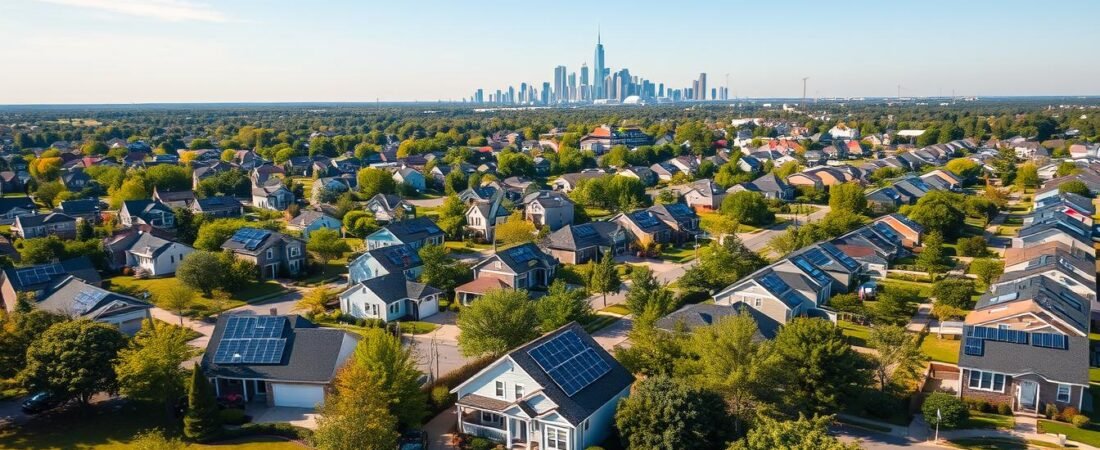
Quick snapshot: Rising electricity rates in North Carolina — up about 24% from 2020–2024 — have pushed many local homeowners to explore rooftop power. Typical project prices in the area range from roughly $17,000 to $31,000, with a common example at about $22,970 (~$2.80 per watt).
This guide defines what “solar panel cost Charlotte” usually means: the total project price, not just equipment. By the end you will compare sticker price versus net cost after rebates and tax credits.
Why shop now? Higher bills, new Duke Energy rules, and more financing options make 2026 a pivotal year for buyers. We also preview key levers that change pricing: system size, roof layout, equipment tier, battery add-ons, and installer differences.
Who this helps: People comparing quotes, weighing purchase versus lease, or adding batteries. It’s less useful for heavily shaded homes or those planning a short stay.
What you’ll learn: price per watt, available incentives, Duke program details, payment choices, and how to protect your investment long term.
– Understand total project pricing vs net pay.
– See Charlotte benchmarks and typical ranges.
– Know the main factors that move your final bill.
Why Charlotte homeowners are looking at solar now
When rates climb year after year, producing part of your own power becomes a practical option for many households.
North Carolina residential rates rose from about 11.3¢/kWh in 2021 to roughly 14.1¢/kWh in 2024 — near a 25% jump. Even modest bills can grow large over 10–20 years if that trend continues.
Price stability means locking in a predictable portion of household energy spending for the life of a typical 25-year warranty. That reduces exposure to future utility increases by generating on-site power.
Production expectations in the area are reasonable: roughly 5.2 peak sun hours per day, with seasonal swings. Good proposals include a shading analysis and an estimated annual kWh output.
Buyers should check annual production forecasts, assumed degradation over the years, and monitoring options. A realistic system can offset part — or most — of usage while also supporting renewable energy goals.
- Look for: clear yearly kWh estimates and monitoring.
- Verify: degradation assumptions and shading reports.
What “solar panel cost” includes in a Charlotte installation
A clear quote breaks total spend into equipment, labor, and ongoing upkeep — that’s where smart shopping begins.
Equipment line items
Panels, inverters (string or micro), racking, wiring, and safety shutoffs are listed separately on good bids. Optional battery storage is another major line. Choose known brands and note both product and performance warranties.
Installation work
Installation costs cover labor, roof mounting, electrical connections, permitting, and interconnection paperwork with Duke. Permits in NC usually run from about $25 to a few hundred dollars depending on the town.
Ongoing ownership
Monitoring apps are often included, but cleaning and repairs may be extra. Expect professional cleaning around ~$200 and repair labor near ~$100/hour for common jobs.
- Checklist for quotes: equipment brands/models, warranty terms, production estimate, permit/interconnection handling, and monitoring access.
- Watch for: storm damage, inverter replacement, and roof issues — workmanship and roof-penetration warranties matter.
Tip: Break down any total into these buckets so you can compare apples-to-apples when you shop local pricing.
Solar panel cost Charlotte: current price benchmarks for 2026 shoppers
Use these 2026 price benchmarks to quickly sanity-check any installer estimate.
Typical ranges by home size
- Small (3–5 kW): about $17,000–$19,500.
- Medium (6–8 kW): roughly $20,000–$26,000.
- Large (9–12 kW): commonly $27,000–$31,000.
Why use per watt as your comparison tool
Per watt normalizes systems so you can compare different sizes and quotes. A lower $/W often reflects bulk pricing, simple roofs, or standard equipment. Higher $/W usually signals premium equipment, steep roofs, shading mitigation, or battery add-ons.
Real-world example and regional context
A common local quote: $22,970 total at $2.80 per watt. That typically includes panels, inverter, racking, permitting, and basic monitoring. Ask each installer for an itemized proposal and the production estimate behind that $/W figure.
North carolina averages about $3.21 per watt versus the U.S. average near $3.33 per watt. Equipment prices in the state have dropped roughly 53% over the last decade, though a small uptick showed around 2022.
“A good $/W only makes sense in context — roof type, shading, warranty, and installer quality matter most.”
Next: the main drivers that make two Charlotte quotes differ by thousands of dollars.
What drives your final solar panel system price in Charlotte
A handful of site and equipment choices usually explain most of the price gap between bids. Below are the main factors you’ll see on every quote and why they matter.
How system size is set
Installers size a system from past kWh use, future changes like an EV, and the percent of home load you want to offset. Larger systems reduce utility purchases but may hit diminishing returns under export-credit rules.
Deciding how much solar makes sense
Think in practical terms: cover daytime use, cut peak buys, or aim for near-total offset. Matching production to daytime demand often yields the best near-term value.
Roof factors that change pricing
Complex rooflines, steep pitch, old shingles, and heavy tree shading raise labor and reduce yield. Limited mounting area can force premium equipment or extra structural work.
When premium panels are worth it
High-efficiency panels help if roof space is tight or shading mitigation is needed. Otherwise, standard panels usually offer better return on investment.
Batteries and backup: a separate decision
Adding storage can raise a project by tens of thousands depending on capacity and brand. Batteries matter most when you want resilience for storms and outages.
Why multiple quotes and installer choice matter
Companies differ on equipment sourcing, labor practices, and warranties. A low price with weak service can cost more long term. Always compare like-for-like proposals.
| Driver | How it affects price | When it matters most | Buyer action |
|---|---|---|---|
| System size | Directly scales equipment and labor | Households adding EVs or growth plans | Specify kWh offset target on every quote |
| Roof condition | May add roof repair, flashing, or labor | Steep, old, or shaded roofs | Get a roof inspection before final bids |
| Panel efficiency | Higher $/W for premium modules | Limited roof space or shading constraints | Ask for model numbers and degradation rates |
| Battery storage | Can add tens of thousands depending on size | Hurricane-prone areas or backup needs | Compare usable kWh, warranty, and round-trip efficiency |
Federal, state, and local incentives that change your net cost
Incentives can turn a high sticker price into an affordable net investment, so review them early.
How upfront price differs from net cost
Upfront price is what the installer quotes. Net cost is what you actually pay after rebates, credits, and any sale of renewable energy certificates.
Payment choice matters. Some financing paths make better use of certain tax credits than a straight cash purchase.
Federal tax credit status right now
The federal 30% federal tax credit that many buyers expected changed after the 2025 package. As of current guidance, that 30% federal tax credit is not available for cash purchases in the same way it once was.
Confirm implications with a CPA or tax advisor before relying on expected savings. Tax law evolves and professional advice protects your plan.
North Carolina property tax treatment
North Carolina offers a property tax exemption for qualifying systems. That means added home value from the installation is generally not taxed by the state.
This keeps the investment more predictable when you assess return over time.
NC-RETS RECs and what they pay
One REC equals 1 MWh of generation. Owners can register in NC-RETS and sell credits, but typical residential income is modest in today’s market.
Expect small annual payments unless you have a large system or aggregated program selling credits at scale.
About EnergizeNC “Solar for All”
EnergizeNC aimed to expand access with grants and subsidies for low-income households, including certain systems and batteries.
That program is currently paused pending federal review. Monitor official updates rather than assuming immediate availability.
| Incentive | What it does | Who benefits | Action |
|---|---|---|---|
| Federal tax credit | Reduces federal tax liability by a percentage | Tax-paying homeowners (check eligibility) | Talk to a tax pro to confirm availability |
| Property tax exemption | Prevents added assessed value from being taxed | All qualifying NC homeowners | Verify with county assessor |
| NC-RETS RECs | Sellable certificates for generation (1 REC = 1 MWh) | Owners who register generation | Register in NC-RETS; estimate revenue conservatively |
Incentive checklist: confirm rebates, federal tax implications, property tax treatment, REC registration, and utility programs. For local program updates, see this summary at Charlotte solar incentives.
Duke Energy programs and rules Charlotte buyers should understand
Understanding Duke Energy’s program details helps you make smarter choices about storage and exports.
PowerPair rebate, plain math: the program pays $0.36 per watt for systems up to 10 kW (max $3,600) and $400 per kWh for batteries up to 13.5 kWh (max $5,400).
A 7 kW system plus a 13.5 kWh battery yields roughly $7,920 in rebates under the caps. That math can drop your upfront price materially when you model payback.
EnergyWise Home Battery
This utility program acts like a virtual power plant. Participants get bill credits up to about $92/month (roughly $1,100/year) plus $6.50 per kW discharged each month.
The utility may call 30–36 dispatch events yearly. You can opt out up to four events, and batteries must keep at least a 20% reserve.
Net Metering Bridge (NMB) and export credits
Net metering now uses a bridge rider where self-consumption offsets retail electricity purchases and exports earn ~ $0.034/kWh.
Export credits carry month to month, but they are lower than retail rates, so maximizing on-site use improves savings.
- Territory matters: DEC vs DEP have different fixed fees and per-kW charges.
- Fixed monthly charges: DEC: $22 minimum + $0.28/kW DC. DEP: $28 minimum + $0.62/kW DC.
- Timing: Legacy Rider NM customers must transition to NMB by Dec 31, 2026; new installs after Oct 1, 2023 go straight to NMB.
Bottom line: Duke’s rebates and programs can change the financial case more than small equipment upgrades. Ask installers about program eligibility, application timing, and how metering and credits will be applied to your bill.
How to pay for solar in Charlotte: cash, loan, or lease
How you pay determines both your monthly bills and your long-term returns.
Cash purchase: who it fits best
Cash buyers pay more up front but keep the largest share of long-term savings. This path suits homeowners who plan to stay 10+ years and want maximum lifetime value from their solar investment.
Ask for an itemized owned-system quote that shows equipment, labor, warranties, and expected annual production.
Solar loans in north carolina: typical terms
Loans let you own with little or no down payment. North carolina revolving loan programs may cap interest near 8% and offer terms up to 20 years.
Watch the APR and total interest paid — low monthly payments can still raise the overall cost of ownership.
Leases and why they exist here
Leasing is authorized under state rules and remains available for many buyers. A lease payment buys the right to use the system; you do not own the equipment.
Leases reduce upfront risk and shift maintenance to the provider. They may pass through some federal benefits in pricing.
LightReach‑style lease example
Typical offer: about $95/month for a medium home, $0 down, monitoring and upkeep included, and a 90% production guarantee.
This option suits those who want fixed monthly expense and minimal hassle.
Shopping tips and quick decision guide
- Request three matched quotes: cash price, loan price (APR & term), and lease price for the same offset target.
- If you want lowest upfront risk → choose a lease.
- If you want maximum lifetime value and will stay long-term → cash ownership often wins.
- If you want ownership but limited cash upfront → use a loan with transparent APR and a cap like 8% when available.
| Path | Upfront | Monthly | Who it fits |
|---|---|---|---|
| Cash | High | Low (ownership) | Long-term owners seeking max value |
| Loan | Low–Medium | Medium (depends on APR) | Owners with limited cash; check 8% cap options |
| Lease | None or very low | Fixed (provider handles maintenance) | Renters or short-term owners wanting predictability |
How much you can save with solar in Charlotte
A clear way to judge value is to compare projected annual generation with your utility usage and rates.
Typical long-term savings estimates over 25 years
One widely cited reference shows a typical local home could save money near $60,000 over 25 years. That number is an average example, not a guarantee.
Savings in proposals should include avoided utility purchases, assumed rate inflation, fixed monthly charges that remain, and export credits under net metering.
How rising Duke Energy rates affect your ROI over time
Duke Energy rates rose roughly 25% from 2021–2024. When grid prices climb, each kWh your system produces offsets a pricier kWh from the utility.
“Rising electricity prices can turn modest savings into stronger returns — but only if production estimates hold up.”
Payback period expectations and what changes them
Payback period is the number of years until cumulative bill reductions equal your net investment.
An example local payback is about 11.6 years. That can shift up or down based on system price, actual production, financing terms, and whether you add a battery.
Batteries often reduce purely financial ROI because they add upfront expense and energy losses. They raise resilience and backup value, which many homeowners count as part of total value.
| Metric | Reference | Effect on savings |
|---|---|---|
| 25‑year savings | Typical example | ~$60,000 (varies by usage) |
| Payback | Local example | ~11.6 years (financing and rates matter) |
| Rate inflation | Duke rise 2021–2024 | Higher grid rates improve ROI |
Ask installers for sensitivity scenarios: conservative, medium, and optimistic rate paths; production ranges with shading considered; and comparisons with and without a battery. That helps you judge likely outcomes over the next 25 years and the true long-term value of your investment.
How to choose a solar company and protect your investment
Picking the right installer matters as much as choosing equipment. A solid company protects your roof, explains warranties, and responds fast when issues arise.
Questions to ask about equipment, workmanship, and roof protection
Ask for brand and model numbers for panels, inverters, and batteries. Request expected degradation rates and replacement logistics.
Confirm who handles permits and interconnection, and ask how the installer protects flashing and roof penetrations. Get clear terms for leak coverage and roof-warranty impact.
Warranty coverage to look for over 25 years
Look for a stacked warranty: manufacturer product warranty, performance (degradation) warranty, inverter warranty, and installer workmanship warranty.
Verify response times and whether the company will still service your system a decade from now.
Maintenance expectations in NC
Pollen can lower output in spring; professional rinsing costs about ~$200. Repair labor runs near ~$100/hour for common fixes.
Inspections are usually triggered by monitoring alerts rather than annual visits. Good monitoring helps spot underperformance early.
- Licensing & insurance proof
- Local installation track record and references
- Clear scope: equipment list, warranties, permit handling
| Item | What to check | Typical cost/term |
|---|---|---|
| Cleaning | Pollen rinse schedule | ~$200 per service |
| Repairs | Labor rate and parts policy | ~$100/hr; parts vary |
| Warranties | Product, performance, inverter, workmanship | 5–25 years depending on component |
Final tip: compare at least three quotes on scope, not just price. A thorough company will protect your roof and your property value for years to come.
Conclusion
To wrap up, keep three priorities front and center: real output, reliable service, and accurate incentives.
Local facts matter. Electricity rose about 25% from 2021–2024, the example system price often cited is $22,970 (~$2.80 per watt), and North Carolina averages near $3.21/W vs the U.S. $3.33/W.
Remember program details: export credits under net metering pay roughly $0.034/kWh, PowerPair can add up to about $9,000 for solar-plus-battery, and NC offers a property tax exemption that protects home value.
Next steps: gather 12 months of bills, estimate future usage, get 2–3 itemized quotes for the same system size, and pick cash, loan, or lease based on how long you’ll stay and how much risk you accept.
Good decisions balance price, roof fit, installer quality, and long-term support so the system performs for decades.
FAQ
What does "Solar Panel Cost in Charlotte: A Buyer’s Guide" cover?
Why are Charlotte homeowners considering solar now?
How does Charlotte’s sun exposure affect production expectations?
What does a typical installation price include?
What ongoing ownership costs should I expect?
What are current price benchmarks for 2026 shoppers in the area?
How does North Carolina pricing compare to national averages?
What factors drive my final system price?
How do roof conditions affect installation and price?
When is premium equipment worth the extra money?
How much does adding a battery change the total?
What federal and state incentives lower my net price?
What is the current federal tax credit status for cash buyers?
What is NC’s property tax exemption for solar electric systems?
What are NC‑RETS and how much are certificates worth?
What Duke Energy programs should Charlotte buyers know about?
FAQ
What does "Solar Panel Cost in Charlotte: A Buyer’s Guide" cover?
This guide explains typical system prices, what’s included in an installation, local utility rules, incentives like the federal tax credit and North Carolina property tax exemption, financing options, and how to pick a reputable installer so you can estimate savings and payback for your home.
Why are Charlotte homeowners considering solar now?
Electricity rates in North Carolina rose roughly 24%–25% from 2020–2024, so many homeowners want predictable bills and added protection from future increases. A 25-year manufacturer warranty and lifetime production estimates help offer price stability compared with volatile utility rates.
How does Charlotte’s sun exposure affect production expectations?
Charlotte receives solid sun hours that support reliable annual production. Local irradiance plus roof orientation and tilt determine real output, so a site assessment helps set realistic energy goals and system size to offset your usage.
What does a typical installation price include?
The full price usually covers modules, inverter(s), racking, electrical components, labor, permitting, and interconnection fees. Optional items such as battery storage, upgraded mounting, or EV charging equipment add to the total.
What ongoing ownership costs should I expect?
Plan for monitoring fees, occasional cleaning (pollen and debris in NC can reduce output), and infrequent repairs. Well‑installed systems with good warranties keep maintenance minimal compared with other home systems.
What are current price benchmarks for 2026 shoppers in the area?
Typical system totals vary by home size, but a common example is about ,970 total, roughly .80 per watt. Price per watt varies with equipment choice and installer; comparing multiple quotes helps identify a fair market rate versus the national average.
How does North Carolina pricing compare to national averages?
North Carolina prices often track near or slightly below the national median, but final pricing depends on local labor, permitting, and market competition. Higher-efficiency modules or added battery storage push per‑watt figures up.
What factors drive my final system price?
System size, your household energy needs, roof shading, orientation, roof condition and complexity, panel efficiency and brand, adding a battery for backup, and differences between installers all influence the final figure.
How do roof conditions affect installation and price?
Roof age, pitch, material, and shading influence mounting complexity and system performance. Replacing a worn roof before installation adds cost but prevents future tear-off and reinstallation expenses.
When is premium equipment worth the extra money?
Premium modules and inverters can be worthwhile if you have limited roof space, prioritize long-term degradation rates, or want higher guaranteed output. For larger roofs with ample space, mid-tier equipment often balances price and performance.
How much does adding a battery change the total?
Adding a home battery substantially raises upfront cost but provides backup power and time-of-use optimizations. Rebates like Duke Energy’s PowerPair or bill credits via program participation can offset some of the extra expense.
What federal and state incentives lower my net price?
The federal investment tax credit reduces federal income tax liability for qualified purchases. North Carolina provides a property tax exemption for the value added by a renewable energy system. Additional local programs and renewable energy certificates (NC‑RETS) can offer modest value.
What is the current federal tax credit status for cash buyers?
Eligible purchasers can apply the federal investment tax credit against their federal tax liability. The exact percentage and eligibility rules change over time, so verify the active rate for the tax year you install and consult a tax professional for your situation.
What is NC’s property tax exemption for solar electric systems?
North Carolina exempts the added home value from state property tax assessments for qualifying renewable energy equipment, which prevents property tax increases tied to the system’s assessed value.
What are NC‑RETS and how much are certificates worth?
NC‑RETS track renewable energy certificates for generation. The realistic market value for these certificates is modest and depends on buyer demand; many homeowners don’t factor them into core financial projections unless a specific purchaser is lined up.
What Duke Energy programs should Charlotte buyers know about?
Key programs include PowerPair rebates for solar-plus-battery (up to ,000 depending on qualifications), the EnergyWise Home Battery bill credit program (monthly credits approximating at times), and the Net Metering Bridge rider which provides an export credit around
FAQ
What does "Solar Panel Cost in Charlotte: A Buyer’s Guide" cover?
This guide explains typical system prices, what’s included in an installation, local utility rules, incentives like the federal tax credit and North Carolina property tax exemption, financing options, and how to pick a reputable installer so you can estimate savings and payback for your home.
Why are Charlotte homeowners considering solar now?
Electricity rates in North Carolina rose roughly 24%–25% from 2020–2024, so many homeowners want predictable bills and added protection from future increases. A 25-year manufacturer warranty and lifetime production estimates help offer price stability compared with volatile utility rates.
How does Charlotte’s sun exposure affect production expectations?
Charlotte receives solid sun hours that support reliable annual production. Local irradiance plus roof orientation and tilt determine real output, so a site assessment helps set realistic energy goals and system size to offset your usage.
What does a typical installation price include?
The full price usually covers modules, inverter(s), racking, electrical components, labor, permitting, and interconnection fees. Optional items such as battery storage, upgraded mounting, or EV charging equipment add to the total.
What ongoing ownership costs should I expect?
Plan for monitoring fees, occasional cleaning (pollen and debris in NC can reduce output), and infrequent repairs. Well‑installed systems with good warranties keep maintenance minimal compared with other home systems.
What are current price benchmarks for 2026 shoppers in the area?
Typical system totals vary by home size, but a common example is about $22,970 total, roughly $2.80 per watt. Price per watt varies with equipment choice and installer; comparing multiple quotes helps identify a fair market rate versus the national average.
How does North Carolina pricing compare to national averages?
North Carolina prices often track near or slightly below the national median, but final pricing depends on local labor, permitting, and market competition. Higher-efficiency modules or added battery storage push per‑watt figures up.
What factors drive my final system price?
System size, your household energy needs, roof shading, orientation, roof condition and complexity, panel efficiency and brand, adding a battery for backup, and differences between installers all influence the final figure.
How do roof conditions affect installation and price?
Roof age, pitch, material, and shading influence mounting complexity and system performance. Replacing a worn roof before installation adds cost but prevents future tear-off and reinstallation expenses.
When is premium equipment worth the extra money?
Premium modules and inverters can be worthwhile if you have limited roof space, prioritize long-term degradation rates, or want higher guaranteed output. For larger roofs with ample space, mid-tier equipment often balances price and performance.
How much does adding a battery change the total?
Adding a home battery substantially raises upfront cost but provides backup power and time-of-use optimizations. Rebates like Duke Energy’s PowerPair or bill credits via program participation can offset some of the extra expense.
What federal and state incentives lower my net price?
The federal investment tax credit reduces federal income tax liability for qualified purchases. North Carolina provides a property tax exemption for the value added by a renewable energy system. Additional local programs and renewable energy certificates (NC‑RETS) can offer modest value.
What is the current federal tax credit status for cash buyers?
Eligible purchasers can apply the federal investment tax credit against their federal tax liability. The exact percentage and eligibility rules change over time, so verify the active rate for the tax year you install and consult a tax professional for your situation.
What is NC’s property tax exemption for solar electric systems?
North Carolina exempts the added home value from state property tax assessments for qualifying renewable energy equipment, which prevents property tax increases tied to the system’s assessed value.
What are NC‑RETS and how much are certificates worth?
NC‑RETS track renewable energy certificates for generation. The realistic market value for these certificates is modest and depends on buyer demand; many homeowners don’t factor them into core financial projections unless a specific purchaser is lined up.
What Duke Energy programs should Charlotte buyers know about?
Key programs include PowerPair rebates for solar-plus-battery (up to $9,000 depending on qualifications), the EnergyWise Home Battery bill credit program (monthly credits approximating $92 at times), and the Net Metering Bridge rider which provides an export credit around $0.034/kWh for new interconnections.
How do monthly fixed charges and net metering changes affect savings?
Monthly service charges vary between Duke Energy Carolinas and Duke Energy Progress and reduce the portion of bills offset by onsite generation. Legacy net metering customers may face transition timelines through 2026, so new customers should model current export rates and fixed fees when calculating ROI.
What financing options are available in North Carolina?
Homeowners can pay cash, take a solar loan, or sign a lease/PPA. Loans offer ownership with little or no upfront cash, and terms vary. Leasing transfers ownership and often includes maintenance but limits eligibility for tax credits.
What should I know about solar loans and the 8% cap concept?
Solar loans vary in term and interest. The “8% cap” reference often describes target effective rates lenders aim for to keep monthly payments attractive versus utility bills. Shop lenders and compare APR, terms, and prepayment penalties.
Is leasing still a good option in Charlotte?
Leasing can suit homeowners who want low upfront costs and included maintenance. However, leases usually forfeit tax credits to the lessor and may complicate home sales, so compare total long‑term value against ownership options.
What is LightReach‑style leasing?
This model offers fixed payments with maintenance included and production guarantees. It simplifies cash flow but typically means you don’t claim federal tax credits or local incentives, so weigh the tradeoffs against buying the system outright.
How much can I expect to save over 25 years?
Typical long-term savings depend on system size, local rates, and incentives. Estimates commonly show substantial lifetime savings versus staying grid‑only, especially as Duke Energy rates rise. A detailed estimate requires your usage, current bills, and an installer’s production model.
How do rising utility rates affect ROI?
Higher electric rates shorten payback and increase lifetime savings because each kWh your system offsets becomes more valuable. Rate trajectories are a key variable in financial models.
What payback period should I expect?
Payback varies widely—common ranges are 6–12 years depending on incentives, financing, and electricity inflation. Adding batteries typically extends payback, while strong incentives and low install prices shorten it.
What should I ask solar companies before signing a contract?
Ask about equipment brand and warranty details, installer workmanship warranty, roof protection practices, interconnection experience with Duke Energy, itemized pricing, production estimates, and references from nearby installations.
What warranty coverage matters most over 25 years?
Look for module performance warranties (degradation guarantees), product warranty durations, and inverter warranty terms. Also verify installer workmanship warranties and rapid response for repairs.
What maintenance should North Carolina homeowners plan for?
Expect periodic cleaning to remove pollen and debris, annual inspections, inverter checks, and occasional repairs. Many installers offer service plans to handle routine upkeep and warranty claims.
How do I protect my investment when choosing an installer?
Get multiple written quotes, verify licensing and insurance, check Better Business Bureau and state contractor records, request local references, and ensure contractual clarity on timelines, payments, and warranty handling.
.034/kWh for new interconnections.
How do monthly fixed charges and net metering changes affect savings?
Monthly service charges vary between Duke Energy Carolinas and Duke Energy Progress and reduce the portion of bills offset by onsite generation. Legacy net metering customers may face transition timelines through 2026, so new customers should model current export rates and fixed fees when calculating ROI.
What financing options are available in North Carolina?
Homeowners can pay cash, take a solar loan, or sign a lease/PPA. Loans offer ownership with little or no upfront cash, and terms vary. Leasing transfers ownership and often includes maintenance but limits eligibility for tax credits.
What should I know about solar loans and the 8% cap concept?
Solar loans vary in term and interest. The “8% cap” reference often describes target effective rates lenders aim for to keep monthly payments attractive versus utility bills. Shop lenders and compare APR, terms, and prepayment penalties.
Is leasing still a good option in Charlotte?
Leasing can suit homeowners who want low upfront costs and included maintenance. However, leases usually forfeit tax credits to the lessor and may complicate home sales, so compare total long‑term value against ownership options.
What is LightReach‑style leasing?
This model offers fixed payments with maintenance included and production guarantees. It simplifies cash flow but typically means you don’t claim federal tax credits or local incentives, so weigh the tradeoffs against buying the system outright.
How much can I expect to save over 25 years?
Typical long-term savings depend on system size, local rates, and incentives. Estimates commonly show substantial lifetime savings versus staying grid‑only, especially as Duke Energy rates rise. A detailed estimate requires your usage, current bills, and an installer’s production model.
How do rising utility rates affect ROI?
Higher electric rates shorten payback and increase lifetime savings because each kWh your system offsets becomes more valuable. Rate trajectories are a key variable in financial models.
What payback period should I expect?
Payback varies widely—common ranges are 6–12 years depending on incentives, financing, and electricity inflation. Adding batteries typically extends payback, while strong incentives and low install prices shorten it.
What should I ask solar companies before signing a contract?
Ask about equipment brand and warranty details, installer workmanship warranty, roof protection practices, interconnection experience with Duke Energy, itemized pricing, production estimates, and references from nearby installations.
What warranty coverage matters most over 25 years?
Look for module performance warranties (degradation guarantees), product warranty durations, and inverter warranty terms. Also verify installer workmanship warranties and rapid response for repairs.
What maintenance should North Carolina homeowners plan for?
Expect periodic cleaning to remove pollen and debris, annual inspections, inverter checks, and occasional repairs. Many installers offer service plans to handle routine upkeep and warranty claims.
How do I protect my investment when choosing an installer?
Get multiple written quotes, verify licensing and insurance, check Better Business Bureau and state contractor records, request local references, and ensure contractual clarity on timelines, payments, and warranty handling.