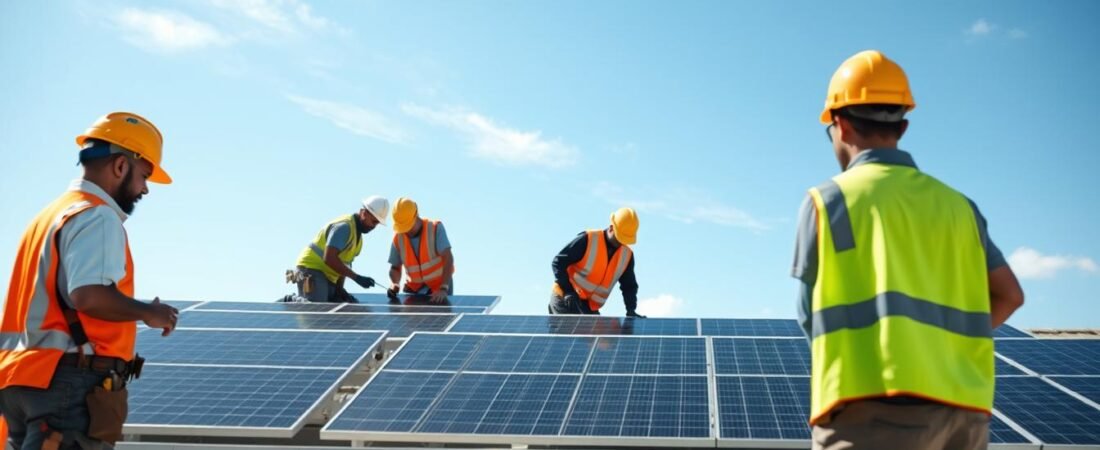
Thinking of adding a home energy system? A typical 12 kW setup averages about $30,505 before incentives, according to EnergySage.
That sticker figure hides the full picture. Most homeowners who generate their own electricity may save between $37,000 and $154,000 over 25 years.
Now is a strong time to act: 2026 sees some of the lowest equipment and setup prices in recent years, so the overall investment looks better than it has in a while.
Keep in mind that the quoted labor fee is only one element of the final price. Your roof, the equipment you choose, local rebates, and state rules all shape how much power your system will produce and how much you save on the utility bill.
In short: look beyond the initial quote. Compare warranties, check incentives in your state, and plan for regular maintenance to protect long-term savings.
Understanding the True Cost of Solar Panel Installation Labor
Upfront estimates rarely show the breakdown that matters most to homeowners. Knowing what counts as physical work versus business overhead helps you compare quotes fairly.
Defining Labor vs. Soft Costs
Installer fees cover much more than hands-on work. A 2021 NREL study found installer costs are about 46% of the total system price, but physical labor is only ~7% of that installer slice.
Most expenses go to sales, permits, marketing, and overhead — not just on-roof crews.
Why Professional Installation Matters
Certified crews ensure your system meets local electrical and building codes. That protects your roof and reduces long-term risk.
- Expert teams reduce the chance of costly rework.
- Verify service agreements include long-term maintenance and warranties.
- Many homeowners prefer licensed installers for the peace of mind they provide over DIY.
To compare vetted providers and services, see our installation services.
Current Market Trends for Residential Solar
Regional pricing and supply-chain changes now play a larger role in what you’ll pay per watt.
Arizona currently offers the lowest average price, while Nebraska and South Dakota sit near the top of the list for higher rates. Local competition and permitting rules shape those differences more than national averages do.
Prices rose slightly in the last three years because of equipment shortages, but the market stabilized in 2026. That means realistic quotes now reflect steady equipment availability and clearer timelines for projects.
Larger systems usually deliver better value per watt. Homeowners who choose bigger setups often see lower price per watt and greater long-term savings on their electricity bill.
Many homeowners pair solar panels with battery storage to keep power during utility outages. Proper maintenance and remote monitoring are also becoming standard expectations for modern systems.
- Arizona: lowest average cost; Nebraska and South Dakota: higher pricing.
- 2026: stabilized prices after pandemic disruptions.
- Compare multiple quotes to find the best value and incentives in your area.
Breaking Down the Total System Price
The total project price hides a mix of hard parts and soft fees. Knowing which line items matter helps you compare quotes clearly.
Equipment and Hardware Expenses
Equipment is the biggest slice. For a typical 12 kW setup, panels, inverters, and related gear make up about 46% of the total system price—roughly $14,055.
Choosing higher-quality panels and inverters often raises the upfront cost but can boost energy production and lower your utility bill over years.
Permitting and Interconnection Fees
Permits, inspections, and utility interconnection usually add a few thousand dollars. Expect these fees to equal roughly 8% of installation costs.
The Department of Energy’s SolarApp+ is reducing permit time and expense in many states, which can cut delays and fees for homeowners.
The Role of Installer Overhead
Installer overhead covers sales, marketing, warranties, and admin. It is a large, often overlooked factor in the total cost.
- Spread fixed soft costs over a bigger system and you lower the per watt price.
- Ask for a line-item quote to spot hidden fees and negotiate better terms.
How System Size Influences Your Final Quote
Bigger systems spread fixed fees over more capacity, which usually lowers the price per watt. That math matters when you compare quotes. A larger system often brings a lower unit price because permits, sales, and admin are shared across more panels.
For many homes, a 12 kW solar panel system is a common benchmark. But true sizing depends on your annual electricity use and future needs.
Think of buying a panel system like bulk shopping: ordering more units typically reduces the per-unit equipment and can cut overall cost per watt.
- Increasing system size usually lowers the per watt figure by spreading fixed fees.
- Match system size to annual electricity use to avoid oversizing or undersizing your home system.
- Consult a pro to balance current needs, future growth, and available incentives in your state.
Impact of Roof Characteristics and Home Complexity
Your roof’s shape and surroundings can change a project estimate more than you expect.
Complex roofs with multiple planes, dormers, or skylights require more time and special equipment. That raises the total installation and increases the per watt figure for the system.
If large trees shade your roof, trimming or removal is often needed. Plan on roughly $300 to $1,500 for those services to protect long-term energy production.
Addressing Electrical Panel Upgrades
Many homes must upgrade to at least a 200-amp electrical panel before a system can connect safely. A certified electrician should inspect your service panel before finalizing the design.
- Panel upgrades typically add a few thousand dollars to the total cost but are essential for safe power distribution.
- Roof orientation and pitch matter: south-facing, ~30-degree slopes produce the most power and usually reduce how many panels you need.
- Height and steep pitch increase crew time and equipment rental, which can affect final installation costs.
Address roof and electrical issues early to avoid delays and unexpected bills during the actual project. That simple step usually protects your timeline and budget.
Regional Variations in Installation Pricing
Where you live often shapes the bottom-line figure more than national averages do.
Local markets, permits, and incentives create real differences in what a homeowner pays for a new system. In warmer states like Arizona, averages tend to run lower, while Nebraska and South Dakota often show higher numbers.
Utility rules and net metering in your state can change how much you save each year. That affects whether a given payback looks attractive.
- Get multiple quotes from local firms that know city permits and inspection timelines.
- Compare the cost per watt to spot outliers in offers.
- Remember that sun exposure and roof shading can require a larger system size to reach the same energy output.
Tip: Research state rebates and local incentives before signing. These can shave thousands off the final price and make a quoted installation far more competitive.
Navigating Solar Incentives and Rebates
Stacking the right rebates and credits can shrink the upfront figure and speed your payback timeline. The federal tax credit lets homeowners deduct 30% of the total installation from federal taxes. That single incentive often saves the average homeowner thousands of dollars.
Local and state programs add more value. Many utilities and state programs offer cash rebates or performance incentives that reduce your upfront cost. Massachusetts, New Jersey, and Washington D.C. are notable for generous offers.
- Include the 30% federal credit when projecting payback and savings.
- Search local utility rebates and performance-based programs to lower out-of‑pocket expenses.
- Compare how incentives change the economics for different system sizes and equipment choices.
Work with a knowledgeable installer who completes the required paperwork and helps you claim rebates. Over the years, combining federal and local incentives can shorten your payback and boost total savings for your home.
Comparing Payment Methods for Your Project
Choosing how to pay for your home system shapes long-term savings more than the sticker price. Which path you pick affects monthly cash flow, eligibility for tax breaks, and who owns the equipment.
Benefits of Cash Purchases
Paying cash is usually the cheapest route. You avoid interest and dealer fees, so the total cost paid upfront is lower.
Ownership matters: owning the system lets you claim federal incentives and local rebates that leases often do not allow.
Pros and Cons of Loans and Leases
Loans let you spread payments while keeping ownership. Be careful: dealer fees can inflate the loan principal by about 19.99%, increasing the final price of your panel system.
Leases and PPAs offer $0 down and predictable monthly bills, but you won’t own the equipment. That usually cuts long-term savings and excludes you from many incentives.
- Cash: best long-term savings, full incentives, no finance fees.
- Loan: ownership without full upfront cost; watch dealer fees and interest.
- Lease/PPA: low barrier to entry and often includes maintenance, but no ownership or tax credits.
Whatever route you choose, confirm the system is sized to your energy needs and roof, and compare how each option changes the per watt and total cost over the life of the equipment.
Evaluating the Long Term Financial Investment
Your break-even date comes from a mix of system size, incentives, and the pace of local electricity inflation.
Average payback period sits near 10 years. After that point, the energy your panels produce is effectively free for about 15 more years.
Most homeowners see total savings between $37,000 and $154,000 over 25 years when they choose a full roof-mounted setup.
- With a ~10-year payback period, expect roughly 15 years of net-free electricity for your home.
- Your exact payback depends on local rates and the final installation cost after incentives.
- Rising grid prices shorten the payback period and increase long-term savings.
View the system as an investment that raises property value and cuts monthly bills. Choose quality panels and verified installers to protect that return for decades.
Conclusion
Investing in home power generation takes planning but yields lasting benefits.
For most U.S. homeowners, adding solar panels is a major financial choice that can cut bills and raise home value.
Understand the breakdown of labor, equipment, and soft costs so you can compare offers with confidence.
Get multiple quotes and research incentives to lower your total cost and shorten the payback, which often sits near 10 years.
Evaluate your roof, your current energy use, and financing options before you sign. For a practical guide on pricing and value, see what is the cost of solar panel.