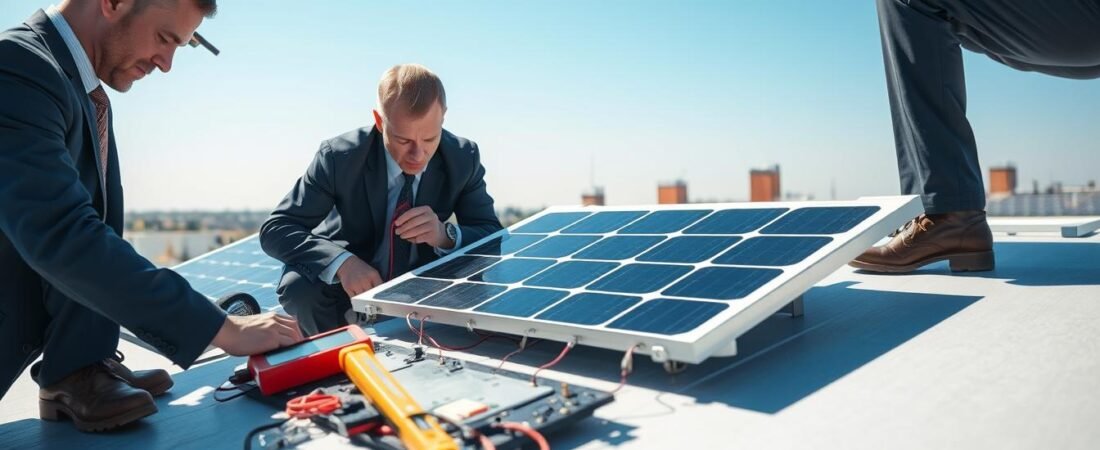
Understanding the typical expenses for solar panel repair pricing helps homeowners plan for long-term system care. Most arrays are built to last 25 years or more, and failure is rare. The National Renewable Energy Laboratory finds a very low failure rate, so big bills are uncommon.
Still, occasional issues happen. Debris, hardware damage, or a faulty inverter can force a panel repair or replacement. Knowing how warranties, insurance, and labor affect the total price makes it easier to decide when to call a professional service company.
This guide gives homeowners clear data and simple steps to assess installation problems and manage repairs over the system’s lifetime. Expect practical tips on warranties, typical service time, and when replacement is the smarter choice.
Understanding Your Solar System Reliability
Modern rooftop arrays rarely fail, with data showing only a tiny fraction of units experience defects.
The National Renewable Energy Laboratory reports a failure rate of about 0.05%. That means most homeowners enjoy decades of steady output from their solar panels.
Typical systems are built to perform for 25 years or more. Individual panels may need minor attention now and then, but major faults are unusual.
Knowing key components helps you spot issues early. Monitor output, check inverters, and watch for shading or debris.
Small steps — like monthly visual checks and reviewing your monitoring app — keep energy production steady and may prevent larger problems.
- Reliability: very high for modern panels
- Lifespan: commonly 25+ years
- Action: monitor and inspect regularly
| Component | Typical Issue | Likelihood | Recommended Action |
|---|---|---|---|
| Panels | Soiling, microcracks | Low | Visual check, cleaning |
| Inverter | Hardware or firmware faults | Moderate | Monitoring alerts, professional service |
| Wiring & mounts | Loose connections, roof wear | Low to moderate | Inspect annually, tighten or seal |
| Monitoring software | Data gaps or false alerts | Low | Restart, update, contact provider |
Common Issues Requiring Professional Attention
When performance drops or alerts persist, it usually signals a problem for a trained technician. Quick checks are fine, but many faults need tools and safety steps only a qualified service team can provide.
Monitoring and Software Failures
Communication glitches are top service triggers. Monitoring apps can lose data or show false alarms, and installers report these as frequent reasons for a call.
Fixes may include firmware updates, reconnecting gateways, or replacing a communications module. For guidance, see a useful resource on panel repair basics.
Inverter Hardware Issues
String inverters act as the system’s brain. A string inverter failure can halt production for the whole array, while microinverter faults affect just one module.
Professionals test, reset, or replace inverter hardware to restore reliable energy flow.
Wiring and Roof Penetration Problems
Wiring faults often come from loose connections, tree branches, or pests nesting under equipment. These can cause dangerous arc faults and roof leaks if left unchecked.
High-quality installers use sealants and proper flashing to prevent water damage. If you need professional service, check local installation and repair options.
Factors Influencing Your Solar Panel Repair Cost
Several variables determine what you’ll pay when a module needs service. The average solar panel repairs run about $841, with most homeowners paying between $234 and $1,450 for a single occurrence.
Labor typically averages about $100 per hour. Steep roofs or complex mounts add fees for safety gear and extra crew time.
Parts matter. A string inverter replacement often costs far more than a single microinverter. Hardware for a string inverter can range $800–$2,500, while microinverter swaps usually stay lower.
Accessibility affects totals. Ground-level arrays or easy rooftops cut service time. Hard-to-reach installations raise labor and travel charges.
| Factor | Typical Impact | Example Range |
|---|---|---|
| Labor & roof access | High | $100 per hour; extra safety fees on steep roofs |
| Parts & hardware | Moderate to high | Microinverter low; string inverter $800–$2,500 |
| Inspection & preventative service | Low to moderate | $150–$300 for routine inspection |
| System size and location | Moderate | Larger systems or remote sites increase total |
Routine inspections catch wiring, debris, or minor damage before they become expensive. Warranties and insurance can shift responsibility, so check those options early.
Navigating Warranty Coverage and Manufacturer Support
Before calling a technician, confirm whether the manufacturer or installer covers the work. Warranties can shift responsibility for parts, while installers often handle workmanship issues for the roof and wiring.
Equipment Warranties
Most manufacturers cover materials and defects for up to 25 years. That typically includes modules and the inverter itself.
Note: replacement parts are often covered, but labor to swap components may not be.
- Check brand terms: premium names like REC and Maxeon sometimes include labor coverage.
- Keep serial numbers and purchase records handy for claims.
Workmanship and Labor Coverage
Your installer usually provides a separate workmanship warranty. This protects roof penetrations, mounts, and wiring quality for a set period.
Always verify whether your specific issue is a covered warranty claim before hiring an outside service. Doing so can prevent unexpected labor costs and speed up a covered replacement.
Determining Responsibility for Repair Expenses
Figuring out who covers service begins by tracing the cause: installation error, factory defect, or storm damage.
Responsibility is usually shared among the homeowner, the installation company, and the equipment maker. Each party’s role depends on what caused the issue and which warranties apply.
If a roof leak or wiring failure traces back to poor installation, the installer should cover the full cost under their workmanship warranty.
Manufacturer warranties generally handle replacement parts when a module or inverter fails due to defective materials. Labor may or may not be included, so read terms closely.
Homeowners insurance can help when weather, falling trees, or other covered perils damage the array. For leased systems or PPAs, the service company often carries maintenance and covers most panel repairs.
| Responsible Party | Typical Coverage | When to Contact |
|---|---|---|
| Homeowner | Insurance for storm or fire; out-of-warranty labor | Physical damage from external events |
| Installer / Company | Workmanship, roof penetrations, wiring fixes | Poor installation, leaks, loose mounts |
| Manufacturer | Defective modules or inverter parts under warranty | Hardware failures or material defects |
When to Consider Solar Panel Removal
You may need to remove modules when a roof replacement or major storm damage makes access unavoidable.
Asphalt shingles usually last 20–25 years, so many homeowners plan removal during a roof overhaul. Small system removals commonly run $400–$600, while full system dismantles can range from $3,000 to $12,500 for large arrays.
Coordinating removal with roofing work often saves money. Combining jobs reduces mobilization time and keeps the system offline for less time, which protects home energy production and lowers labor fees.
Important: improper removal can void a 25-year warranty. Hire a certified company to handle mounting hardware, wiring disconnection, and safe lifting.
If severe weather or debris damages equipment, check your homeowners insurance. Many policies cover removal and reinstallation as part of a claim. For a full removal price guide, see this removal cost guide.
Professional Versus DIY Repair Risks
Handling electrical gear without training raises serious safety and warranty concerns.
Light hitting modules produces electricity any time they are exposed. That means even a disconnected circuit can be live during daytime.
Attempting a DIY fix can cause electrical shock, arc flashes, or fires. Untrained work also risks unseen wiring faults and inverter damage.
Most manufacturers void multi‑thousand dollar warranties if they find unauthorized tampering. That can turn a small service need into an expensive replacement.
| Approach | Risk | Typical Outcome |
|---|---|---|
| DIY | High — shock, fire, voided warranty | Possible permanent equipment damage and lost coverage |
| Professional | Low — trained shutdown, code compliance | Safe fixes, preserved warranty, proper labor records |
| When to choose | Minor cleaning only; no live work | All electrical, wiring, or inverter issues |
Hiring a qualified installer ensures work meets local codes and protects your investment. The extra labor fee is small compared with injury risk or voided warranties.
Budgeting for Ongoing System Maintenance
Routine care keeps your array producing near-peak output year after year. Set a modest yearly budget to cover cleaning, inspections, and small fixes.
Cleaning your solar panels twice a year prevents grime buildup that can cut system output by up to 30% in polluted areas. Regular washing is low effort and low cost when planned ahead.
Schedule an annual professional inspection. Technicians spot loose wiring, hot spots, and inverter issues before they cause major panel repair or roof damage.
- Save for routine work: set aside funds to avoid surprise bills.
- Pest guards: install them to protect wiring under the panels.
- Combine services: pair cleaning with inspection to lower overall costs.
Tip: keep records and photos after each visit to support any warranty claims or future installation questions. A small maintenance budget protects your 25‑year investment and keeps everything running smoothly.
Managing Costs During System Upgrades
Timing an upgrade to coincide with roof work can cut overall labor and downtime. When a roof crew already has access, bundling removal and new installation trims duplicate mobilization fees. This approach often lowers total costs and shortens the time your home is offline.
If your solar panels are more than a decade old, newer modules can be 20–30% more efficient. That extra output may justify a full replacement rather than repeated small repairs.
Compare up-front costs against long-term savings. Ask your installer for a simple payback estimate and run numbers for energy savings over 10–15 years.
Confirm inverter compatibility before buying new hardware. Some inverters require upgrades to handle higher-output panels, which affects total installation costs and timeline.
- Bundle upgrades with roof replacement to save on removal and reinstallation.
- Weigh new equipment price against projected energy savings.
- Plan upgrades during scheduled panel repair to minimize downtime.
Talk to your installer about warranty transfer and expected lifespan. That step helps avoid surprises from hidden damage and ensures the replacement is the smarter long-term choice.
Safety Protocols for Damaged Solar Arrays
After severe weather, focus first on safe shutdown and keeping clear of damaged equipment.
Locate your AC and DC disconnect switches and turn them off before approaching the roof or array area. If you cannot reach the switches safely, stay back and call a professional.
Never touch broken modules or exposed wiring. Even cracked glass can hide live conductors that cause shock.
Document damage with photos for insurers, but do so from a safe distance. Keep the surrounding roof clear of debris to limit further harm from wind or falling tree branches.
- Shut down via AC/DC disconnects first.
- Avoid touching shattered glass or exposed wiring.
- Keep the area free of debris to reduce secondary damage.
- Photograph damage before any removal or service.
Call a qualified technician for damaged panels, wiring, or glass. Prompt professional attention reduces fire risk and helps preserve warranty and insurance claims.
| Hazard | Immediate Action | When to Call a Pro |
|---|---|---|
| Cracked or shattered glass | Isolate system; do not touch | Always — risk of cuts and live conductors |
| Exposed wiring | Shutdown at disconnects; keep clear | Immediately — fire and shock hazard |
| Roof damage near mounts | Stay off roof; document visually from ground | When structural support or leaks are present |
How to Coordinate Repairs with Your Installer
The fastest path to a fix is to notify your installer and let them review system data.
Most solar installers use remote monitoring and will often spot drops in output before homeowners do. About 73% actively watch systems for faults and call the home to discuss next steps.
When you spot an issue, call your installation company first. They can confirm whether the problem falls under your warranty and explain any potential repair costs.
A project manager from the company usually coordinates service visits, schedules qualified technicians, and tracks labor time. This keeps the work efficient and preserves warranty records.
- If your panels are leased, the company typically handles all service and replacement at no charge to you.
- Keep detailed records of every call, email, and service date to support warranty or insurance claims.
- Ask your installer to share monitoring screenshots or error logs so you know what to expect and how long repairs may take.
Conclusion
Simple habits and the right contacts shorten downtime when issues arise. Keep records of your purchase and installer information so a call to your company is quick and clear.
Plan for routine checks to protect your 25-year investment. If a problem needs work, one documented solar panel repair or a few small solar panel repairs over the decades are normal.
Choose reputable solar installers and confirm what your warranty and installation cover. That way you act fast, stay safe, and enjoy reliable energy from your solar panels for many years.